The World's UFO Hotspots, Country by Country: Where the Encounters Cluster, and Which Ones Hold Up
The United States logs more UFO reports than anywhere on Earth, Brazil and Mexico have the loudest traditions, and France and Chile run the most serious government offices. Here is each hotspot's most famous and most infamous encounter, with the real footage and documents, scored on the same four axes.
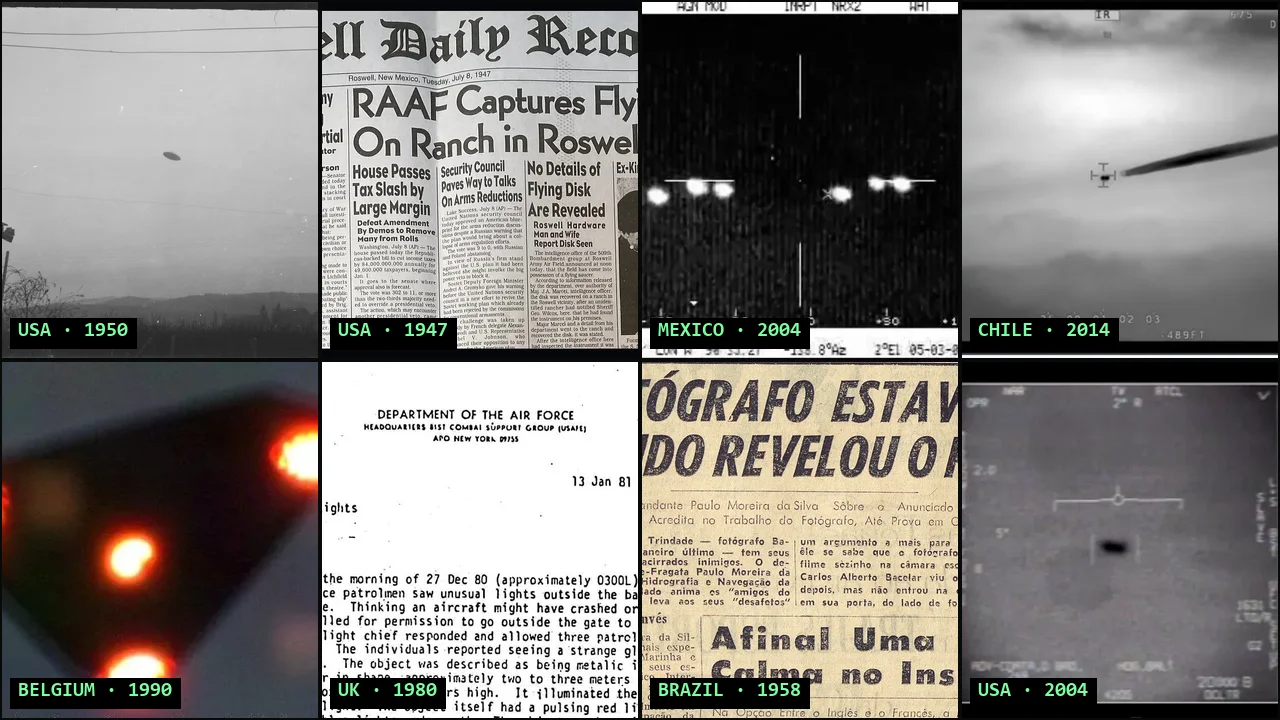
By raw volume the United States is the world's biggest UFO hotspot: the civilian National UFO Reporting Center logged its 200,000th report in August 2026. But report counts mostly measure population and how easy it is to file. Where governments investigate every case, the unexplained remainder is small and strikingly consistent: 3.1% of France's 3,381 classified GEIPAN cases, and a little over 3% of Canada's 1,052 reports in 2025. The best-evidenced encounters are spread across the US, the UK, Brazil and Iran, and none of them came from a public hotline.
Ask which country has the most UFO encounters and you get a list that looks like a map of the phenomenon: the United States, then Brazil, Mexico, the UK, Chile. It is mostly a map of something else. A UFO report is a person, a sky, and a place to send what they saw. Change the third thing and the numbers move by orders of magnitude.
So this guide does two jobs. First, the counting: who records sightings in each hotspot, and what the unexplained share looks like where anyone publishes it. Then the cases: for each country, the encounter everyone knows and the one that went wrong, with the real photographs, documents and military footage, scored on the same four-axis rubric as every case file on this site.
The counting problem
| Country | Who counts | Latest figure | Unexplained share |
|---|---|---|---|
| United States | NUFORC (civilian hotline, since 1974); AARO (Pentagon, since 2022) | NUFORC: 200,000th report, Aug 2026. AARO: 1,870 reports, May 2025 | AARO: none attributed to non-human tech; hundreds held as unresolved for lack of data |
| France | GEIPAN, inside the space agency CNES (since 1977) | 3,381 classified cases | 3.1% unidentified after investigation; 30% too little data |
| Canada | Ufology Research (civilian annual survey, 35+ years) | 1,052 reports in 2025 | a little over 3% |
| United Kingdom | Ministry of Defence UFO desk (closed 2009) | 209 files, about 52,000 pages released 2008 to 2013 | never published as a rate |
| Chile | CEFAA, inside the civil aviation authority (from 1997) | case files released case by case | not published as a rate |
| Brazil | Air Force; records transferred to the National Archives | major release around 2010 | not published as a rate |
| Belgium | SOBEPS (civilian, during the 1989 to 1991 wave) | about 2,000 reports in one wave | not published as a rate |
| Mexico | no standing government office | no national count | none |
Three things fall out of that table.
The US lead is a plumbing lead. NUFORC has run a public hotline and web form for five decades in a country of 340 million people. No other nation has anything close, so no other nation comes close in raw counts. Canada’s own survey notes that sightings track population, with the big cities leading every year.
Where someone actually investigates, the remainder is about three percent. France’s state office and a civilian Canadian survey, working with different methods on different continents, both land a little above 3% unexplained. That agreement is the most interesting number in the table, and it is also the humblest one: GEIPAN files a further 30% of cases as unresolvable for lack of data, not as mysteries.
Mexico has one of the loudest UFO cultures on Earth and no official counter. Its famous cases reach the public largely through one journalist, which shapes everything about how they were received. More on that below.
United States: the biggest number, and the widest spread
Most famous: Roswell, 1947 (5 / 12). On 8 July 1947 the Roswell Army Air Field press office announced it had recovered a “flying disc”, and the local paper ran it across the top of the front page. The claim was withdrawn within a day, and two Air Force reports in the 1990s tied the debris to Project Mogul, a classified balloon program. The paperwork is strong. The evidence for a craft is not, which is why the most famous UFO case in the world scores 5.
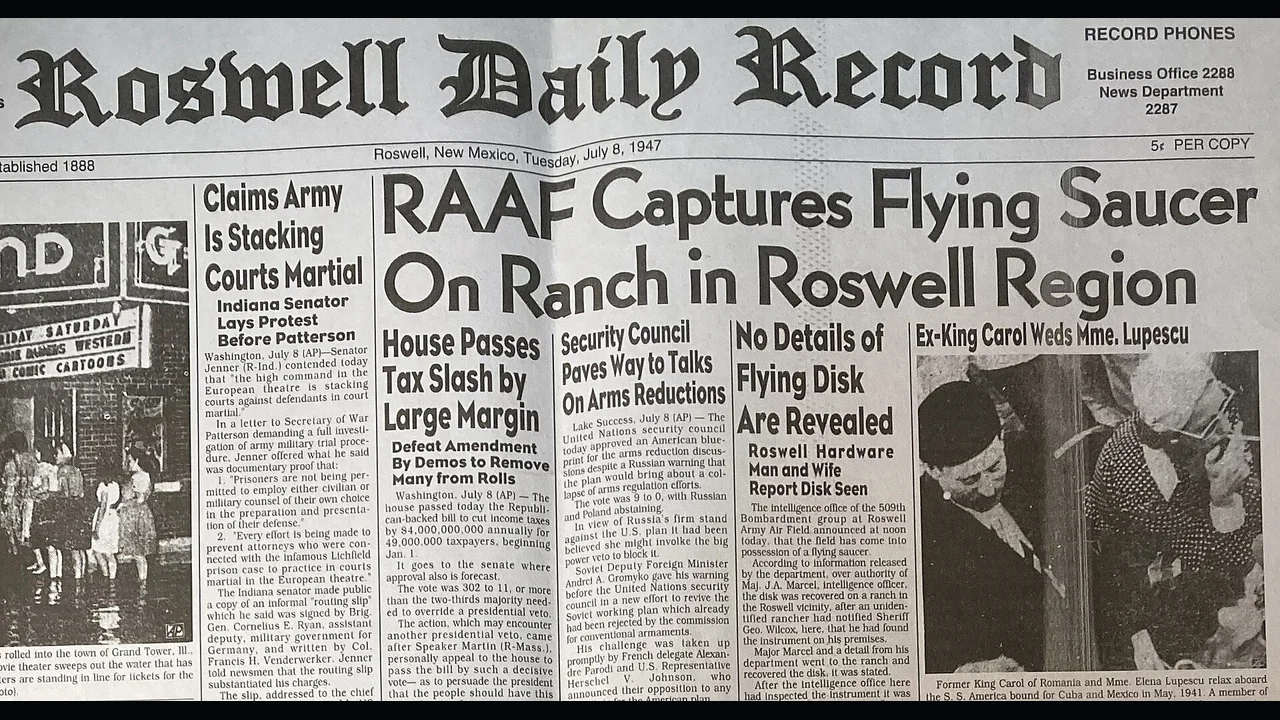
Roswell Daily Record, 8 July 1947. Public domain, via Wikimedia Commons. Read the case file →
The photograph that has held up best: McMinnville, Oregon, 1950. On 11 May 1950 farmer Paul Trent took two pictures of a metallic disc over his farm, and Life published them that June. The US government’s own Condon study later called it one of the few reports in which every factor it investigated appeared consistent with the witnesses’ account. Skeptics have argued for decades that it is a small model hung from the overhead wires visible in the frame, and nobody has settled it either way. Seventy-six years on, it is still the benchmark every saucer photo gets compared to.
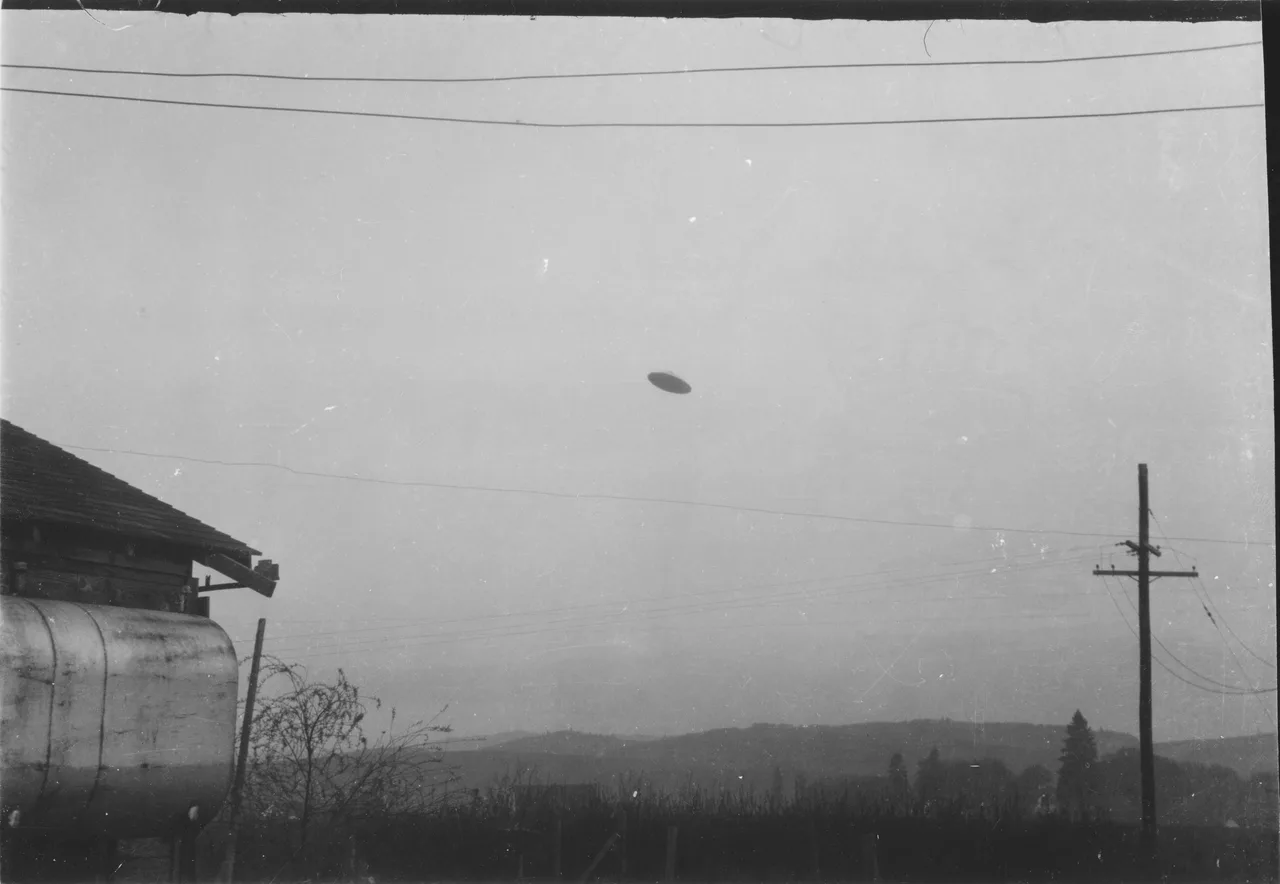
Paul Trent’s first McMinnville photograph, 11 May 1950. Public domain, via Wikimedia Commons.
Best evidenced: the USS Nimitz “Tic Tac”, 2004 (10 / 12). Radar tracks from the USS Princeton, several Navy aircrew including Cmdr. David Fravor, and an infrared video the Pentagon later confirmed as genuine. It ties for the top score on this site. The Pentagon released it alongside two other Navy clips, including the one below.

Also worth your time: the Phoenix Lights (8 / 12), where thousands of people and the state’s own governor saw a formation the military never explained, and Aguadilla, Puerto Rico (8 / 12), a federal thermal video with an intact chain of custody.
Most infamous: the “alien in the freezer”, 1996. A man calling himself Dr. Jonathan Reed sold footage of a small creature he said he had killed in the Washington woods and kept in his freezer. The film stock and the Jeep in his story did not exist until after the date he gave, and his doctorate did not exist at all. How the hoax came apart →
Brazil: the deepest archive in the Southern Hemisphere
Brazil is where fame and evidence run in opposite directions most clearly, which is why it has its own ranked guide.
Best evidenced: the Night of the UFOs, 1986 (10 / 12). On 19 May 1986 air defence radar in Brasília logged about 21 unidentified returns across several states, five fighters were scrambled, and four days later the Minister of Aeronautics confirmed it at a press conference with the pilots beside him. Almost nobody outside Brazil has heard of it. Read the case file →
The photographs: Trindade Island, 1958 (9 / 12). Almiro Baraúna photographed a Saturn-shaped object from the deck of a Brazilian Navy ship, in front of the crew. The argument has run ever since, and you can see it in the coverage from the time: this O Globo page from February 1958 leads with “The photographer was alone when he developed the film”, the exact objection skeptics still make.
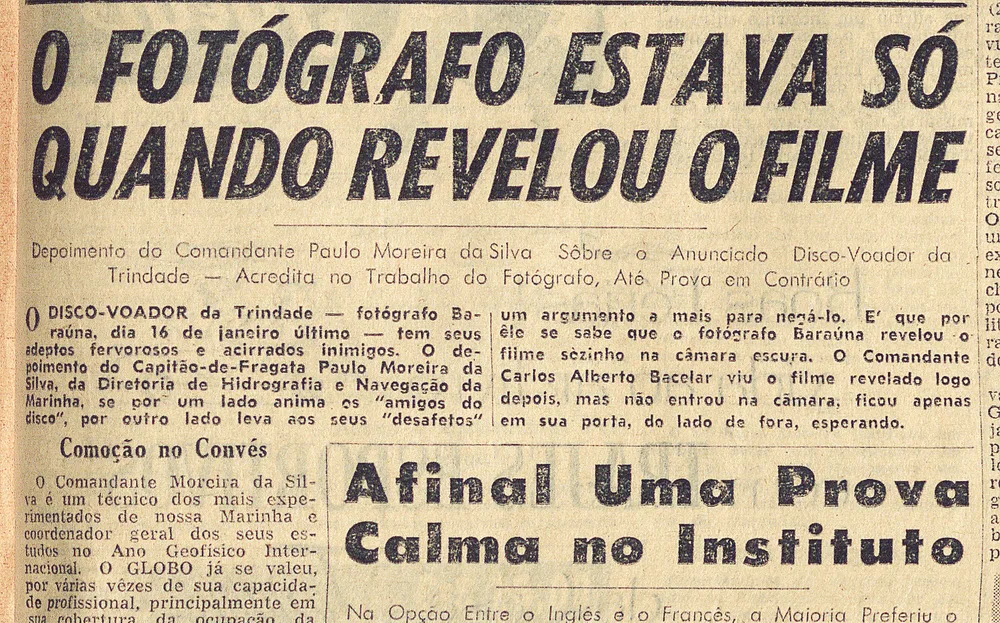
O Globo, 26 February 1958, page 3. Scan by ROMOVI via Wikimedia Commons, CC BY-SA 4.0. Read the case file →
Most famous, and near the bottom: Varginha, 1996 (4 / 12). Three young women reported a hunched, red-eyed creature crouched by a wall. Around that grew a thirty-year story of capture, a hospital and a body, with no photograph, document or physical sample ever produced. The town built a flying-saucer memorial anyway.
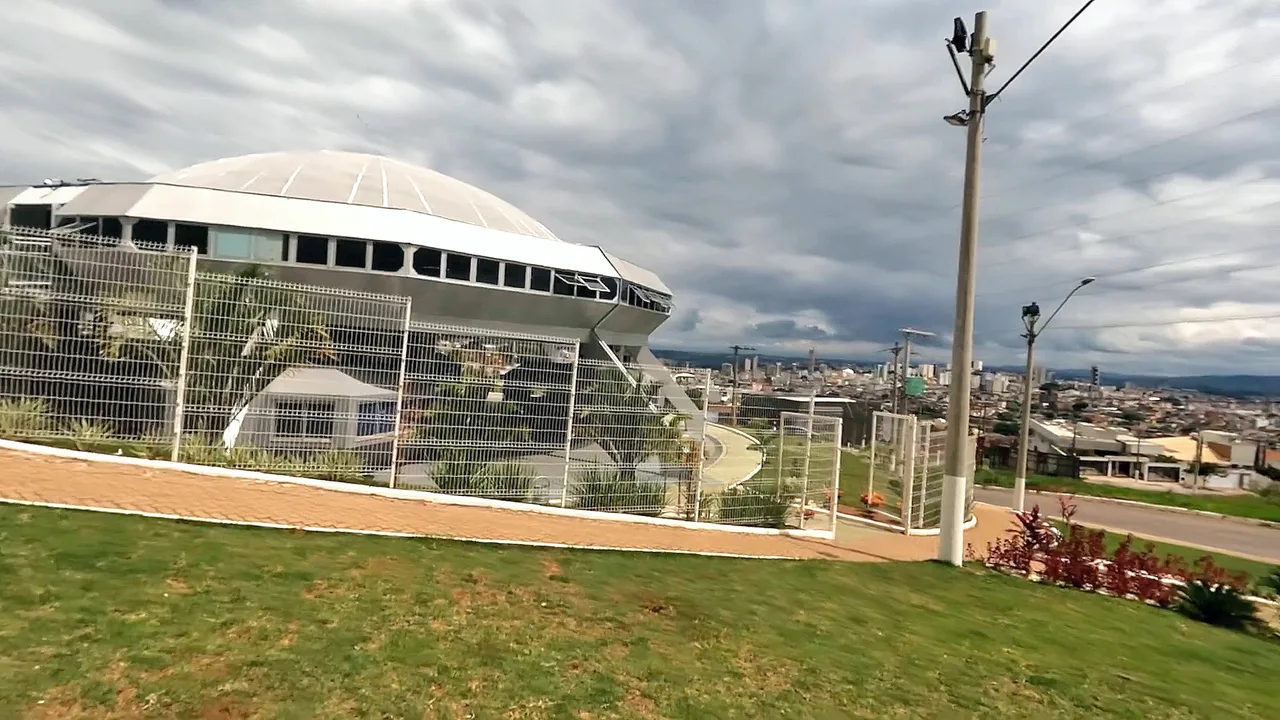
The Memorial do ET in Varginha, Minas Gerais, February 2025. Photo by Então Vamo! via Wikimedia Commons, CC BY-SA 4.0. What the evidence actually shows →
Mexico: the loudest sky with no official record
Most famous: the Campeche infrared video, 2004. On 5 March 2004 a Mexican Air Force surveillance aircraft on an anti-drug patrol over Campeche filmed eleven bright heat sources on its infrared camera. A Defence Department spokesman confirmed the tape was genuine. The crew said the lights seemed to surround them, and the radar operator counted “eight in the screen”, but according to the AP report only three objects ever showed up on the plane’s radar.

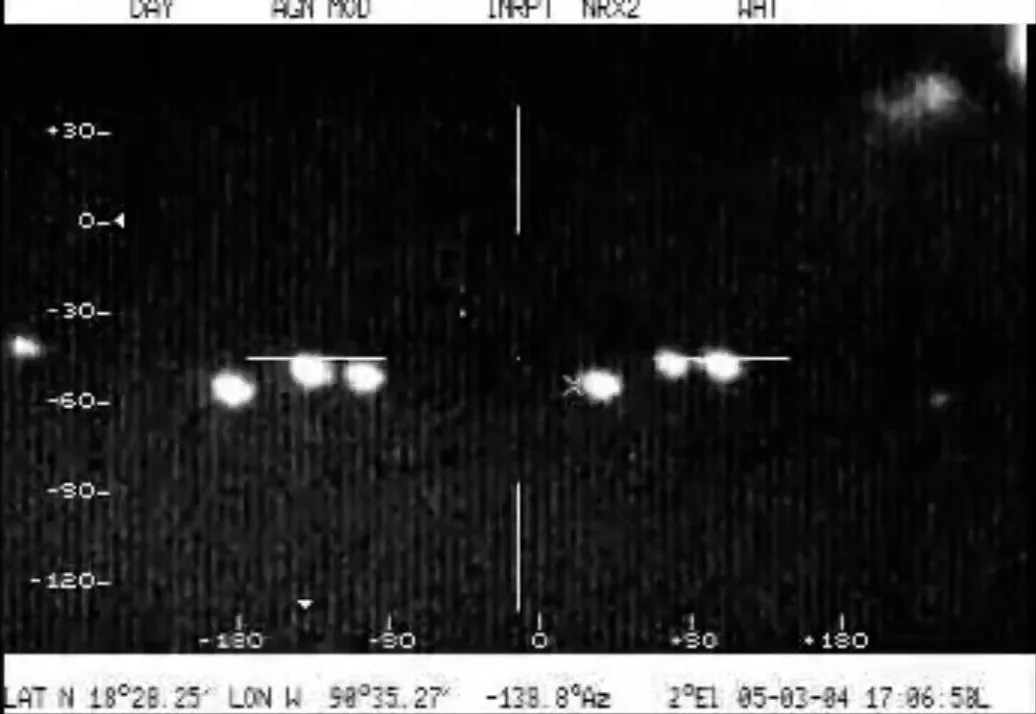
Frame from the Mexican Air Force video, released May 2004. Shown for commentary.
The leading explanation is mundane and specific. On that reading, the camera was pointed toward the Cantarell oil field in the Bay of Campeche, whose platforms burn off gas in very bright, very hot flares, and an infrared camera sees those flares from far beyond the horizon, where they can look like lights hanging in the sky. Skeptic magazine laid out the flare case within weeks. It fits the lights that line up in rows and do not show on radar. It fits less well with the crew’s account of lights that moved around the aircraft, which is why the case is still argued.
The route the video took to the public matters as much as the video. It was not released by the Air Force. The Defence Secretary gave it to Jaime Maussan, a television journalist who has been Mexico’s dominant UFO voice for decades, and he premiered it on national TV. That pattern repeats.
Most infamous: the “non-human” bodies in Congress, 2023 (2 / 12). In September 2023 Maussan presented small, three-fingered bodies to a hearing of Mexico’s Chamber of Deputies as non-human. Peruvian and international scientists who examined similar specimens concluded they are assembled from human and animal remains. It is the lowest-scoring case in this guide. The full story →
United Kingdom: a closed desk and a forest
Best evidenced: Rendlesham Forest, 1980 (10 / 12). Over three nights in December 1980, US Air Force security police at RAF Woodbridge in Suffolk reported a glowing, metallic object in the forest. The deputy base commander, Lt. Col. Charles Halt, took a radiation meter out on the third night and then wrote it up in a memo to the Ministry of Defence. That memo is why this case scores where it does: it is a signed, dated, contemporaneous record from a senior officer.
Lt. Col. Charles Halt, “Unexplained Lights” memorandum, 13 January 1981. US Government work, public domain, via Wikimedia Commons. Read the case file →
The MoD kept a UFO desk for decades and shut it in 2009, concluding the reports had no defence value. Between 2008 and 2013 the National Archives released 209 files, about 52,000 pages, of what it had collected.
Most infamous: the Alien Autopsy, 1995. Grainy black and white footage of surgeons dissecting a body, sold as a 1947 Roswell recovery, aired on Fox and Channel 4 and around the world. It was made in a flat in Camden, north London. The bodies were plaster casts filled with sheep brains, chicken entrails and raspberry jam, and the promoter, Ray Santilli, admitted in 2006 that it was staged, while still claiming he had once seen a real film it was based on.
Chile: the government that published its footage
Chile ran something rare for two decades: a UFO committee, CEFAA, inside its civil aviation authority, staffed by military officers, pilots and academics, which released its case files when it closed them.
Most famous: the Navy helicopter video, 2014. On 11 November 2014 a Chilean Navy Cougar helicopter on a coastal patrol west of Santiago filmed an object on its infrared camera for more than nine minutes. Neither nearby radar station could see it, and it did not answer radio calls. Twice it appeared to eject a long, hot plume. After two years of meetings, a majority of CEFAA’s committee classed it as unidentified and released the video in January 2017.

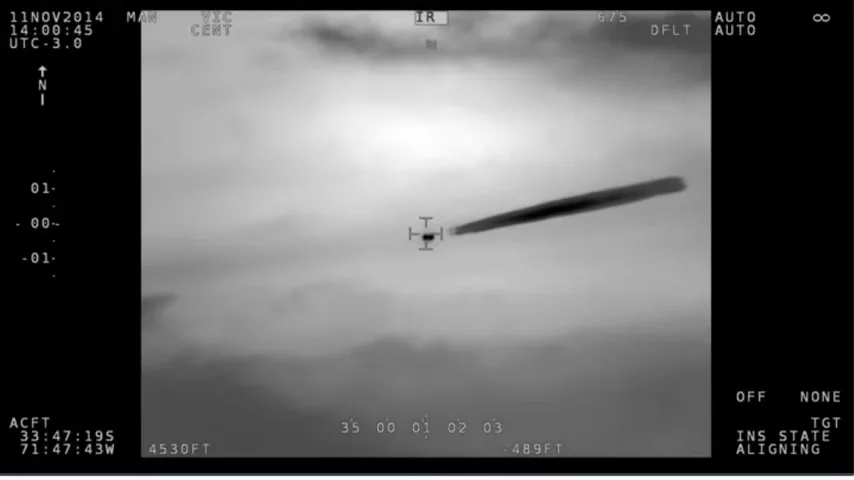
Frame from the Chilean Navy video released by CEFAA in 2017. Shown for commentary.
This is also the case that shows how a good file gets solved. French analysts brought in through GEIPAN had already suggested an airliner. Shortly after the release, researchers at Metabunk matched the object’s position to Iberia flight IB6830, an Airbus A340 that had just taken off from Santiago, and read the “plumes” as contrails switching on and off as the aircraft passed through humid air. CEFAA’s committee rejected the airliner idea, but the match is detailed and has not been refuted. Chile gets the credit either way: it released the full video, which is the only reason anyone could check.
France: the country that counts properly
France has no single legendary encounter to rival Roswell. What it has is better: the world’s longest-running government UFO office, GEIPAN, inside the national space agency since 1977, which classifies every case it investigates and puts the results online. Of 3,381 classified cases, 28.1% are fully identified, 38.7% probably identified, 30% unresolvable for lack of data, and 3.1% unidentified after investigation.
Its best-known file is Trans-en-Provence, 8 January 1981, where a farmer, Renato Nicolaï, reported a small disc landing in his field. Gendarmes took soil samples, and the agency’s investigators reported signs of compression and heating at the site. It remains one of the most cited physical-trace cases in the world, and unresolved.
Belgium: one wave, one famous fake
Most famous: the Belgian wave, 1989 to 1990 (8 / 12). Starting in November 1989, thousands of people, many of them gendarmes, reported silent black triangles with lights at the corners. On the night of 30 to 31 March 1990 the Belgian Air Force scrambled two F-16s and later published its own radar data, which it eventually attributed to atmospheric effects. The ground sightings have never been cleanly explained. Read the case file →
Most infamous: the Petit-Rechain photo, 1990. The single most reproduced image of the wave, a dark triangle with four lights, turned out to be exactly what it looks like. In 2011 its author, Patrick Maréchal, admitted on Belgian television that it was a painted polystyrene triangle with a light at each corner.
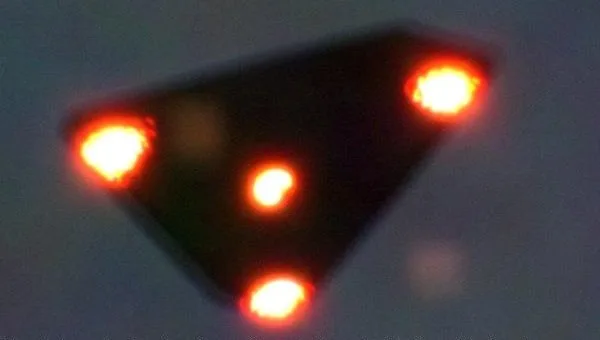
The Petit-Rechain photograph, April 1990. Confessed hoax, 2011. Public domain per Wikimedia Commons.
The hoax did not start the wave, which was already months old, but it did become its face, and that is the pattern to watch for in every hotspot. The most famous image of a real mystery is often not real.
Canada: steady reports and one government file
Canada logs about a thousand reports a year, 1,052 in 2025, with Ontario leading and Calgary the top city that year. It also has two of the better-documented cases in North America. At Shag Harbour, Nova Scotia (9 / 12) in October 1967, witnesses watched lit objects descend into the sea, and the RCMP, the Coast Guard and later Navy divers searched for it. At Falcon Lake, Manitoba (7 / 12) that May, a prospector came back with grid-pattern burns on his chest, and the RCMP and RCAF both investigated.
Honourable mentions
- Iran: the Tehran F-4 intercept of 1976 (10 / 12), in which a fighter’s weapons and communications failed as it closed on a light, and a US intelligence report called it a classic case.
- Zimbabwe: Ariel School, 1994 (5 / 12), sixty-two children describing the same landing.
- Australia: Westall, 1966 (5 / 12), about two hundred witnesses at a Melbourne school, and a balloon that may explain it.
- Colombia: the Buga sphere, 2025 (3 / 12), a metal ball whose extraordinary lab claims have never been independently checked.
What the map actually shows
Put the whole guide on one page and the hotspots stop looking like places the phenomenon prefers. They look like places with one of three things: a large population and an open hotline (the US, Canada), a single spectacular night that became national folklore (Belgium, Brazil), or a single persistent promoter (Mexico).
The strong cases follow a different rule. Every encounter in this guide that scores 10 out of 12, in the US, the UK, Brazil and Iran, involved military sensors or military witnesses and produced an official paper trail at the time. None of them arrived through a public report form, and none of them was the most famous case in its own country.
The number to remember is the small one. Where a government actually investigates, about three reports in a hundred survive. That is not proof of anything visiting. It is a measured, repeatable remainder, and it is where the serious work is.
Compare every scored case at the ranked case files, see them on the map, or read how the rubric works.
Every new case, scored the same way
One email when a case file lands, with its Signal-Strength score and what would move it. No hype, no 'BREAKING', and every claim carries its source. Unsubscribe anytime.
Frequently asked
Which country has the most UFO sightings? +
The United States, by a wide margin. The civilian National UFO Reporting Center, founded in 1974, logged its 200,000th report in August 2026, and the Pentagon's AARO held 1,870 reports as of May 2025. That lead mostly reflects population size and a long-running, easy-to-use public hotline rather than anything unusual about American skies.
Which countries investigate UFOs officially? +
France has the longest-running office, GEIPAN, inside the national space agency CNES since 1977, and it publishes its classified cases. Chile ran CEFAA inside its civil aviation authority from 1997. The United States has AARO in the Pentagon. The UK Ministry of Defence ran a UFO desk until 2009, and Brazil has transferred its Air Force UFO records to the National Archives.
What percentage of UFO sightings are never explained? +
Where the data is published, about three percent. France's GEIPAN classes 3.1% of its 3,381 classified cases as unidentified after investigation, with another 30% lacking enough data to judge. Canada's 2025 civilian survey put a little over 3% of 1,052 reports in its unexplained category. Unexplained means unexplained, not alien.
What is the most famous UFO case in Mexico? +
The 5 March 2004 Mexican Air Force infrared video over Campeche, in which a surveillance crew filmed eleven bright heat sources. The Defence Department confirmed the footage was genuine and it was released through journalist Jaime Maussan. The leading explanation is that the camera was recording distant gas flares from offshore oil platforms, and the crew's radar showed only three returns.
What is the best-evidenced UFO case outside the United States? +
On this site's four-axis rubric, three cases tie at 10 out of 12: Rendlesham Forest in England in 1980, the Tehran F-4 intercept in Iran in 1976, and Brazil's 1986 Night of the UFOs. Each combines military witnesses, instrument data and an official record, and none has a confirmed explanation.
Sources
- [1] NUFORC, 'NUFORC Logs its 200,000th UFO Report' (7 Sep 2026)
- [2] AARO, FY2025 Consolidated Annual Report on UAP (1,870 reports as of 30 May 2025)
- [3] GEIPAN / CNES, case statistics (3,381 classified cases, A/B/C/D shares)
- [4] The Canadian Press via Global News, Ufology Research 2025 Canadian UFO Survey (10 Mar 2026)
- [5] The National Archives (UK), UFO files highlights guide, final release 2013
- [6] USA Today, 'Britain's defense ministry releases its final UFO files' (21 Jun 2013)
- [7] CBS News / AP, 'Mexican A.F. Pilots Film UFOs' (May 2004)
- [8] James C. Smith, 'Mexican Air Force UFO affair: aliens, ball lightning, or flares?', Skeptic vol. 11 no. 2 (2004)
- [9] Leslie Kean, 'Groundbreaking UFO Video Just Released By Chilean Navy', HuffPost (5 Jan 2017)
- [10] Metabunk, 'Chilean Navy UFO video: aerodynamic contrails, flight IB6830'
- [11] Wikipedia, Alien Autopsy (1995 film)
- [12] Wikipedia, Trans-en-Provence case
- [13] Wikimedia Commons, McMinnville UFO photograph by Paul Trent (public domain)
- [14] Wikimedia Commons, Petit-Rechain photograph (public domain)
- [15] Wikimedia Commons, O Globo, 26 Feb 1958, p. 3, Trindade coverage (CC BY-SA 4.0)
- [16] Wikimedia Commons, Memorial do ET de Varginha, by Então Vamo! (CC BY-SA 4.0)
Read next
More History & Lore → Roswell 1947: What the Paperwork Actually Says
The most famous UFO case in the world has a thick official record and a thin evidentiary one. Scored on our own rubric, it lands below cases nobody has heard of.
Brazil's UFO Cases, Ranked by Evidence: Why the Most Famous One Comes Last
Brazil has the deepest UFO archive in the Southern Hemisphere: a Navy photo sequence, a four-month Air Force field investigation, a night of radar intercepts confirmed by a cabinet minister, a metal sample analysed for sixty years, and a creature story that became a tourist industry. Scored on the same four axes, they line up in almost exactly the reverse order of their fame.
The Night of the UFOs: Brazil Scrambled Its Air Force in 1986, and the Minister Said He Had No Explanation
On 19 May 1986, radar across four Brazilian states tracked objects nobody could identify, five fighters went up after them, and four days later the sitting Minister of Aeronautics stood in front of the press with his pilots and said, on the record, that the Air Force had no explanation. It is almost unknown outside Brazil, and by a transparent evidence rubric it is the best-documented case the country has, far above the one everybody has heard of.
Follow the thread
New disclosure reporting, physics breakdowns, and case files, in your inbox. Sources or it didn't happen. No spam, unsubscribe anytime.