Roswell 1947: What the Paperwork Actually Says
The most famous UFO case in the world has a thick official record and a thin evidentiary one. Scored on our own rubric, it lands below cases nobody has heard of.
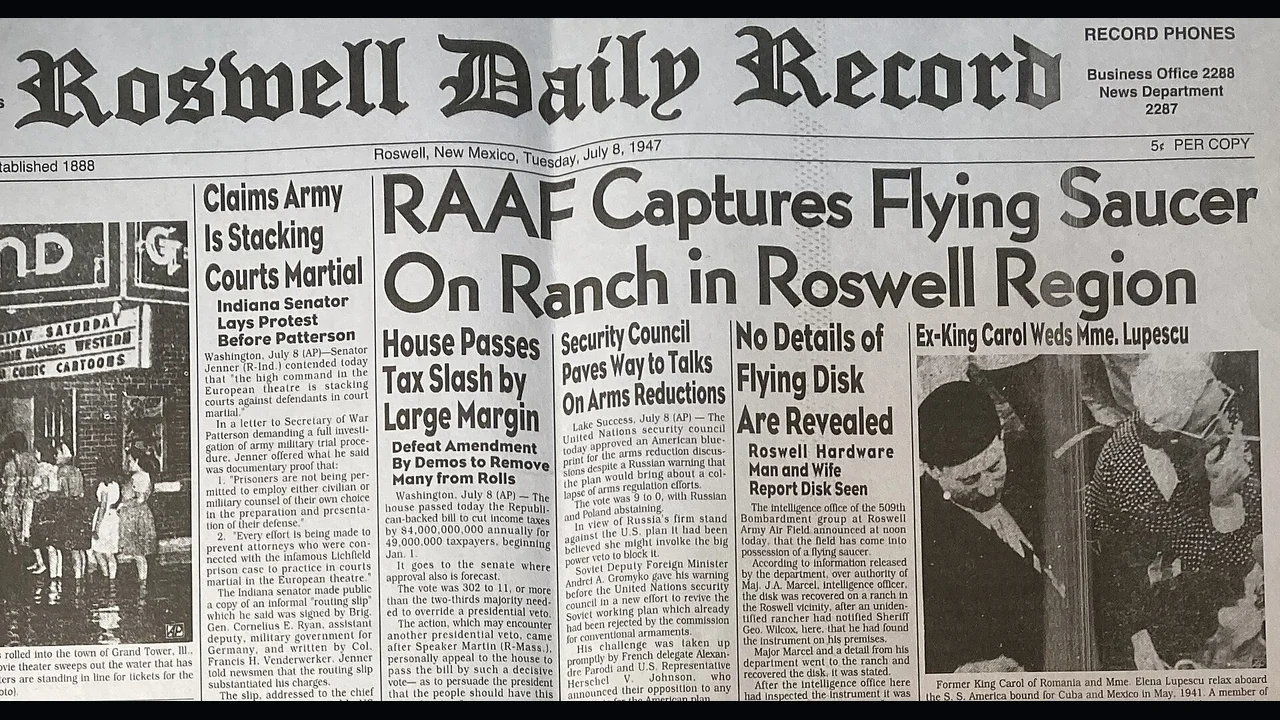
In July 1947 the Roswell Army Air Field press office announced it had recovered a 'flying disc' from a ranch northwest of Roswell, New Mexico, and retracted the claim the same day, identifying the debris as a balloon. Two US Air Force reports (1994 and 1997) and a 1995 GAO records audit attribute the material to Project Mogul, a classified balloon program for detecting Soviet nuclear tests. No physical evidence of a non-human craft from Roswell has ever been produced, and the extraordinary witness testimony dates from 1978 onward, thirty years after the event.
Roswell is the only UFO case that non-believers can name, and it is the case that scores worst relative to its fame. That gap is the story.
We rank cases on four axes, each worth 0 to 3: how good the witnesses are, whether an instrument recorded anything, whether the event entered an official record, and how well the case survives contact with a mundane explanation. Roswell scores 5 out of 12. Shag Harbour, a Canadian case most people have never heard of, scores 9.
Nobody wants that result. It is still the result.
What happened in eight days of 1947
In late June or early July, rancher W.W. Brazel found a scatter of debris on the Foster ranch, roughly 75 miles northwest of Roswell. He brought some of it into town on 7 July. On 8 July the Roswell Army Air Field press office, over the name of public information officer Walter Haut, announced that the 509th Bomb Group had come into possession of a flying disc.
That release is the single strangest document in the case, and it is also the only one written by anyone who was there. It ran on the wires within hours. By that evening, Brig. Gen. Roger Ramey at Fort Worth had the material photographed on his office floor and identified it as a weather balloon and a radar target. The press moved on the next day.
Brazel described the material to the Roswell Daily Record himself: rubber strips, tinfoil, tough paper, sticks, and tape. The whole lot, he estimated, weighed about five pounds and would have bundled into a package three feet across. Nothing in his own account is difficult to account for.
Then nothing happened for thirty one years
This is the part usually skipped. Between 1947 and 1978, Roswell was not a famous case. It was not a case at all. It does not appear in the UFO literature of the 1950s and 1960s in any meaningful way.
It returns in 1978, when Stanton Friedman interviews Maj. Jesse Marcel, the RAAF intelligence officer who had handled the debris. The Roswell Incident, by Charles Berlitz and William Moore, follows in 1980. The bodies, the second crash site, the mortician, the nurse, the threats against witnesses: all of it enters the record after 1978, from testimony recalled three decades later, much of it collected by researchers who had already decided what happened.
Memory is not a preserved artifact. It is a reconstruction, and it reconstructs toward the story the person has since heard. That is not an accusation against any witness. It is the reason the witness axis scores weak here while it scores strong at Ariel School, where sixty odd children were interviewed within days and drew pictures before anyone told them what to think.
What the Air Force said, and where it is weak
The 1994 report, The Roswell Report: Fact vs. Fiction in the New Mexico Desert, identified the debris as a Project Mogul balloon train. Mogul was a classified attempt to detect Soviet nuclear tests acoustically from high altitude, using long strings of neoprene balloons carrying radar reflectors. The reflectors were built from foil, balsa and reinforcing tape. The tape carried a printed floral pattern, which is the mundane candidate for the famous “hieroglyphics” on the beams.
This part holds up well. It explains why the material was odd enough to be worth a press release and boring enough to be dropped by nightfall, and it explains why the retraction was so fast, because a classified programme had just been discussed on the wires.
The 1997 sequel, Case Closed, is where the Air Force overreaches. It attributes the body reports to anthropomorphic test dummies dropped in New Mexico for high altitude parachute research, and asks the reader to accept that witnesses compressed events from 1953 to 1959 back into 1947. That is a real psychological effect, and it is also a six year gap being papered over with confidence. We do not have to defend the Air Force’s weakest chapter to notice that its strongest one still stands.
The records that are actually missing
The honest anomaly in this case is administrative. The 1995 GAO audit, requested by Rep. Steven Schiff, went looking for Roswell records and found a hole. RAAF administrative records covering March 1945 to December 1949, and outgoing messages from October 1946 to December 1949, had been destroyed. The GAO reported that it could find no disposition authority for the destruction and could not establish who did it or when.
That is a genuine finding and it deserves to be stated without decoration. It is not evidence of a craft. It is evidence that the paper trail for the exact window was not kept, in an era when a great deal was not kept.
The memo everyone cites, which is not about Roswell
The FBI’s Guy Hottel memo, dated 22 March 1950, describes an informant’s account of three flying saucers recovered in New Mexico with occupants in metallic suits. It is the most viewed document in the FBI Vault, and it is routinely presented as Roswell confirmation.
It is dated nearly three years after Roswell, it names no location tied to the case, and the FBI itself notes there is no reason to connect the two. It is third hand and the Bureau never followed it up. Cite it if you like, but cite it as what it is.
Where that leaves the score
Official record: strong. There is a press release, a same day retraction, an FBI file, two Air Force reports and a GAO audit. Few cases have that much paper.
Witnesses: weak. The contemporaneous ones describe balloon debris. The extraordinary ones arrived after 1978.
Instrumentation: none. There is no radar plot, no photograph of anything unexplained, no measurement.
Stands up to scrutiny: weak. Mogul is a specific, documented, testable explanation that fits the debris description given by the man who found it.
Total: 5 out of 12, which puts Roswell in the contested tier, below Colares, below Kecksburg, and well below the cases with instruments attached.
Roswell’s real significance is not evidentiary, it is structural. It is the case that taught the field its grammar: the crash, the retrieval, the cover story, the silenced witness. Every later claim is told in that grammar, including the ones with better evidence. Understanding Roswell as the founding myth rather than the founding proof makes the rest of the field easier to read.
The full ranking, and how we score, is at the case index and the methodology.
Every new case, scored the same way
One email when a case file lands, with its Signal-Strength score and what would move it. No hype, no 'BREAKING', and every claim carries its source. Unsubscribe anytime.
Frequently asked
What crashed at Roswell in 1947? +
The US Air Force concluded in 1994 and 1997 that the debris came from Project Mogul, a classified programme that flew long trains of neoprene balloons carrying radar reflectors to listen for Soviet nuclear tests. The radar reflectors used foil, balsa struts and reinforcing tape, which matches the rancher's own contemporaneous description of the material.
Did the Air Force admit it recovered a flying saucer? +
The Roswell Army Air Field press office issued a release on 8 July 1947 saying the 509th Bomb Group had recovered a flying disc. Later the same day the commanding general of the Eighth Air Force identified the material as a balloon and radar target, and the story died in the press within twenty four hours.
Were bodies recovered at Roswell? +
No body has ever been produced and no contemporaneous document describes one. Claims about bodies first appear in the late 1970s and 1980s. The Air Force response, that witnesses were recalling anthropomorphic crash test dummies dropped in New Mexico, is the weakest part of its explanation, because those drops began in 1953.
Are government records about Roswell missing? +
Yes. A 1995 GAO audit found that Roswell Army Air Field administrative records from March 1945 to December 1949, and outgoing messages from October 1946 to December 1949, had been destroyed with no disposition authority on file. The GAO did not determine who destroyed them or why.
Sources
- [1] GAO, Government Records: Results of a Search for Records Concerning the 1947 Crash Near Roswell, New Mexico (NSIAD-95-187, 1995)
- [2] US Air Force, The Roswell Report: Case Closed (1997), via GovInfo
- [3] US Air Force, The Roswell Report: Case Closed (full PDF, DoD FOIA Reading Room)
- [4] FBI, UFOs and the Guy Hottel Memo
- [5] FBI Records: The Vault, Roswell UFO file
Read next
More History & Lore →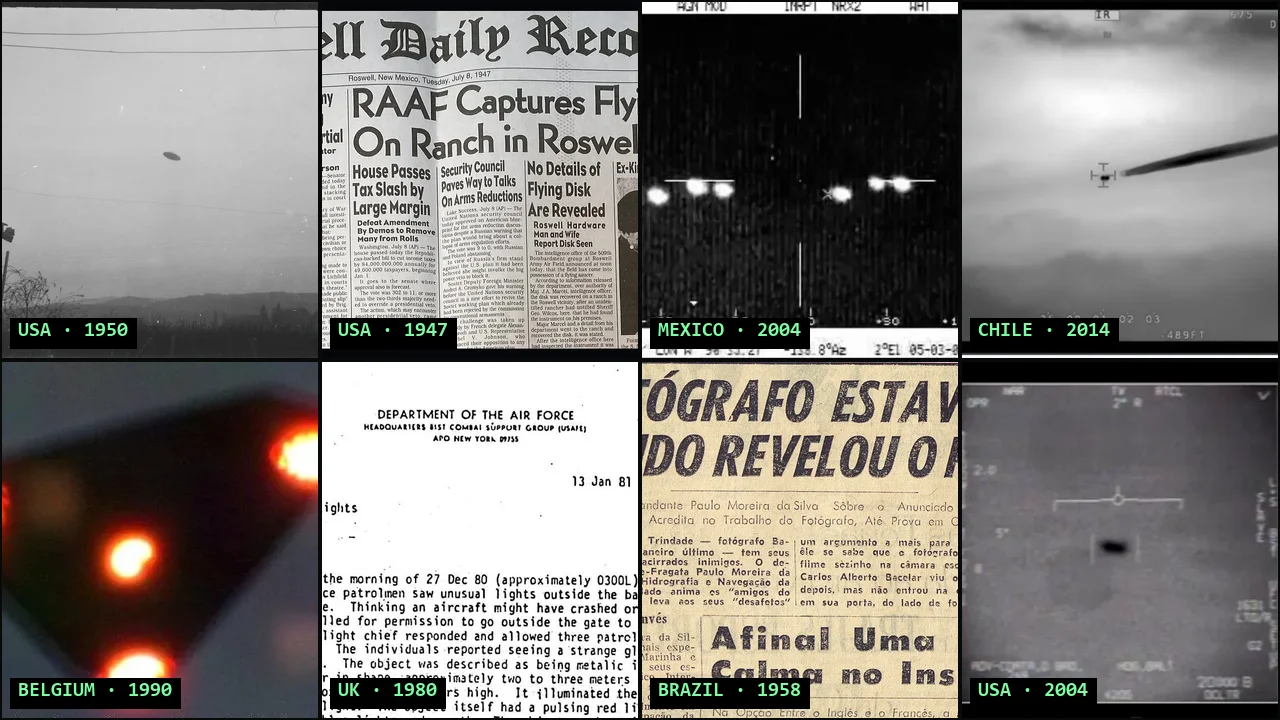
The World's UFO Hotspots, Country by Country: Where the Encounters Cluster, and Which Ones Hold Up
The United States logs more UFO reports than anywhere on Earth, Brazil and Mexico have the loudest traditions, and France and Chile run the most serious government offices. Here is each hotspot's most famous and most infamous encounter, with the real footage and documents, scored on the same four axes.

The Ariel School Encounter, 1994: Sixty-Two Children, One Story, Thirty Years
During morning break at a rural Zimbabwean school, sixty-two children reported a landed craft and small beings at the edge of the playground. The adults weren't outside. The children never recanted. It is the most unsettling mass close encounter on record, and the hardest to score.
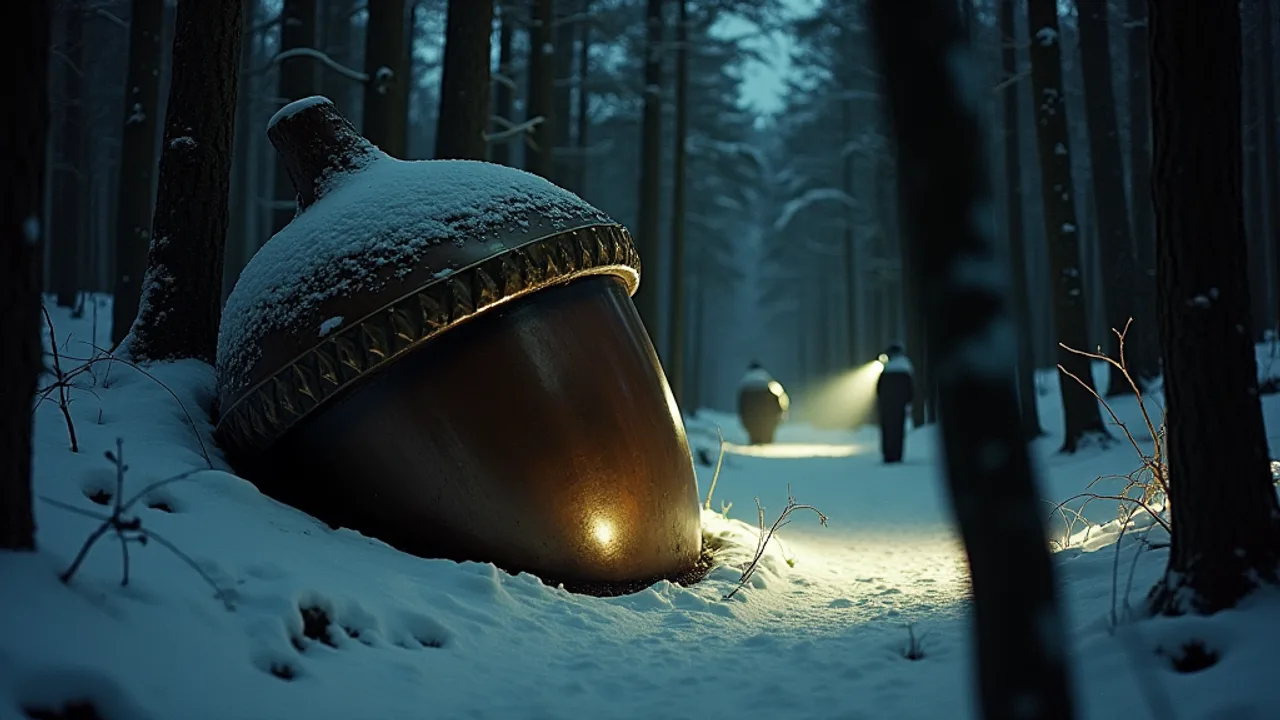
Kecksburg, 1965: The Acorn in the Woods and the Records NASA Lost
A fireball crossed six states, something was reported down in a Pennsylvania wood, witnesses describe an acorn-shaped object with strange markings and a military cordon, and forty years later NASA said it had examined the debris, called it a Soviet satellite, and lost the records.
Follow the thread
New disclosure reporting, physics breakdowns, and case files, in your inbox. Sources or it didn't happen. No spam, unsubscribe anytime.