Kecksburg, 1965: The Acorn in the Woods and the Records NASA Lost
A fireball crossed six states, something was reported down in a Pennsylvania wood, witnesses describe an acorn-shaped object with strange markings and a military cordon, and forty years later NASA said it had examined the debris, called it a Soviet satellite, and lost the records.
 AI illustration
Crash-retrieval stories are the weakest genre in ufology, because they require the most evidence and reliably produce the least: no wreck, no paper, no photographs, just testimony that all three existed and were taken away. Kecksburg is the genre’s most interesting entry, for one reason. Here, decades later, a government agency agreed that something was recovered, and then couldn’t find its own records.
On the afternoon of December 9, 1965, a brilliant fireball crossed the sky over the Great Lakes, witnessed by thousands from Michigan through Ohio into Pennsylvania and Ontario. Sonic booms were reported; small grass fires and debris reports came in across several states. Astronomers who reconstructed the trajectory concluded it was a bolide, an exceptionally bright meteor, and for most of the region, that was the end of it.
In the small village of Kecksburg, southeast of Pittsburgh, it wasn’t.
The acorn
Local residents, most insistently a young boy’s mother, then volunteer firefighters and neighbors who walked into the woods, reported finding, half-buried in a wooded ravine, an object unlike a meteorite: metallic, acorn-shaped, the size of a small car, bronze-to-gold in color, with no rivets or seams, and around its base a raised band carrying markings some witnesses compared to hieroglyphics. Within hours, witnesses say, the area filled with military and other officials; the woods were cordoned; civilians were ordered out; and late that night a flatbed truck carrying something under tarpaulin was seen leaving the area. The official statement at the time: searchers entered the woods and found nothing.
Those two sentences, we found an acorn-shaped craft and we found nothing, have faced each other across this case for sixty years. The witnesses never produced a photograph of the object; the government never produced an explanation for the cordon the witnesses describe. The story survived on local memory and got its national second life from television (Unsolved Mysteries staged a model of the acorn in 1990 that still stands in Kecksburg as a roadside landmark).
NASA’s own goal
In December 2005, on the fortieth anniversary, NASA managed to make the case permanently un-dismissable. A spokesman told reporters that NASA examiners had gone over metallic debris from the site at the time, that it was identified as part of a re-entering Russian satellite, and that the records documenting this had been lost in the 1990s.
Read that against the 1965 statement and the problem is obvious: nothing was found and we examined the debris and lost the paperwork cannot both be true. Worse for the prosaic account, the named candidate doesn’t fit. The Soviet Venus probe Kosmos-96 did fall out of orbit that same day, but US Space Command tracking places its re-entry about thirteen hours before the fireball, over Canada. Orbital analysts have found no other catalogued object that works. So NASA’s explanation invokes a satellite that, as far as anyone can verify, wasn’t there.
Journalist Leslie Kean, the same reporter who later carried Belgian general De Brouwer’s testimony into print and co-broke the 2017 New York Times AATIP story, sued NASA under FOIA over the missing records. In 2007 a federal judge, openly exasperated, ordered the agency to conduct a real search. Hundreds of pages were eventually produced. None of them answered the question.
The honest read
The skeptical reconstruction remains the strongest single account: the fireball was a bolide; nothing necessarily landed at Kecksburg at all; a search of dark December woods found nothing because there was nothing; the acorn grew in memory from a few minutes of confusion, fed by decades of retelling. It explains the astronomy perfectly and the absence of physical evidence effortlessly. What it handles poorly is the officialdom, why witnesses consistently describe an immediate, organized military response to an empty wood, and why NASA, of all agencies, volunteered forty years later that it had examined debris it then couldn’t document.
On our rubric that nets out: witnesses moderate (thousands saw a fireball, but the object in the woods rests on a handful); instrumentation weak (the bolide was well recorded; the acorn left nothing); official record moderate, the rare crash case with a real federal court order and an on-record agency admission in the file; debunk-resistance weak, because the meteor account genuinely covers most of it. That places Kecksburg in Contested territory on the ranked evidence index, structurally the American cousin of Varginha: a retrieval story where everything interesting was allegedly driven away on a truck, and the paperwork that could settle it is missing on purpose or missing because it never existed. At Kecksburg, uniquely, the government has managed to claim both.
Every new case, scored the same way
One email when a case file lands, with its Signal-Strength score and what would move it. No hype, no 'BREAKING', and every claim carries its source. Unsubscribe anytime.
Frequently asked
What fell at Kecksburg in 1965? +
Officially, nothing. A brilliant fireball crossed the Great Lakes region on December 9, 1965, and astronomers concluded it was a meteor. Some Kecksburg residents reported a metallic acorn-shaped object the size of a small car in the woods, and a military presence that evening, but no recovered object has ever been produced.
What did NASA say about Kecksburg? +
In 2005 a NASA spokesman said the agency had examined metallic debris from the site at the time, identified it as part of a Soviet satellite, and that the relevant records had been lost in the 1990s. That statement contradicted the official 1965 line that nothing was found, and the satellite explanation is disputed on orbital-mechanics grounds.
Was the Kecksburg object the Kosmos-96 Venus probe? +
Probably not. Kosmos-96, a failed Soviet Venera probe, re-entered the atmosphere the same day, which made it the leading candidate, but US Space Command data places its re-entry roughly thirteen hours before the fireball, over Canada. If something man-made came down at Kecksburg, it has never been convincingly identified.
What happened in the Leslie Kean NASA lawsuit? +
Journalist Leslie Kean, backed by the Coalition for Freedom of Information, sued NASA under FOIA over the missing Kecksburg records. In 2007 a federal judge ordered NASA to conduct a proper search of its files. The search produced hundreds of pages but no document explaining what, if anything, was recovered.
Sources
Read next
More History & Lore →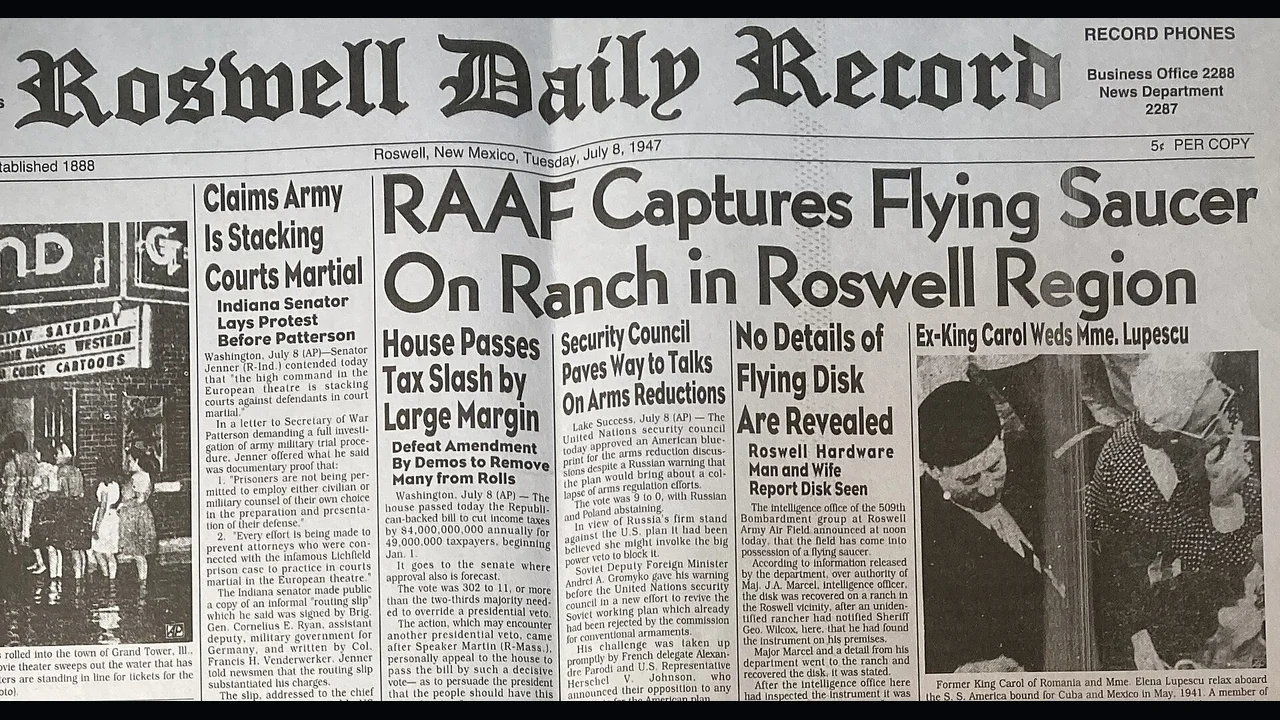
Roswell 1947: What the Paperwork Actually Says
The most famous UFO case in the world has a thick official record and a thin evidentiary one. Scored on our own rubric, it lands below cases nobody has heard of.

The Varginha Incident, Explained: Brazil's 'Roswell' and What the Evidence Actually Shows
In January 1996, three young women in Varginha, Brazil said they saw a hunched, red-eyed creature crouched by a wall. Thirty years later it's the most famous UFO case in the Southern Hemisphere, wrapped in claims of a military capture, a dead soldier, and a body flown to a university. Here's what was actually witnessed, what only got attached later, what the Brazilian Army's own inquiry concluded, and how the case scores once you separate the sighting from the legend.
The Las Vegas Backyard, 2023: A 911 Call, a Meteor, and Two Very Tall Problems
A fireball crossed four states, a family called police forty minutes later, and body cameras recorded the aftermath. It is the best documented entity report of the decade and it still does not get you to entities.
Follow the thread
New disclosure reporting, physics breakdowns, and case files, in your inbox. Sources or it didn't happen. No spam, unsubscribe anytime.