The Ariel School Encounter, 1994: Sixty-Two Children, One Story, Thirty Years
During morning break at a rural Zimbabwean school, sixty-two children reported a landed craft and small beings at the edge of the playground. The adults weren't outside. The children never recanted. It is the most unsettling mass close encounter on record, and the hardest to score.
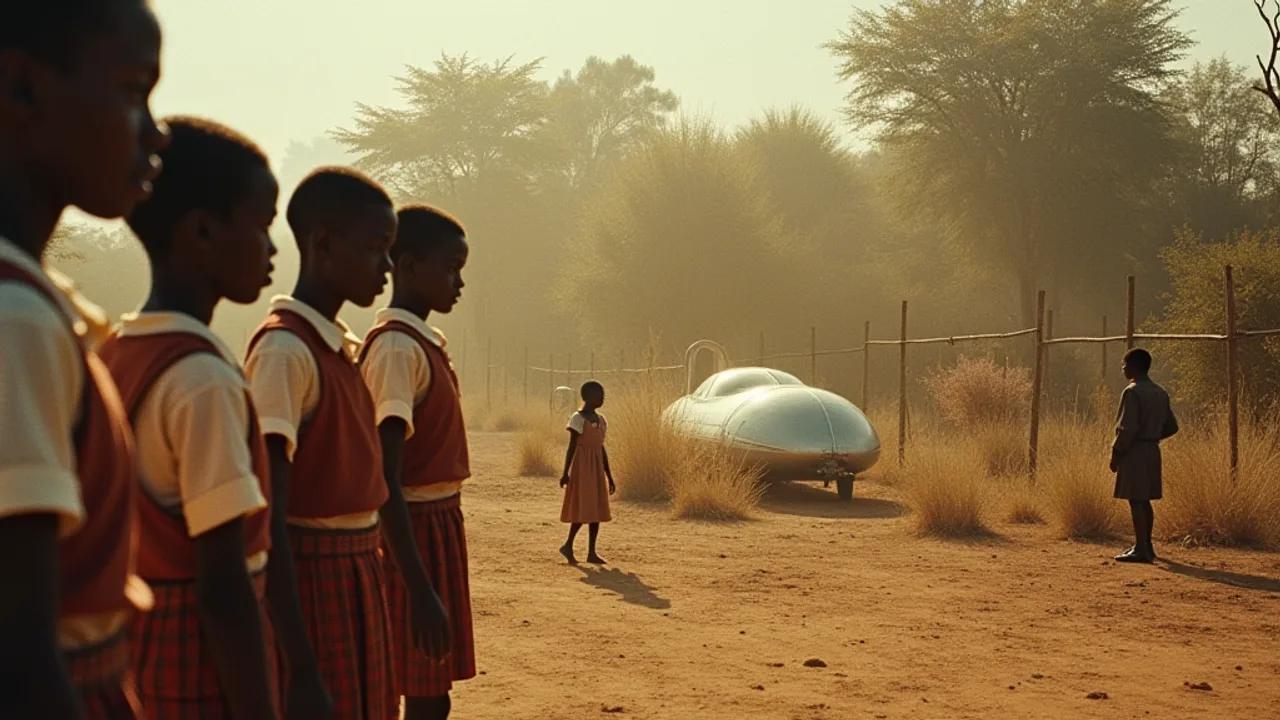 AI illustration
Every case in our index is carried by something, radar, paperwork, photographs, adult witnesses with reputations to lose. Ariel is carried by sixty-two children. Depending on what you believe about children, that makes it the weakest case in the catalog or one of the strongest, and the honest answer is that it is both at once.
On the morning of September 16, 1994, the Ariel School, a small private school in farmland outside Ruwa, Zimbabwe, let its students out for break while the staff held a meeting indoors. Around 10:15, children at the edge of the playground began seeing something in the scrubland just beyond the boundary: by most accounts a silver craft, or several, that came down low or landed, and beside it one or two small figures in tight dark clothing, with large heads and very large black eyes. Some children said a being moved toward them in an odd, gliding way; the younger ones screamed and ran. The older ones stared. Break ended; the thing was gone.
The teachers, crucially, saw nothing, they were inside. When the children poured in talking over each other, the adults assumed a game. It took parents’ phone calls, then Zimbabwean UFO researcher Cynthia Hind arriving within days, then the BBC’s Harare correspondent Tim Leach, a war reporter, not a credulous man, filming the children, for it to become clear the students were not playing. Hind had the children draw what they saw, separately. The drawings, dozens of them, show the same object and the same figure.
The Mack interviews, asset and liability
Two months later, John E. Mack, the Pulitzer-winning Harvard psychiatrist who had staked his reputation on taking encounter experiencers seriously, flew to Ruwa with a colleague and spent two days interviewing the children on camera. The footage, central to the 2022 documentary Ariel Phenomenon, is hard to watch unmoved: small children, calm and matter-of-fact, describing the eyes (“like rugby balls”), the feeling of being looked into, and, from several of the older ones, a received impression that the world was being harmed, trees gone, air unbreathable, delivered without words.
Mack is the case’s asset and its liability in one person. Asset, because a senior clinical interviewer judged the children sincere and untutored, and his tapes preserved their accounts fresh. Liability, because Mack arrived already convinced such encounters were real, and skeptics have argued ever since that his interviews, and the adult excitement that preceded them, helped shape the story they were recording.
The skeptical case, given fully
It has real legs. Two nights earlier, on September 14, the re-entry of a Zenit-2 rocket booster broke up in a slow, brilliant fireball seen across southern Africa, and Zimbabwean radio spent the following days full of UFO talk. The children, primed by that, had break-time, a distant glint, perhaps a person beyond the fence; one excited claim becomes a contagious one; children’s memories are famously suggestible; and every later interview, Hind’s, Leach’s, Mack’s, risked annealing a group story into individual certainty. On our rubric that earns the case a real debunk path and costs it accordingly.
What the prosaic account has never managed cleanly is the content at close range: dozens of separate drawings of the same being made within days, the specificity and emotional weight of the close-up descriptions, and the fact that, unlike playground rumors, which inflate, the accounts have stayed fixed for thirty years. The witnesses interviewed as adults in Ariel Phenomenon, some now in their forties on other continents, tell the story with the same details and visible reluctance. People do not usually carry a childhood fib that far at personal cost. They do, sometimes, carry a sincere false memory. Choosing between those is the entire case.
Where it lands
Scored honestly on the rubric: witnesses strong, not because children outrank adults but because sixty-two near-simultaneous, separately-recorded, never-recanted accounts is an extraordinary human dataset; instrumentation none, no photo, no trace, nothing physical; official record none, no government in the chain at all, only journalists and researchers; debunk-resistance moderate, the rocket-priming theory is plausible but has to do a lot of unshown work to reach the close-range detail. That lands Ariel in Contested territory, the same shelf as Westall 1966, its closest structural cousin: a schoolyard, daylight, a crowd of young witnesses, and not one object you can put in a lab. Two schools, twenty-eight years apart, on two continents, with the same shape of mystery, and the same hole where the evidence should be.
Every new case, scored the same way
One email when a case file lands, with its Signal-Strength score and what would move it. No hype, no 'BREAKING', and every claim carries its source. Unsubscribe anytime.
Frequently asked
What happened at the Ariel School in 1994? +
On September 16, 1994, during morning break at the Ariel School in Ruwa, Zimbabwe, sixty-two children aged roughly six to twelve reported seeing one or more silver craft land or hover at the edge of the schoolyard, and one or two small black-eyed beings nearby. The teachers were in a staff meeting and saw nothing.
Did the Ariel School children ever admit it was made up? +
No. The witnesses were interviewed within days by researcher Cynthia Hind and BBC correspondent Tim Leach, two months later by Harvard psychiatrist John Mack, and again as adults for the 2022 documentary Ariel Phenomenon. The core accounts have stayed consistent for three decades, and no participant has recanted.
What is the skeptical explanation for the Ariel School incident? +
Two days earlier, the re-entry of a Zenit rocket booster produced a spectacular fireball seen across Zimbabwe, and UFO talk saturated local radio. Skeptics argue the children, primed by that excitement, misread something mundane and built a shared narrative through suggestion and group dynamics, and that John Mack's interviews came with a believer's framing.
What did the children say the beings told them? +
Several children described receiving a wordless impression, most famously a warning that the world was being damaged, that trees would die and the air would become hard to breathe. Whether that content came from the entities, from the children's own minds, or from the interviewing process is exactly the contested part.
Sources
Read next
More History & Lore →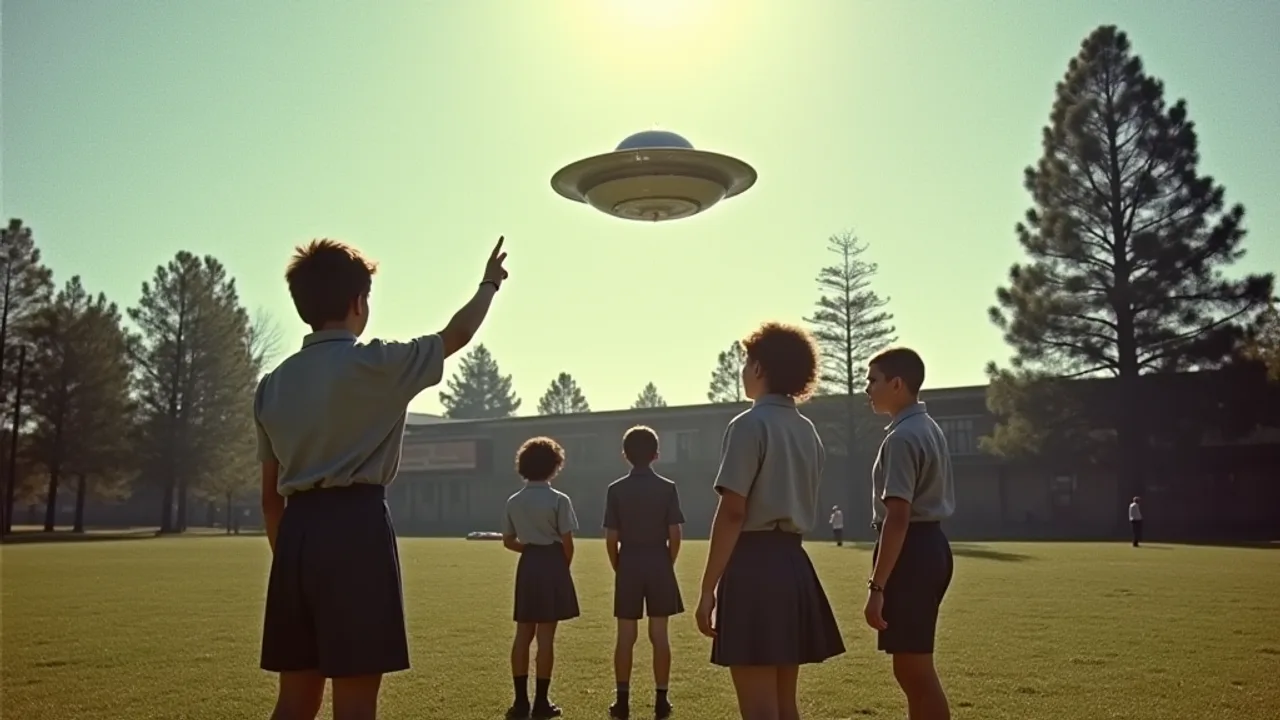
The Westall UFO, 1966: Two Hundred Witnesses and a Balloon That Might Explain It
Australia's biggest mass UFO sighting happened in a schoolyard in broad daylight: students and teachers watched a silvery disc descend behind the trees, then climb away. Sixty years on there is still no official file, and one prosaic theory that almost fits.
Roswell 1947: What the Paperwork Actually Says
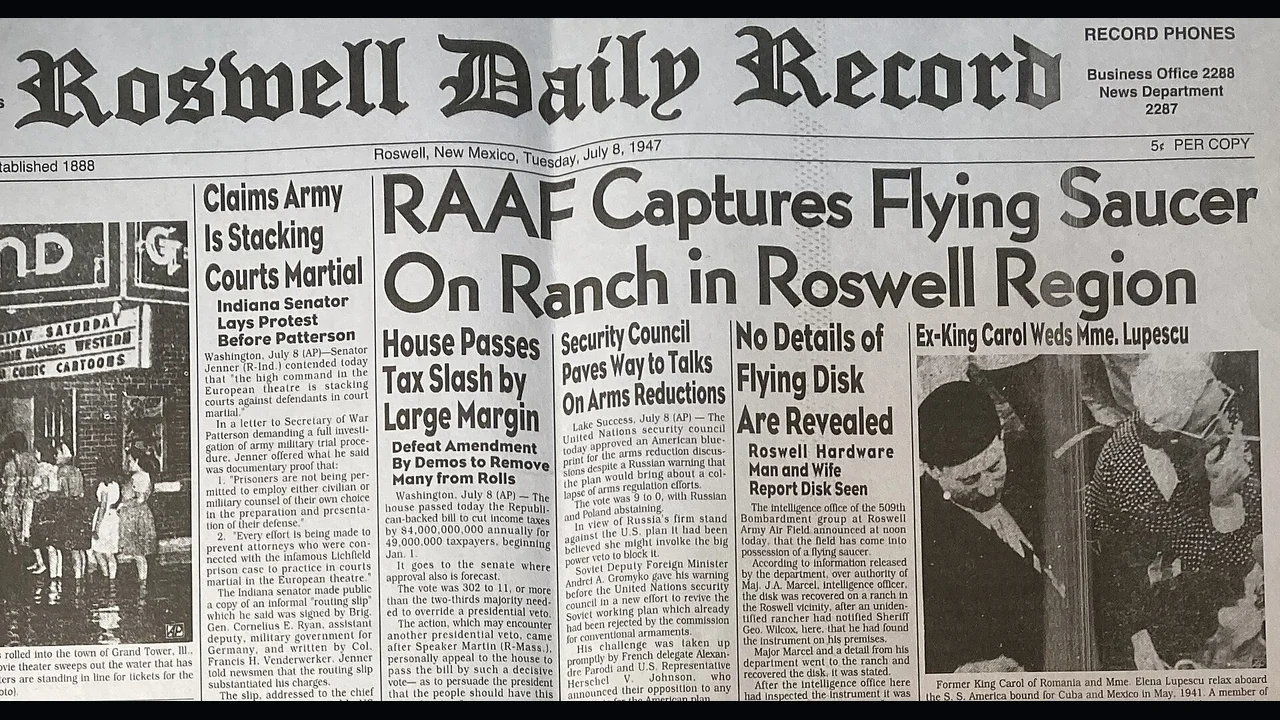
The most famous UFO case in the world has a thick official record and a thin evidentiary one. Scored on our own rubric, it lands below cases nobody has heard of.
The USS Nimitz Tic Tac, 2004: The Best-Documented UAP Case on Record
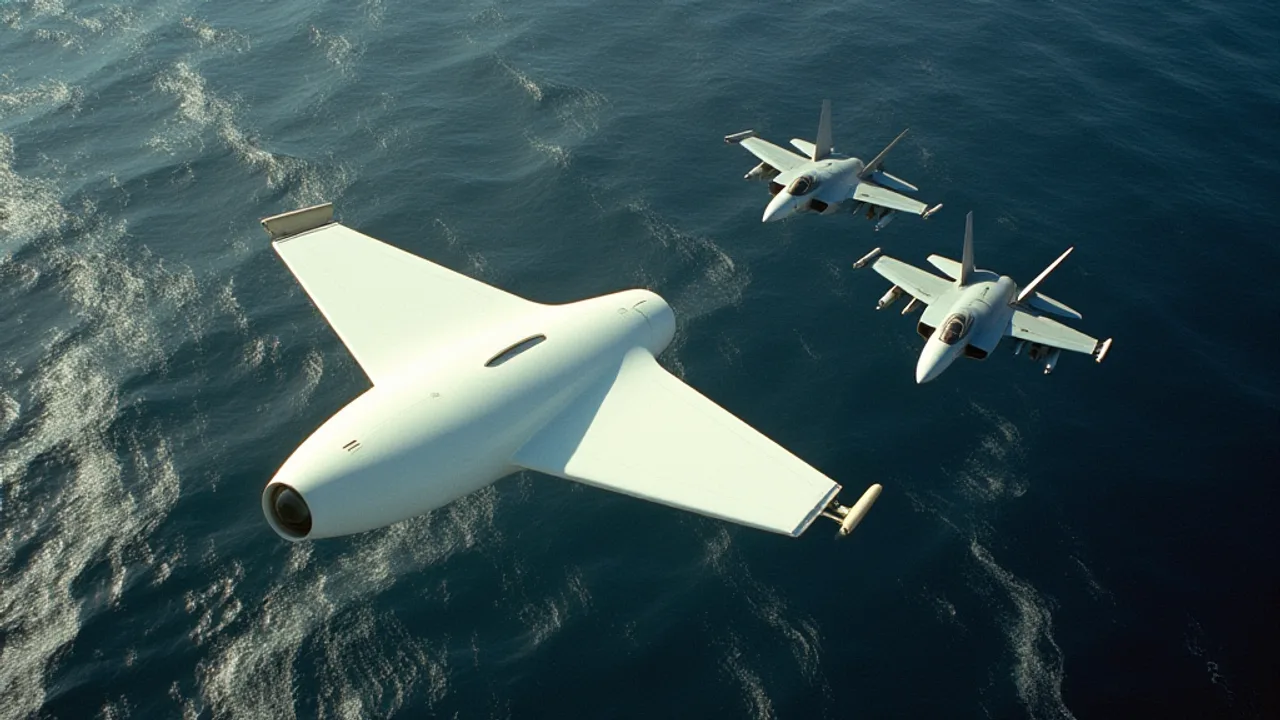
Two weeks of radar tracks, four aviators' eyes, an infrared video the Pentagon itself released, and sworn congressional testimony. The Tic Tac is the case that moved UFOs from tabloids to oversight hearings, and the gap between what's confirmed and what's claimed still matters.
Follow the thread
New disclosure reporting, physics breakdowns, and case files, in your inbox. Sources or it didn't happen. No spam, unsubscribe anytime.