The Buga Sphere: Colombia's Mystery Orb and the Company It Keeps
A metal sphere the size of a melon, filmed drifting over a Colombian town, then handed to researchers who said it had three internal layers, no welds, and a core full of microspheres. The materials claims are genuinely odd. The names attached to the case are exactly why you should keep one hand on your wallet.
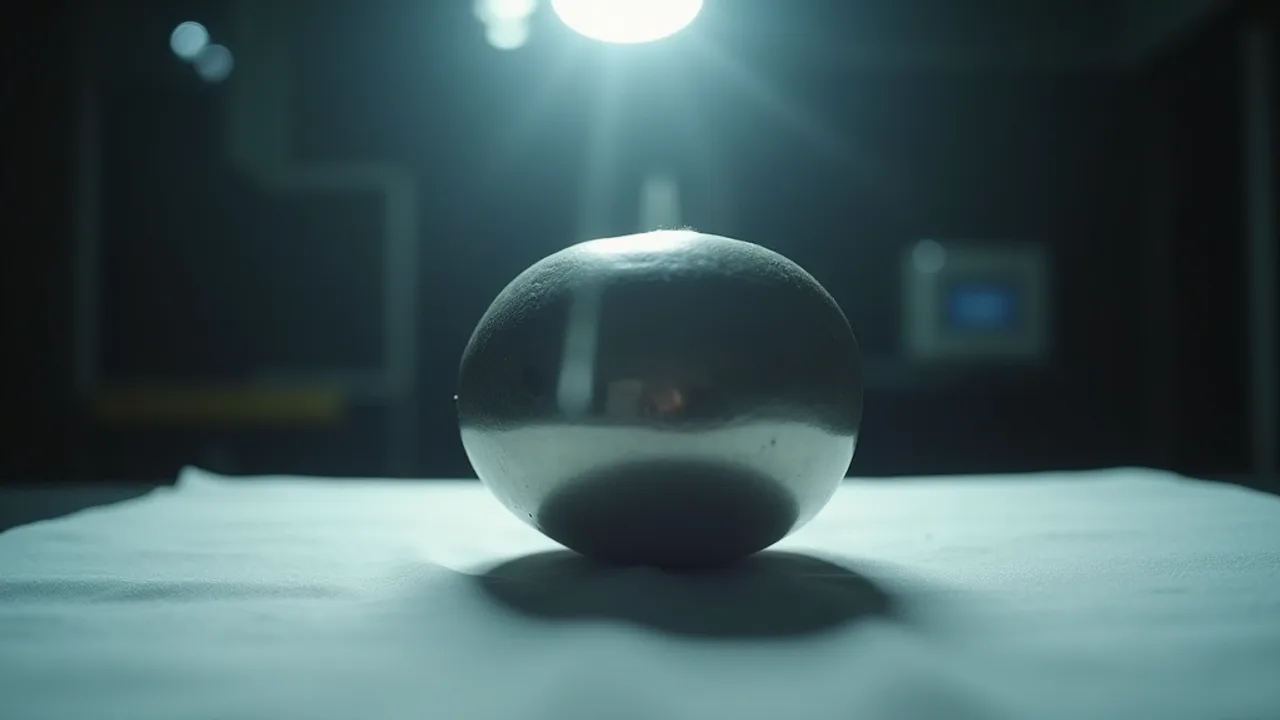 AI illustration
The Buga Sphere is a melon-sized metal orb filmed drifting over Buga, Colombia in March 2025 and later recovered for analysis by independent researchers, who claim it shows three seamless internal layers and no weld marks. Those materials claims have not been peer-reviewed or verified by an independent, disinterested lab, and several researchers promoting the case have prior records of disputed or debunked claims, so treat the analysis as unverified pending outside replication.
In March 2025, residents of Buga, a town in Colombia’s Valle del Cauca, filmed a small object moving erratically through the air. What makes the Buga case unusual is not the footage, which is the usual ambiguous smear of light against sky. It is that, this time, somebody ended up holding the thing. The sphere was recovered, and a group of researchers began taking it apart with instruments.
Their findings, as reported, are the interesting part. The object is roughly spherical, the size of a small melon, with markings etched into its surface. Under analysis it was said to show three concentric metal-like layers, no welds, seams, or joints anywhere on its body, and, in the core, a cluster of tiny microspheres surrounded by other material. One of the researchers, José Luis Velázquez, said the absence of any join was the striking feature: nothing about it looked assembled the way a manufactured object is assembled. X-ray images were released showing the layered interior.
Why “no welds” is less impressive than it sounds
Take the strongest claim on its own terms. A seamless, multi-layered metal sphere does sound exotic. But “no welds” is not the same as “no human could make this.” Casting, spinning, and electroforming all produce seamless metal shells routinely. Ball bearings have no welds. A spun-metal incense burner or a decorative cast orb has no welds. The microsphere core is stranger, but “strange” is a long way from “not of this Earth,” and none of the analysis has been published, peer-reviewed, or performed by a lab with no stake in the answer.
And then there are the etchings. Markings deliberately inscribed on the surface are evidence of craftsmanship, of a maker with hands and an intent, which is an odd thing to find on an object being sold as a manufactured-by-nobody-human anomaly. Decoration is the fingerprint of a human artisan, not an interstellar drone.
An object with no chain of custody, analyzed by no independent lab, presented by people in the business of presenting alien artifacts, is not evidence. It is a claim wearing a lab coat. The materials may be weird. Weird is cheap.
The company it keeps
Here is the detail that should govern how much credence the Buga sphere gets, and it has nothing to do with metallurgy. The case orbits the same ecosystem of promoters, most notably the circle around Jaime Maussan, that brought the world the Nazca “alien mummies,” a claim that the scientific mainstream and Peru’s own forensic authorities concluded were dolls assembled from looted human and animal bones. (We cover that saga separately.) When the same names that presented assembled-corpse “aliens” to a national congress turn up adjacent to a seamless mystery sphere, the prior probability does not move in the sphere’s favor. It collapses.
This is not guilt by association for its own sake. It is the single most useful heuristic in the entire field: track the provenance and track the promoter. Extraordinary physical claims that route through people with a documented history of debunked physical claims deserve extraordinary suspicion, not extraordinary excitement.
What would change the picture
Almost nothing about the Buga sphere is unanswerable. It is a physical object that physically exists, which makes it one of the most testable items in recent ufology, and that testability is precisely what its handlers have not delivered. Hand the sphere to an independent materials lab, a university metallurgy department, a national standards body, anyone with no documentary deal riding on the result. Run an unambiguous chain-of-custody isotope and alloy analysis. Publish the method and the raw data. Let someone who wants it to be a lawn ornament try and fail to prove it.
Until that happens, the Buga sphere belongs in the same drawer as every other beautiful, suggestive, un-provenanced object the field has fallen for: genuinely curious, possibly nothing, and presented by exactly the people whose track record tells you to wait for the lab, not the press conference.
Every new case, scored the same way
One email when a case file lands, with its Signal-Strength score and what would move it. No hype, no 'BREAKING', and every claim carries its source. Unsubscribe anytime.
Sources
Read next
More Science & Physics →
What the Evidence Actually Says: We Scored Every Case on the Same Four Axes
Most UFO writing argues case by case, which makes every story sound equally strong. We did the opposite: scored every case file on the same four-part rubric and lined the numbers up. The pattern that falls out is not the one either side wants.
The Reported-NHI Field Guide: Every Claimed Non-Human Type, Graded by Provenance
Greys, Nordics, Reptilians, Insectoids, Tridactyls, and, as of June 2026, 'sentient plasmoid life.' Pop catalogs list a dozen alien races as if they were equally real. They are not equally evidenced. This is a field guide that logs each reported non-human type, ties it to the specific cases it actually comes from, and sorts the whole gallery into three honest tiers of provenance, from investigated physical encounters down to channeled starseed lore.
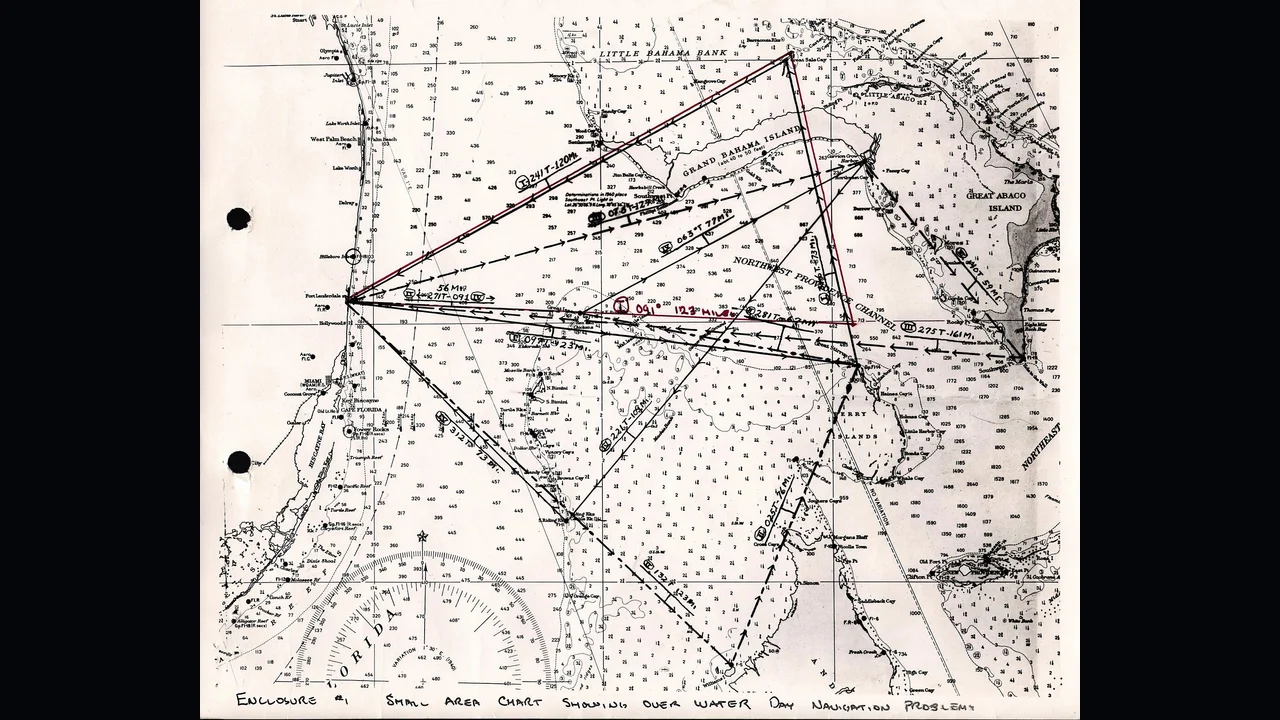
The Bermuda Triangle: A Mystery Assembled From Filing Errors
The most famous anomalous region on Earth was named in a pulp magazine in 1964 and dismantled by one researcher with a library card in 1975. It scores 2 out of 12, and that is generous.
Follow the thread
New disclosure reporting, physics breakdowns, and case files, in your inbox. Sources or it didn't happen. No spam, unsubscribe anytime.