Aguadilla, 2013: The Trans-Medium Video Two Agencies Can't Agree On
A federal aircraft's infrared camera filmed a small object skimming over Aguadilla, apparently splitting in two and dropping into the ocean without slowing. One scientific group spent years arguing it broke the laws of normal flight. The Pentagon's UAP office looked at the same footage and said: lanterns. The gap between those two readings is the most honest thing about modern ufology.
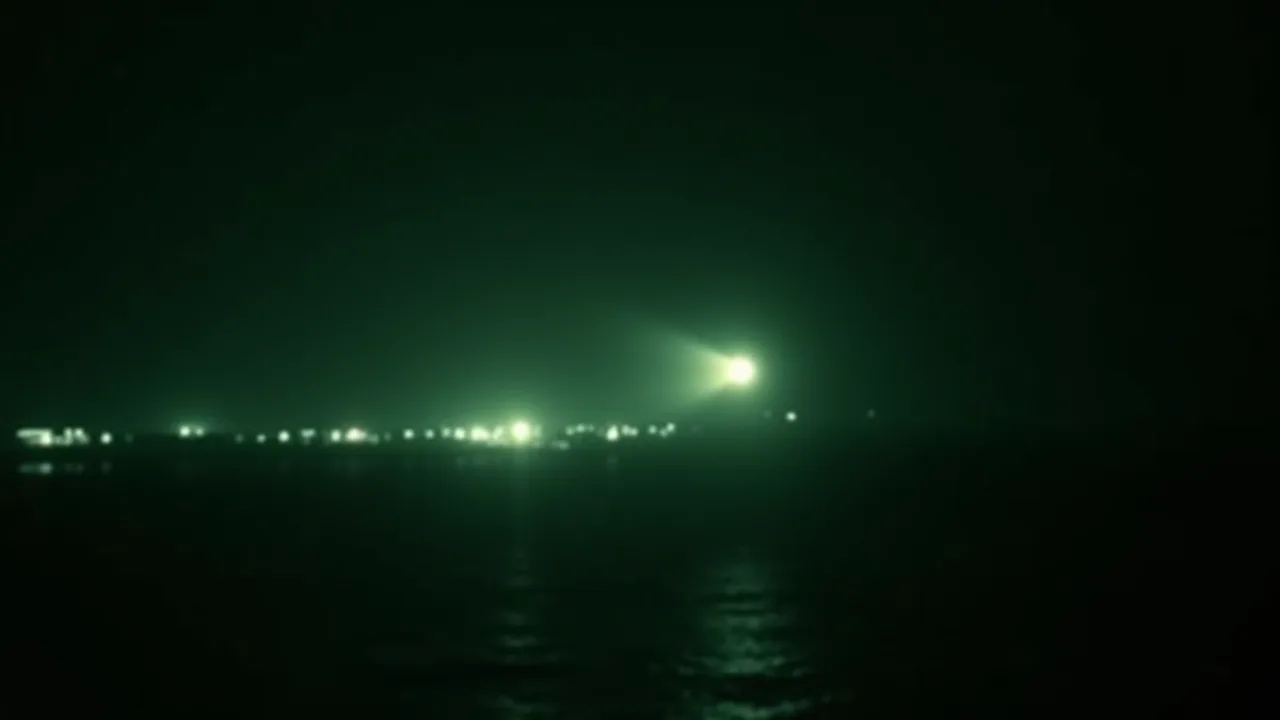 AI illustration
In April 2013, a federal Customs and Border Protection aircraft's infrared camera near Aguadilla, Puerto Rico recorded an object that appears to split in two and drop into the ocean without decelerating. The Scientific Coalition for UAP Studies analyzed the same footage and concluded the motion was anomalous for any known aircraft, while the Pentagon's AARO reviewed it and attributed it to sky lanterns; the two official-adjacent analyses directly contradict each other and neither has been retracted.

On the night of April 25, 2013, a Department of Homeland Security aircraft working out of Aguadilla, Puerto Rico, pointed its thermal imaging camera at a small object moving low over the airport. For about three minutes the infrared footage tracks it: a warm blob skimming over terrain and water, moving erratically, appearing at one point to split into two, and finally dropping into the sea, and, the footage seems to suggest, continuing underwater rather than stopping at the surface.
It is, on its face, the holy grail of the UAP catalog: a government sensor, a clear thermal track, and apparent trans-medium behavior, air to water without the catastrophic deceleration that destroys anything man-made at the interface. For a decade it has been one of the most intensively studied UAP videos in existence, and it is a near-perfect test of how the field reasons, because two serious bodies looked at the identical data and reached opposite verdicts.
The case for anomaly
The Scientific Coalition for UAP Studies, a group of credentialed engineers and scientists, produced a long, technical analysis of the footage and concluded it showed something that should not be possible. Frame-by-frame, they argued the object moved at speeds inconsistent with a drifting balloon, maneuvered against the wind, genuinely bifurcated into two objects, and entered the ocean and kept going, with no thermal plume indicating conventional propulsion. Their report leans on photogrammetry, using the aircraft’s known position and the camera geometry to estimate the object’s range, size, and speed, to make the case that no mundane object fits all of those behaviors at once.
If that analysis holds, Aguadilla is extraordinary: a sensor-grade record of trans-medium flight.
The case against, from the Pentagon’s own office
Then, in 2024, the All-domain Anomaly Resolution Office (AARO), the Pentagon’s official UAP investigation body, published a case resolution on the same footage, and its conclusion was deflating. The object did not demonstrate anomalous performance. AARO’s assessment points to the most ordinary culprit in the night-sky bestiary: lights or balloons, most plausibly drifting lanterns. The “split into two,” in that reading, is simply two lanterns that were always present resolving apart as the camera angle changed. The “entry into the ocean” is parallax, the object passing in front of the water from the camera’s perspective, not into it. The erratic motion is wind plus the jitter of a long-lens thermal tracker on a moving aircraft.
This is not a tabloid debunk. It is the U.S. government’s dedicated UAP office formally concluding that its own agency’s famous video is mundane.
Aguadilla is the rare case where the skeptic isn’t a grumpy astronomer on a podcast, it’s the Pentagon, and the believer isn’t a YouTuber, it’s a coalition of engineers with a photogrammetry model. When the institutional roles invert like that, you learn something: “official” and “anomalous” are not opposites, and neither label is a substitute for the math.
Where the disagreement actually lives
The two camps are not arguing about what the pixels show. They are arguing about range. Almost everything, the speed, the size, whether it could be a lantern, whether it “entered” the water, hangs on how far the object was from the camera, and a thermal blob against a dark background carries no intrinsic scale. SCU’s photogrammetry says the geometry forces a distance and speed that rule out a lantern. AARO says the geometry is consistent with a near, slow object and that the dramatic behaviors are artifacts of perspective. Resolve the range and you resolve the case. Neither side can do so with the certainty the other demands.
What survives
Aguadilla survives not as proof of trans-medium craft, and not as a settled lantern story, but as the cleanest illustration in the modern record of how thin the evidentiary margins really are. The same three minutes of footage support a rigorous “impossible” reading and a rigorous “balloons” reading, and the deciding variable, distance, is the one the sensor never recorded.
That is the uncomfortable lesson, and it generalizes far beyond one Puerto Rican night: in the UAP field, the data is rarely the problem. The missing context around the data is. Until a sensor captures range as cleanly as it captures heat, cases like Aguadilla will keep being whatever the most confident analyst in the room needs them to be.
Every new case, scored the same way
One email when a case file lands, with its Signal-Strength score and what would move it. No hype, no 'BREAKING', and every claim carries its source. Unsubscribe anytime.
Sources
Read next
More Science & Physics →
What the Evidence Actually Says: We Scored Every Case on the Same Four Axes
Most UFO writing argues case by case, which makes every story sound equally strong. We did the opposite: scored every case file on the same four-part rubric and lined the numbers up. The pattern that falls out is not the one either side wants.
The Reported-NHI Field Guide: Every Claimed Non-Human Type, Graded by Provenance
Greys, Nordics, Reptilians, Insectoids, Tridactyls, and, as of June 2026, 'sentient plasmoid life.' Pop catalogs list a dozen alien races as if they were equally real. They are not equally evidenced. This is a field guide that logs each reported non-human type, ties it to the specific cases it actually comes from, and sorts the whole gallery into three honest tiers of provenance, from investigated physical encounters down to channeled starseed lore.
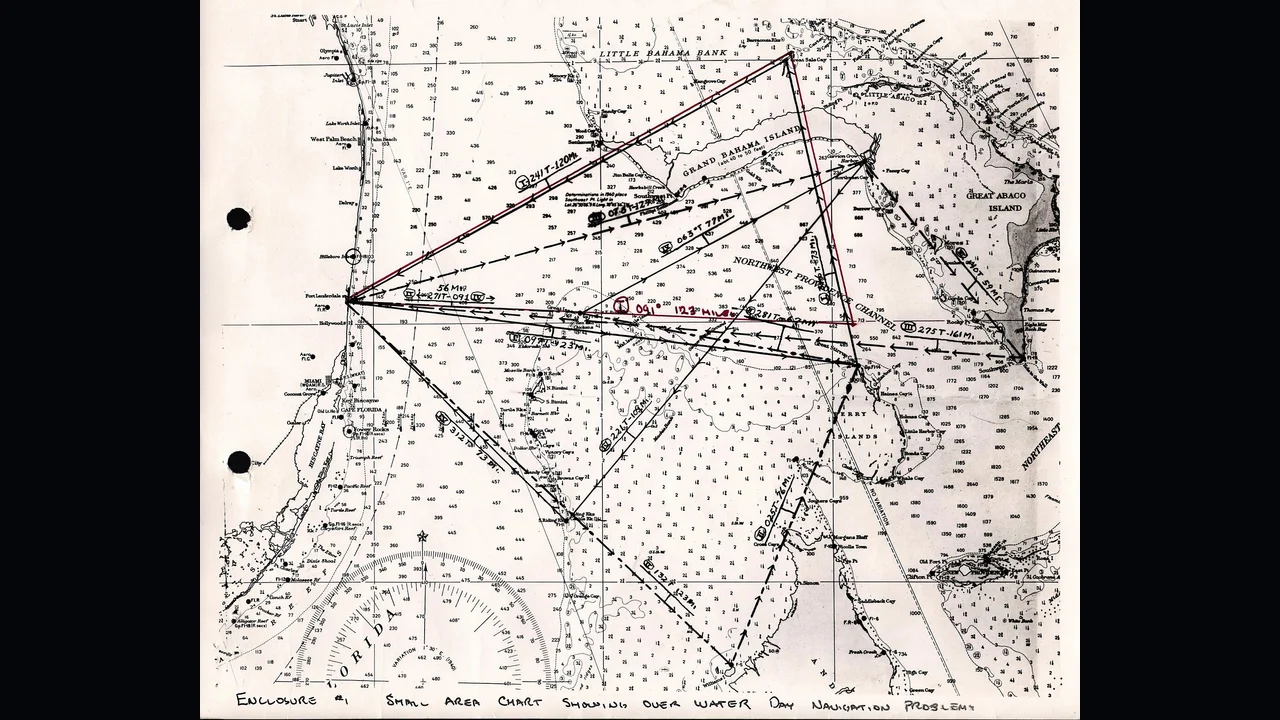
The Bermuda Triangle: A Mystery Assembled From Filing Errors
The most famous anomalous region on Earth was named in a pulp magazine in 1964 and dismantled by one researcher with a library card in 1975. It scores 2 out of 12, and that is generous.
Follow the thread
New disclosure reporting, physics breakdowns, and case files, in your inbox. Sources or it didn't happen. No spam, unsubscribe anytime.