Alien DNA in the 1000 Genomes Project? A Genetics Claim, Examined
A researcher scanned 581 families in a public genome database and found DNA in some children that matches neither parent. He reads it as a fingerprint of alien germline editing. Here is exactly what he did, and the boring explanation he has not yet ruled out.
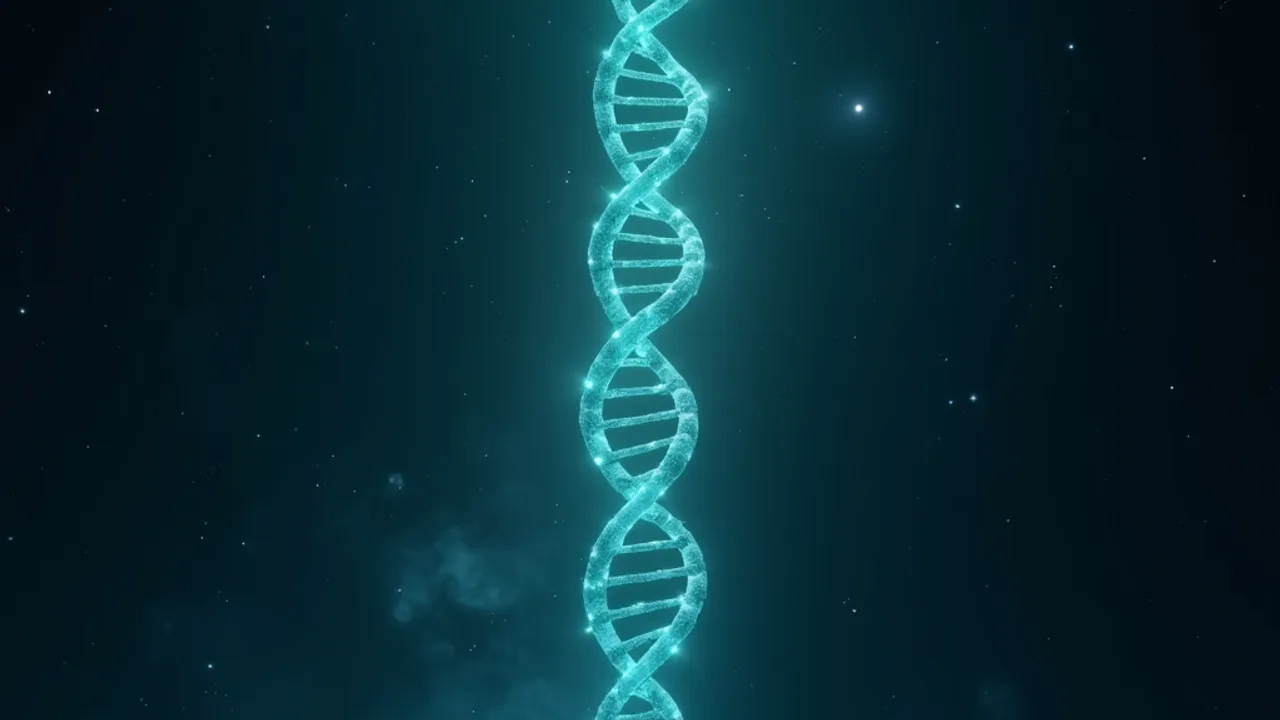 AI illustration
In a May 2025 preprint, Max Myakishev-Rempel reports that about 2% of families in the 1000 Genomes Project carry clusters of 'nonparental' DNA in the child and argues this is evidence of alien genetic manipulation. The paper is a single-author preprint on viXra and has not been peer-reviewed. Independent genetics literature shows that exactly this signal, clustered non-parental variants in sequenced trios, is a well-documented technical artifact that concentrates in repetitive and copy-number regions of the genome. The claim is unverified, and the ordinary explanation has not been excluded.
Every so often a claim arrives wearing the full costume of science, spreadsheets, p-values, a genome database, and asks to be taken seriously on those terms. This is one of them, and it deserves to be taken on those terms, which is the most interesting thing we can do with it.
In May 2025 a researcher named Max Myakishev-Rempel posted a paper titled Preliminary evidence of traces of alien genetic manipulation in humans. His idea is elegant in its simplicity. If aliens have been quietly editing human embryos, as a long line of abduction researchers has claimed, then the edit should leave a mark you can read: stretches of DNA in a child that came from neither parent. And we now have the data to look, sitting in the open.
What he did
He downloaded 602 family trios, father, mother, child, from the 1000 Genomes Project, a public reference dataset of high-quality genomes used by researchers worldwide. After quality checks he kept 581 complete families. Then he wrote a pipeline to slide across chromosome 3 in small windows and count, for each child, how many genetic variants matched neither parent. In ordinary inheritance that count should be essentially zero: you get one copy of each chromosome from each parent, and nothing from anywhere else.
The plan is genuinely clever, because it needs no knowledge of what “alien DNA” would look like. It only asks a yes-or-no question the data can answer: is there a chunk here that the parents cannot account for?
What he found
In 98% of families, textbook inheritance, as expected. But in about 2%, eleven families, he reports dense clusters of these “nonparental” variants. The showcase case, a child labeled HG01505, carries a cluster of 348 such variants across a roughly 16-kilobase region, and, unusually, on both chromosome copies at once. He puts the odds of that clustering happening by chance at less than one in ten trillion, and notes that all these children were born before 1990, decades before CRISPR made human gene editing even theoretically possible. His conclusion: something edited these genomes, and it was not us.
He also ran a small pilot on two families who suspect they have had abduction experiences, genotyped through a consumer service, and reports a similar signal in one of them, offered as a cheap “do-it-yourself” way for others to check themselves.
Read the label
A few things are worth knowing before you weigh it. The paper is a preprint, posted to viXra, an open repository that does no peer review and no screening, and mirrored on the author’s ResearchGate page. It is single-author and, by its own title, preliminary: he analyzed only about 2.3% of the genome, one slice of one chromosome. The author’s foundation studies “DNA resonance,” electromagnetic fields around DNA, which sits well outside mainstream genetics, and the paper’s framing leans on the classic abduction-hybridization literature, including William Cooper’s Behold a Pale Horse, a book our own Canon files as a debunked hoax. None of that makes the data wrong. It just tells you what kind of document you are reading: an unreviewed first pass, not a settled finding.
The ordinary explanation he has not ruled out
Here is the part a careful reader should sit with. The exact signal at the center of this paper, clusters of variants in a child that match neither parent, has a mundane name in genetics: Mendelian inheritance errors. And they are not rare or mysterious. When you sequence trios, a small fraction of positions always come back looking non-parental, and, crucially, they do not scatter evenly. They cluster, and they cluster in precisely the parts of the genome that are hardest to read: repetitive stretches, segmental duplications, and regions where the number of copies varies from person to person. In those regions, short sequencing reads from one place can mismap to a near-identical place, manufacturing a tidy little peak of “impossible” inheritance that is really a mapping error, or a mislabeled sample. One study of 1,314 trios found these errors so predictable they can be used as a quality-control gauge, and another showed them concentrating inside copy-number losses. A sharp, localized cluster of nonparental variants at one spot on chromosome 3 is not only consistent with this artifact, it is one of its signatures. The paper’s p-value of less than one in ten trillion measures how non-random the cluster is, but an artifact is non-random too, so the number cannot tell alien editing and a mismapping hotspot apart. That is the gap the paper does not close.
What would actually settle it
The nice thing about a testable claim is that it points to its own resolution. Reads pulled from a mapping artifact carry telltale signs: odd sequencing depth, poor mapping-quality scores, breakpoints that line up with known duplicated regions. Long-read sequencing, which reads DNA in much longer stretches and is far harder to fool, would show in a single run whether HG01505 really carries a foreign 16-kb insert or whether the short-read pipeline was tripping over a repeat. Independent, blinded replication by a genetics lab with no stake in the answer would do the rest. Until one of those happens, the honest status is: an intriguing pattern with an ordinary explanation still on the table, and the ordinary explanation is the one the field already expects.
Why it is on this site
Not because we think it is true. Because it is exactly the kind of claim worth handling well: specific, quantitative, and checkable, the opposite of the vague testimony that fills most of this field. It shows both the appeal and the trap of the genomic approach, a real database, a clean method, a striking number, and, underneath, a well-known way for that same number to mean nothing. If someone ever runs the long-read test on HG01505 and the insert survives, it would be one of the most important results in the history of the subject. That test has not been run. That is the whole story, for now.
Every new case, scored the same way
One email when a case file lands, with its Signal-Strength score and what would move it. No hype, no 'BREAKING', and every claim carries its source. Unsubscribe anytime.
Sources
- [1] Max Myakishev-Rempel, 'Preliminary evidence of traces of alien genetic manipulation in humans' (preprint, viXra 2505.0194, May 2025)
- [2] 1000 Genomes Project, NYGC 30x high-coverage trio data collection (IGSR)
- [3] 'Mendelian inheritance errors in whole genome sequenced trios are enriched in repeats and cluster within copy number losses' (bioRxiv)
- [4] 'Mendelian Inconsistent Signatures from 1314 Ancestrally Diverse Family Trios Distinguish Biological Variation from Sequencing Error' (G3, 2019)
Read next
More Science & Physics →
Element 115 and the Lazar Claim: The Story That Made Its Own Test, and Failed It
Bob Lazar's 1989 account is the rare UFO claim specific enough to check. Physics checked it. Element 115 exists, it was made in 2003, and it lasts less than a second.
The Bermuda Triangle: A Mystery Assembled From Filing Errors
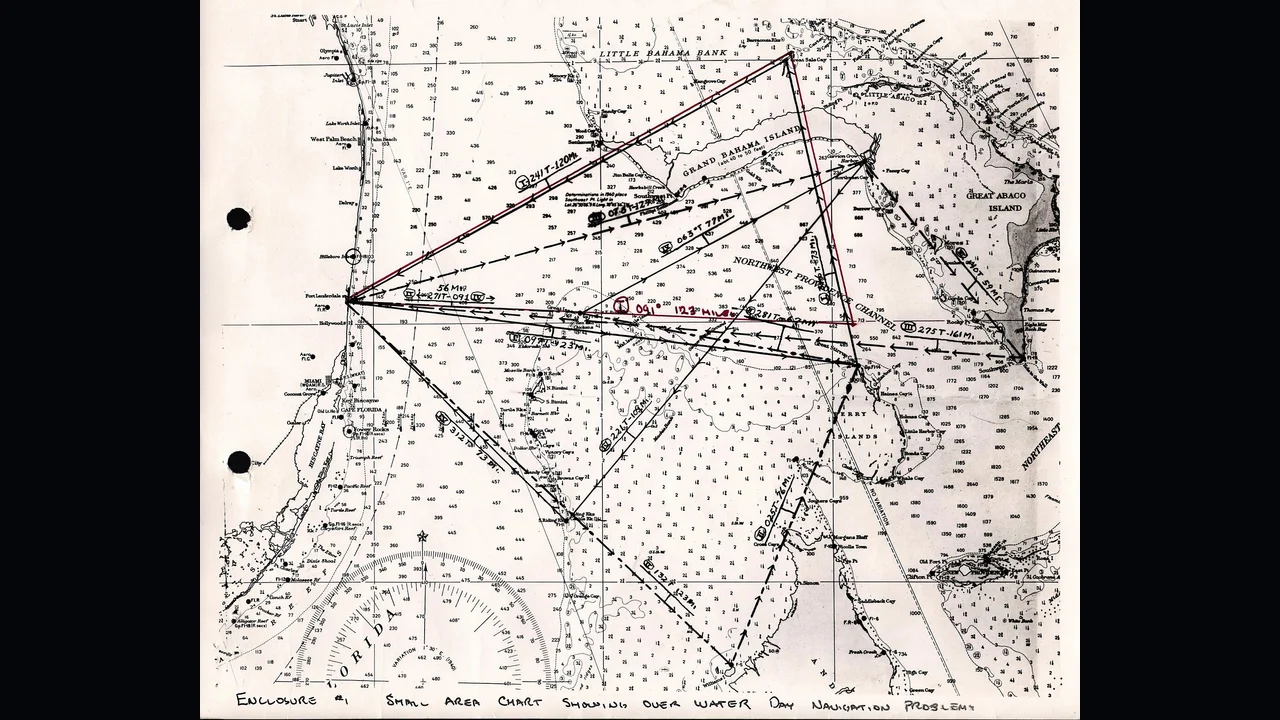
The most famous anomalous region on Earth was named in a pulp magazine in 1964 and dismantled by one researcher with a library card in 1975. It scores 2 out of 12, and that is generous.
What the Evidence Actually Says: We Scored Every Case on the Same Four Axes
Most UFO writing argues case by case, which makes every story sound equally strong. We did the opposite: scored every case file on the same four-part rubric and lined the numbers up. The pattern that falls out is not the one either side wants.
Follow the thread
New disclosure reporting, physics breakdowns, and case files, in your inbox. Sources or it didn't happen. No spam, unsubscribe anytime.