Rendlesham Forest: The Night the Cold War Brushed Up Against Something Else
Three nights in December 1980, a USAF nuclear base in Suffolk, and a memo so calm it became the loudest thing in the archive.
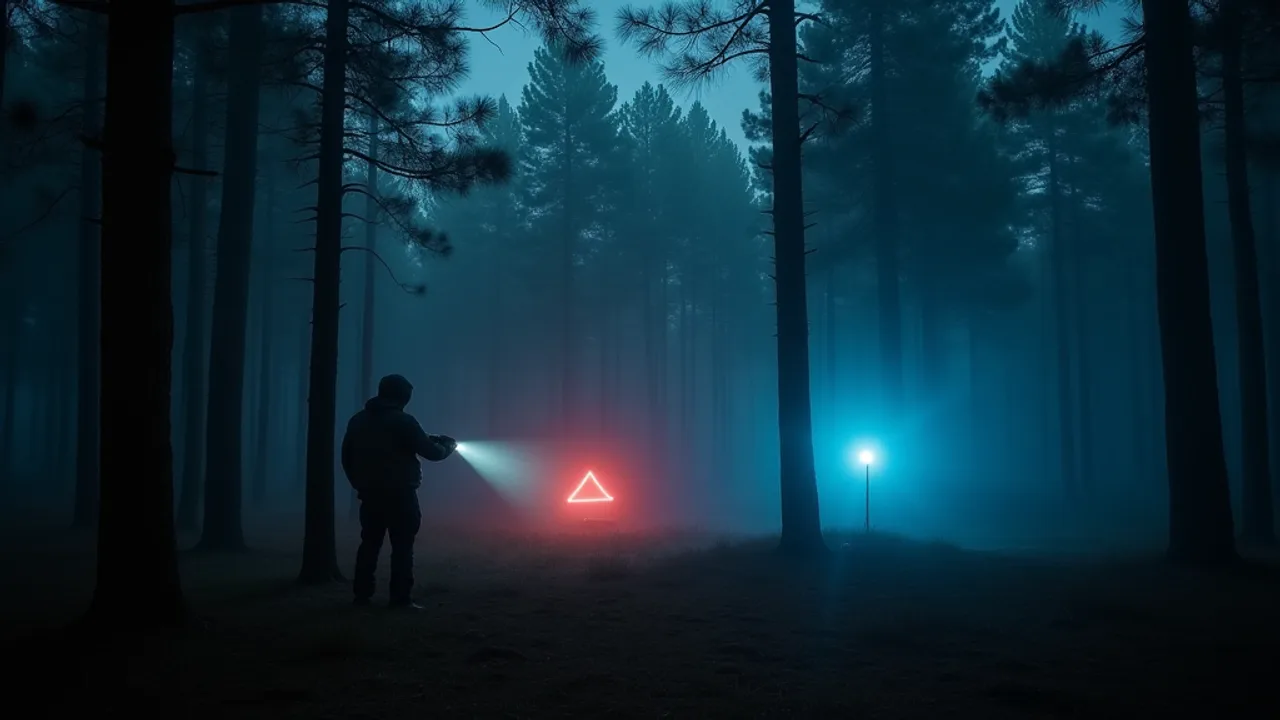
Over three nights in December 1980, US Air Force security personnel at RAF Woodbridge, England reported a metallic, triangular craft in nearby Rendlesham Forest, an account documented in a contemporaneous memo by Deputy Base Commander Lt. Col. Charles Halt and preserved in UK Ministry of Defence files (DEFE 24/1948). The object itself remains officially unidentified; above-background radiation readings and ground impressions were recorded, but no physical craft or debris was ever recovered.

The thing that makes Rendlesham different from a dozen sightings filed the same year isn’t the lights in the trees. It’s the memo.
Two days after the second incident, Deputy Base Commander Lt. Col. Charles Halt typed a one-page report describing a metallic, triangular, “glowing as if with its own light” object in the forest east of RAF Woodbridge. He attached the impressions of three depressions in the ground where it had reportedly rested. He noted radiation readings, in beta and gamma, taken with a calibrated instrument, of roughly ten times background.
He filed it like he was filing anything else.
What was on the base
RAF Woodbridge and the adjacent Bentwaters were a single United States Air Force operational unit holding, on the relevant nights, special weapons, the public record is now clear that nuclear ordnance was present at Bentwaters in 1980 under the WS3 program. That detail does not by itself elevate a sighting. What it does do is set the security posture: people on patrol that night were rated to engage. They were not casual witnesses.
The three nights
Night one, December 26. A security patrol responds to lights down a forestry track east of the East Gate. They go on foot. They report a small craft. Radio traffic, since released under FOIA, includes terms that later officers said they had been trained to avoid using on open channels.
Night two, December 27. Quiet. Witnesses return in daylight and photograph the three indentations. A forester remarks that they don’t look like anything he has seen the deer make.
Night three, December 28. Halt himself goes out, with a tape recorder. The eighteen-minute tape, informally called the Halt Tape, is hard to dismiss. It is the calm voice of a senior officer narrating something he cannot account for, to himself, into a recorder, in real time, with his men in earshot. He is not performing for a future audience. He is checking his own perception.
“I’m looking at it now, it’s still hovering, it appears to be elliptical through an eight-power lens. Now it’s coming this way. It is definitely coming this way. Pieces are shooting off, like falling stars.”
The UK MoD’s quiet stance
The UK Ministry of Defence’s position, until 2009, was that the events in Rendlesham Forest “presented no threat to national security.” That is not the same statement as “we know what it was.” The distinction was preserved deliberately in successive briefings. Briefing notes released in 2010 confirm that internally the file was kept open, that the radiation data was forwarded to AWRE Aldermaston for assessment, and that nothing in the assessment closed the file.
The shape of what’s left
Strip away the four decades of folklore, the rival witness accounts, the self-published books, and the YouTube reconstructions. What remains in the archive is:
- A memo from a base deputy commander affirming a physical encounter.
- An audio tape recorded by the same officer, in the woods, at the time.
- Three ground impressions photographed by base personnel.
- Independently-logged radiation readings.
- A British government file kept open for thirty years.
That isn’t proof of anything exotic. It is, however, more documentary substrate than most diplomatic incidents leave behind. Rendlesham is in the canon for a reason, and the reason is the paperwork.
For the other great European case where the official paperwork is the strongest evidence, and the famous physical evidence fell apart, read the Belgian UFO wave of 1989-1990, then see how both score on the ranked evidence index.
Every new case, scored the same way
One email when a case file lands, with its Signal-Strength score and what would move it. No hype, no 'BREAKING', and every claim carries its source. Unsubscribe anytime.
Sources
Read next
More History & Lore →
The USS Nimitz Tic Tac, 2004: The Best-Documented UAP Case on Record
Two weeks of radar tracks, four aviators' eyes, an infrared video the Pentagon itself released, and sworn congressional testimony. The Tic Tac is the case that moved UFOs from tabloids to oversight hearings, and the gap between what's confirmed and what's claimed still matters.
The Belgian UFO Wave, 1989-1990: F-16s, a Hoaxed Photo, and What's Left
The Belgian UFO wave: thousands of witnesses, many of them police, reported silent black triangles, F-16s scrambled, and the Air Force published its radar. The famous photo was a hoax; the radar was weather. What's left is still strange.
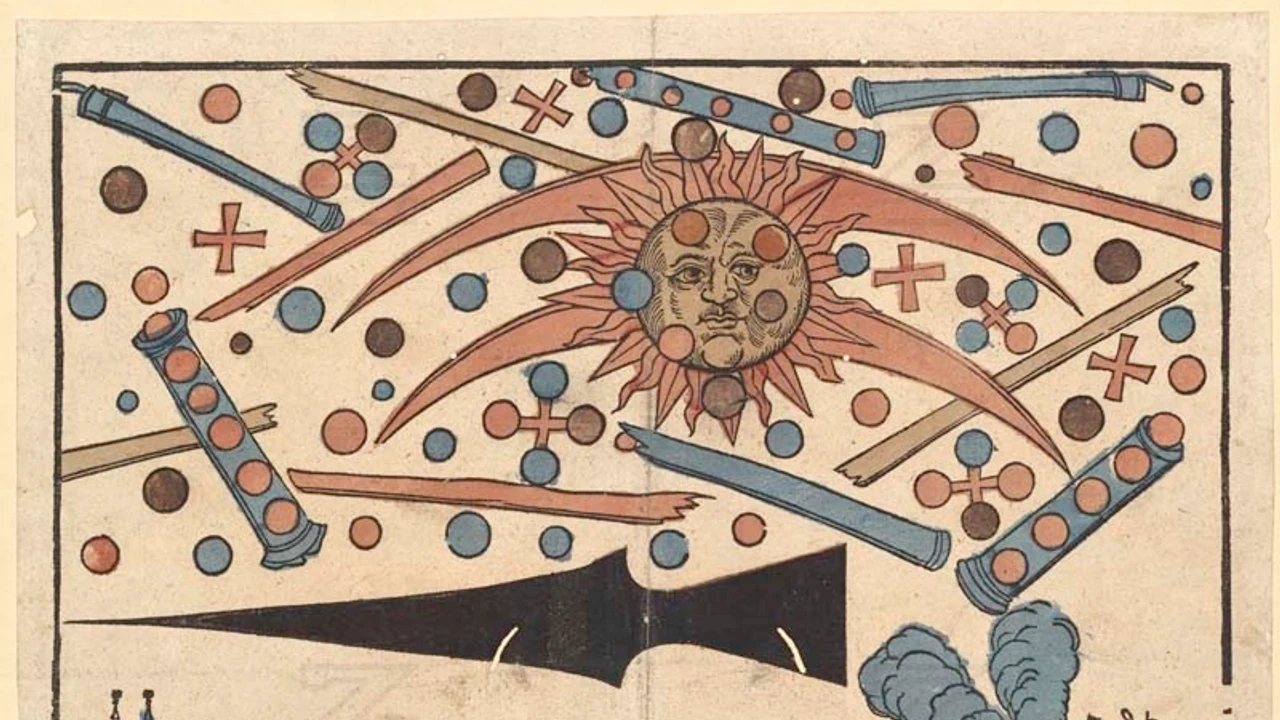
Nuremberg 1561: The Sky Battle That Is Really a Newspaper
A woodcut of globes and crosses fighting above a German city is the oldest image in the UFO canon. The artefact is genuine and datable. Almost everything said about it since is not.
Follow the thread
New disclosure reporting, physics breakdowns, and case files, in your inbox. Sources or it didn't happen. No spam, unsubscribe anytime.