The Night of the UFOs: Brazil Scrambled Its Air Force in 1986, and the Minister Said He Had No Explanation
On 19 May 1986, radar across four Brazilian states tracked objects nobody could identify, five fighters went up after them, and four days later the sitting Minister of Aeronautics stood in front of the press with his pilots and said, on the record, that the Air Force had no explanation. It is almost unknown outside Brazil, and by a transparent evidence rubric it is the best-documented case the country has, far above the one everybody has heard of.
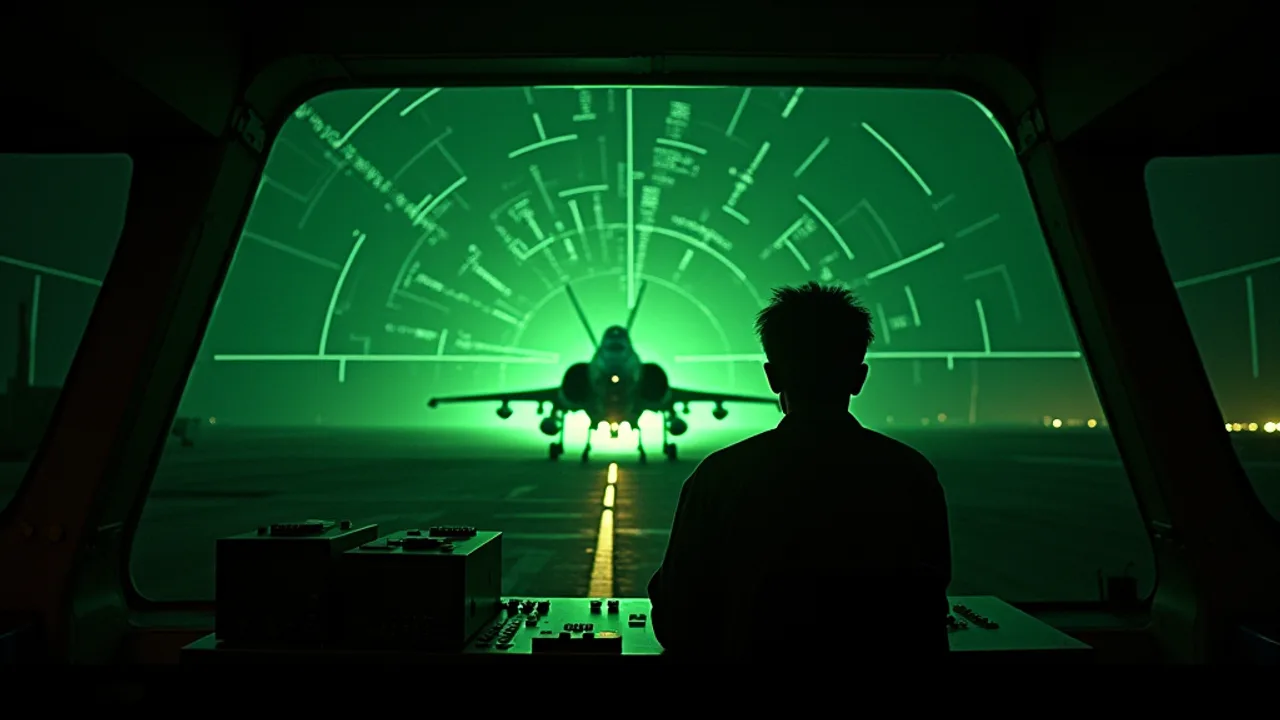 AI illustration
On 19-20 May 1986, Brazilian air defence radar at CINDACTA I in Brasília tracked around 21 unidentified returns over São Paulo, Rio de Janeiro, Goiás and neighbouring states, and five Air Force fighters were scrambled to intercept. On 23 May 1986, Minister of Aeronautics Brigadier Octávio Júlio Moreira Lima held a press conference alongside the pilots, confirmed the events, and stated that the Air Force had no technical explanation. No official explanation has been published since.
The best-evidenced UFO case in Brazil is not the one with the museum, the water tower, and the Netflix-adjacent documentary. It is a night in May 1986 that most English-speaking readers have never heard of, when a national air defence centre logged 21 unidentified radar returns, the Air Force put five fighters into the sky after them, and the sitting Minister of Aeronautics walked into a press conference four days later and said he could not explain it.
Brazilians call it the Noite Oficial dos OVNIs, the Official Night of the UFOs. The adjective is the whole point. It is official because the government said so, out loud, on a podium, with the pilots standing next to it.
What happened on the night of 19 May 1986
The evening began with a civilian sighting. Around 8:15 PM local time, Sérgio Mota da Silva, an air traffic controller at São José dos Campos Airport in São Paulo state, reported bright lights over the airfield. Guarulhos International, the big Rio-São Paulo hub, picked up contacts in the same vicinity.
Over the following hours the contacts multiplied and spread. Radar at CINDACTA I, the Integrated Air Defence and Air Traffic Control Centre in Brasília, tracked returns across São Paulo, Rio de Janeiro, Goiás and Paraná. By the end of the night, 21 radar plots had been logged.
One of the sighting reports came from an unusually well-credentialed observer. Colonel Ozires Silva, the founder of Embraer and one of the most senior figures in Brazilian aviation, was flying an EMB 121 Xingu (registration PT-MBZ) and reported pursuing lights he could not identify.
The intercepts
This is the part that separates the case from a wave of lights. Brazil did not just record the contacts. It launched against them.
- 10:27 PM — an F-5E from Santa Cruz Air Force Base, callsign JB17
- 10:48 PM — a Mirage IIIE from Anápolis Air Force Base, callsign JG116
- 10:50 PM — a second F-5E from Santa Cruz, callsign JB07
- Two further Mirage IIIE interceptors from Anápolis, which reported no visual or radar contact
Five fighters, two bases, two aircraft types, one night. Whatever the objects were, they were treated at the time as a live air defence problem rather than a curiosity, and the crews’ reports entered the military record as such.
The press conference that named the case
On 23 May 1986, four days later, the Minister of Aeronautics, Brigadier Octávio Júlio Moreira Lima, held a press conference with the fighter pilots present. He confirmed that the intercepts had taken place, and he framed the government’s position with a sentence that has been quoted in Brazil ever since:
“It’s not about believing or not. We can only give out technical information. There are several hypotheses. Technically, I’d tell you gentlemen that we have no explanation.”
Read that carefully, because it is doing something rarer than it looks. He is not endorsing an extraterrestrial reading. He is refusing to endorse any reading, while confirming the underlying data. That is what a defence ministry sounds like when it has instrument records it cannot resolve and has decided not to invent a resolution.
No official explanation has been published in the forty years since. Records released later catalogue observed behaviour without identifying the objects.
How it scores
Run it through the same four-axis Signal-Strength rubric as every other case on this site.
Witnesses: strong. Military aircrew, civilian and military air traffic controllers, and a senior aviation figure flying his own aircraft, reporting independently across four states.
Instrumentation: moderate. Twenty-one radar plots from a national air defence centre plus airborne radar on the interceptors. It scores moderate rather than strong because the raw radar data has never been published in a form outside observers can re-analyse. There is instrumentation. There is no public tape.
Official record: strong. A sitting cabinet minister confirming the event on the record within four days, with the aircrew present, is the strongest species of official record a UFO case can have. It beats a leaked memo, because nobody has to authenticate it.
Stands up to scrutiny: moderate. No debunk has stuck. Balloons, aircraft, and astronomical misidentification have all been floated in the four decades since, and any of them may account for part of the night, but no published finding resolves the 21 plots. It does not score strong because the absence of a successful debunk is not the same as the presence of proof.
That totals 10 of 12, which puts the Night of the UFOs at the top of our ranked case files, alongside Rendlesham Forest and the 1976 Tehran F-4 intercept. All three share the same trait, and it is not fame: the key evidence exists outside any one person’s memory.
Why nobody outside Brazil has heard of it
Compare it with the case that actually gets the traffic.
The Varginha incident of 1996 is Brazil’s Roswell. It has a spaceship-shaped water tower, an annual tourist trade, a James Fox documentary, a US congressman writing to the CIA about it, and thirty years of argument. It scores 4 of 12. No photograph of the creature, no recovered material, and an official inquiry that argues the witnesses saw a disoriented local man in the rain.
The 1986 case has radar tapes, fighter scrambles, and a minister of state. It scores 10. It has no water tower.
The difference is not evidence. It is narrative. Varginha has a creature, a capture, a martyr, and a cover-up, the full folk-story architecture. The Night of the UFOs has air traffic control logs and a man in uniform declining to speculate. One of those travels. The other one holds up.
That gap is the single most repeatable finding on this site: fame and evidence are not the same axis, and in Brazil the two run almost exactly opposite to one another.
What would move it
The case is capped at moderate instrumentation for one reason: the underlying radar data has never been released in analysable form. If CINDACTA’s original tapes or plot records from 19-20 May 1986 entered the public record, and independent analysts could examine altitude, speed, and track continuity for the 21 returns, this case would either climb to the top of the table outright or collapse into a known artefact. Either outcome would be worth more than another forty years of retelling.
Until then it sits where it sits: the most checkable thing Brazil has, and the least famous.
Read next: Brazil’s UFO cases, ranked by evidence, the full table including Trindade, Colares, Ubatuba, and Varginha, and Operação Prato, the Air Force investigation that filled an archive and proved nothing.
Every new case, scored the same way
One email when a case file lands, with its Signal-Strength score and what would move it. No hype, no 'BREAKING', and every claim carries its source. Unsubscribe anytime.
Frequently asked
What was the Night of the UFOs in Brazil? +
On the night of 19 May 1986, Brazilian radar and pilots recorded a series of unidentified contacts across several states, including São Paulo, Rio de Janeiro and Goiás. Around 21 radar plots were logged, and five Brazilian Air Force fighters were launched to intercept. The episode became known in Brazil as the Noite Oficial dos OVNIs, the Official Night of the UFOs, because the government publicly confirmed it days later.
Did the Brazilian Air Force officially confirm the 1986 UFO event? +
Yes, to an unusual degree. On 23 May 1986, four days after the event, the Minister of Aeronautics, Brigadier Octávio Júlio Moreira Lima, held a press conference with the fighter pilots present and confirmed that the intercepts had happened. He told reporters that the Air Force could only supply technical information and that, technically, it had no explanation. That public confirmation is what gives the case its name.
How many aircraft were scrambled during the 1986 Brazilian UFO incident? +
Five fighters in total were launched: F-5E interceptors from Santa Cruz Air Force Base and Mirage IIIE interceptors from Anápolis Air Force Base, launched between roughly 10:20 and 11:00 PM local time. Two further Mirage IIIEs from Anápolis had no visual or radar contact.
Was the 1986 Brazilian UFO incident ever explained? +
No official explanation has ever been published. The Air Force confirmed the radar and visual contacts, declined to characterise their origin, and released records years later that catalogued observed behaviour without identifying the objects. Conventional candidates such as balloons, aircraft and astronomical objects have been proposed by commentators, but no specific published finding resolves the 21 plots.
Is the Night of the UFOs better evidenced than the Varginha incident? +
By a transparent four-axis rubric, yes, and by a wide margin. The 1986 case has instrumented radar data from a national air defence centre, military aircrew as witnesses, and a sitting cabinet minister confirming it on the record within four days. The 1996 Varginha case has witness testimony and a large legend, no photograph, no recovered material, and an official inquiry that argues against it. Varginha is far more famous. It is not better evidenced.
Sources
- [1] Wikipedia, 1986 Brazilian UFO incident (timeline, callsigns, radar plots, minister's statement)
- [2] Wikipédia (pt), Noite dos discos voadores (CINDACTA I detection, 23 May press conference)
- [3] Correio Braziliense, 'A noite em que 21 óvnis invadiram o espaço aéreo brasileiro e foram perseguidos por caças da FAB' (May 2026)
- [4] Olhar Digital, 'Noite dos Óvnis: mistério intriga o Brasil há quase 40 anos' (3 July 2024)
Read next
More History & Lore →
Brazil's UFO Cases, Ranked by Evidence: Why the Most Famous One Comes Last
Brazil has the deepest UFO archive in the Southern Hemisphere: a Navy photo sequence, a four-month Air Force field investigation, a night of radar intercepts confirmed by a cabinet minister, a metal sample analysed for sixty years, and a creature story that became a tourist industry. Scored on the same four axes, they line up in almost exactly the reverse order of their fame.
The Varginha Incident, Explained: Brazil's 'Roswell' and What the Evidence Actually Shows
In January 1996, three young women in Varginha, Brazil said they saw a hunched, red-eyed creature crouched by a wall. Thirty years later it's the most famous UFO case in the Southern Hemisphere, wrapped in claims of a military capture, a dead soldier, and a body flown to a university. Here's what was actually witnessed, what only got attached later, what the Brazilian Army's own inquiry concluded, and how the case scores once you separate the sighting from the legend.
Colares 1977: The UFO 'Attack' Brazil's Air Force Officially Investigated (Operação Prato)
In 1977, on a small island in the Amazon delta, hundreds of residents of Colares said they were being struck by beams of light from low-flying objects, burns, puncture marks, dizziness, anemia. The Brazilian Air Force did something almost no government has done before or since: it sent an official team to investigate, photograph, and document it. Operação Prato, 'Operation Saucer', ran for months, filled a dossier now in the National Archives, and officially concluded it found nothing unusual. Here's the case, the files, and why it scores higher than far more famous ones.
Follow the thread
New disclosure reporting, physics breakdowns, and case files, in your inbox. Sources or it didn't happen. No spam, unsubscribe anytime.