Brazil's UFO Cases, Ranked by Evidence: Why the Most Famous One Comes Last
Brazil has the deepest UFO archive in the Southern Hemisphere: a Navy photo sequence, a four-month Air Force field investigation, a night of radar intercepts confirmed by a cabinet minister, a metal sample analysed for sixty years, and a creature story that became a tourist industry. Scored on the same four axes, they line up in almost exactly the reverse order of their fame.
 AI illustration
Scored on a transparent four-axis rubric, Brazil's best-evidenced UFO case is the 19 May 1986 'Night of the UFOs', with 21 radar plots and an on-the-record confirmation from the Minister of Aeronautics, followed by the 1958 Trindade Island Navy photographs and the 1977 Colares investigation. The 1996 Varginha incident, by far the most famous Brazilian case internationally, scores near the bottom because no photograph, body, or physical sample has ever entered the public record.
Brazil is the best country in the world to test a claim this site keeps making, that fame and evidence are unrelated. It has an unusually deep official record: a Navy vessel’s photo sequence, a four-month Air Force field operation with an archived dossier, a night of radar intercepts confirmed by a cabinet minister, and a metal sample that has been re-analysed for six decades. It also has one of the most famous creature stories on Earth.
Line them up on the same four axes and the ordering is almost perfectly inverted. The case with the museum comes last. The case nobody outside Brazil can name comes first.
The rubric
Every case here is scored the same way, on the four axes described in full at /methodology: witness quality, instrumentation, official record, and how well it stands up to scrutiny. Each is rated none, weak, moderate or strong (0 to 3), and summed to a Signal-Strength score out of 12. A low score does not mean nothing happened. It means the public, checkable evidence is thin right now, and scores move when better evidence surfaces.
| Case | Year | Score | Tier |
|---|---|---|---|
| Night of the UFOs | 1986 | 10 / 12 | Well-Documented |
| Trindade Island photographs | 1958 | 9 / 12 | Credible |
| Colares / Operação Prato | 1977 | 8 / 12 | Credible |
| Varginha ‘ET’ | 1996 | 4 / 12 | Contested |
| Ubatuba fragments | 1957 | 2 / 12 | Thin |
1. The Night of the UFOs, 1986 — 10 / 12
On the night of 19 May 1986, radar at CINDACTA I in Brasília logged roughly 21 unidentified returns across São Paulo, Rio de Janeiro, Goiás and Paraná. Five Air Force fighters, F-5Es from Santa Cruz and Mirage IIIEs from Anápolis, were scrambled to intercept. Four days later the Minister of Aeronautics, Brigadier Octávio Júlio Moreira Lima, held a press conference with the pilots present, confirmed the events, and said the Air Force had no technical explanation.
That is the strongest official record a UFO case can have, because nobody has to authenticate it. It was not leaked. It was announced. Combined with multi-site radar and military aircrew as witnesses, it lands at 10, level with Rendlesham Forest and the 1976 Tehran intercept at the top of the global ranking.
It is capped below strong instrumentation for one honest reason: the raw radar data has never been published for independent re-analysis.
2. Trindade Island, 1958 — 9 / 12
A photographer, Almiro Baraúna, shot a sequence of a Saturn-shaped object from the deck of the Brazilian Navy’s Almirante Saldanha, in front of the ship’s company, near Trindade island in January 1958. The Navy examined the negatives and the case entered the record with official acknowledgement, which is what carries the score.
It is not unchallenged. Baraúna had a prior history of staged trick photography, and skeptics have argued the images were a double exposure, an accusation that prevents the case from scoring higher on how well it stands up to scrutiny. But a photographic sequence taken in front of naval personnel is durable evidence in a way testimony is not, and the argument since 1958 has been about interpreting an artefact rather than about whether anything exists to interpret.
3. Colares and Operação Prato, 1977 — 8 / 12
In 1977, residents of Colares in Pará state reported being struck by beams of light from small aerial objects, with burns and other injuries, a phenomenon locals called the Chupa Chupa. The mayor asked for help. The Air Force responded with a genuine field investigation, Operação Prato, running in two phases from 20 October to 11 November and 25 November to 5 December 1977, under the operational command of Captain Uyrangê Hollanda.
The operation produced photographs of lights, hundreds of pages of reports, and witness interviews. It also produced, after roughly four months, an official conclusion of no unusual phenomena. The dossier later reached the Brazilian National Archives, with a substantial Air Force release around 2010.
This is the strangest entry in the table because it is simultaneously the best-paperworked UFO case in the world and one where the paperwork proves nothing. A state investigated for months and archived its files. The files describe reports. They do not contain a craft.
4. Varginha, 1996 — 4 / 12
The famous one. In January 1996, three young women in Minas Gerais reported a hunched, red-eyed creature crouched by a wall. Around that sighting grew a thirty-year structure of claimed military capture, a hospital, a body flown to a university, and a dead soldier, none of it substantiated with a document, an image, or physical material. A Brazilian Army inquiry concluded the women most likely encountered a disoriented local man after heavy rain, and that the military vehicle movements that day were routine.
It scores 4. Moderate witnesses, no instrumentation, a weak official record that argues against the case, and a specific mundane explanation on the table.
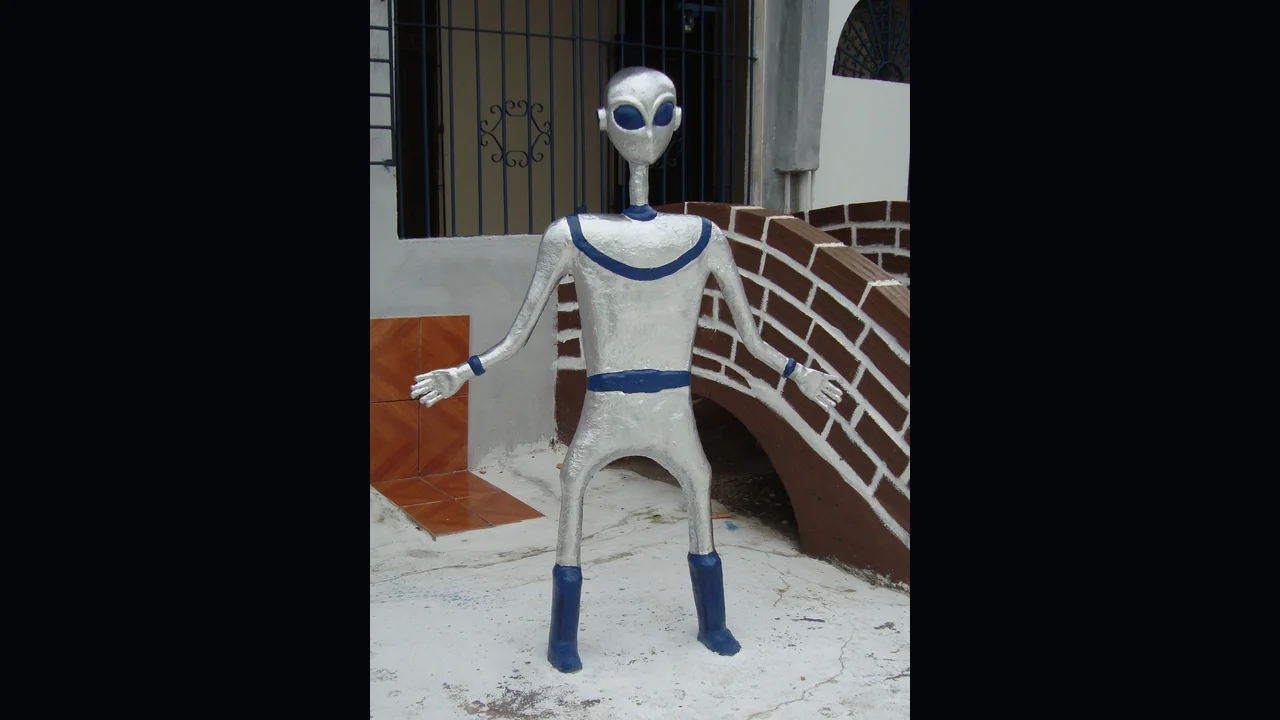
It is also, by a wide margin, the most-read case on this site, has a spaceship-shaped water tower, a tourist economy, a 2022 James Fox documentary, and in 2026 a US congressman writing to the CIA and FBI about it.
5. The Ubatuba fragments, 1957 — 2 / 12
In September 1957 the O Globo columnist Ibrahim Sued received an anonymous letter describing a disc exploding over the beach at Ubatuba, São Paulo state, enclosing small pieces of white metal. Analyses reported magnesium of remarkable purity, which proponents argued could not be produced terrestrially at the time. Later isotope work found the magnesium isotope ratios fell within terrestrial limits, with trace-element results inconclusive.
The case has the one flaw no amount of subsequent laboratory work can repair. The material arrived in an anonymous letter. There is no witness, no location verification, and no chain of custody. You can analyse a sample forever and never recover the provenance it never had, which is exactly why “we have a physical piece of it” is a weaker claim than it sounds.
What the ordering actually shows
Rank the five by international fame and you get almost the exact reverse: Varginha first by a distance, then Colares among enthusiasts, then Trindade, then Ubatuba, then the 1986 intercepts nowhere at all.
The mechanism is not mysterious. The cases that travel have characters and a plot: a creature, a capture, a cover-up, a martyr. The cases that hold up have artefacts and paperwork: a radar plot, a negative, a dossier, a minister at a podium. Those are different products, and the market rewards the first one.
This is why the site scores before it narrates. If you sort Brazilian UFO history by how good the story is, you get Varginha. If you sort it by what survives outside a witness’s memory, you get a Tuesday night in 1986 that almost nobody has heard of.
Compare across countries at the ranked case files, or read how the rubric works. For the Brazilian creature-encounter tradition specifically, see the reported NHI types field guide.
Every new case, scored the same way
One email when a case file lands, with its Signal-Strength score and what would move it. No hype, no 'BREAKING', and every claim carries its source. Unsubscribe anytime.
Frequently asked
What is the most famous UFO case in Brazil? +
The Varginha incident of January 1996, in which three young women reported a hunched, red-eyed creature crouched by a wall in Minas Gerais. It is often called Brazil's Roswell and has generated books, documentaries, a tourist industry, and, in 2026, a US congressional records request. Its fame is not matched by its evidence.
What is the best-evidenced UFO case in Brazil? +
By this site's four-axis rubric, the 19-20 May 1986 'Night of the UFOs'. Brazilian air defence radar logged around 21 unidentified returns across several states, five Air Force fighters were scrambled, and the Minister of Aeronautics confirmed the events at a press conference on 23 May 1986, stating the Air Force had no technical explanation. That combination of instrument data and immediate official confirmation is rare in any country.
Did the Brazilian government release its UFO files? +
In part. Brazil transferred military UFO records, including the Operação Prato dossier from the 1977 Colares investigation, to the National Archives, with a significant release around 2010. The files show that investigations happened and what was reported. They do not contain a confirmed identification of any non-human craft or being.
What was Operação Prato? +
A Brazilian Air Force field investigation on and around Colares island in Pará state, running in two phases between October and December 1977, after residents reported light beams causing burns and other injuries. It was commanded operationally by Captain Uyrangê Hollanda. The operation closed after roughly four months, and authorities reported no unusual phenomena. Its archived dossier is now one of the most substantial official UFO record sets in the world.
Are the Ubatuba magnesium fragments alien metal? +
There is no evidence that they are, and the case has an unfixable flaw: the material arrived by anonymous letter to a newspaper columnist in 1957, so it has no chain of custody at all. Early analyses reported unusually pure magnesium, which was argued to be impossible to produce terrestrially at the time. Later isotope work found the magnesium isotope ratios fell within terrestrial limits, with trace-element results inconclusive.
Sources
- [1] Wikipedia, 1986 Brazilian UFO incident (radar plots, intercepts, minister's press conference)
- [2] Wikipedia, Operação Prato (dates, command, outcome, archive release)
- [3] Wikipedia, Varginha UFO incident (witnesses, army inquiry, Mudinho conclusion)
- [4] The Trindade island visual and photographic case of 1958, Patrick Gross / UFOlogie
- [5] Journal of Scientific Exploration, 'Isotope Ratios and Chemical Analysis of the 1957 Brazilian Ubatuba Fragment'
- [6] O Estado de S. Paulo, 'Aeronáutica libera documentos sobre aparição de óvnis' (Dantas, 14 Aug 2010)
Read next
More History & Lore →
The Varginha Incident, Explained: Brazil's 'Roswell' and What the Evidence Actually Shows
In January 1996, three young women in Varginha, Brazil said they saw a hunched, red-eyed creature crouched by a wall. Thirty years later it's the most famous UFO case in the Southern Hemisphere, wrapped in claims of a military capture, a dead soldier, and a body flown to a university. Here's what was actually witnessed, what only got attached later, what the Brazilian Army's own inquiry concluded, and how the case scores once you separate the sighting from the legend.
Colares 1977: The UFO 'Attack' Brazil's Air Force Officially Investigated (Operação Prato)
In 1977, on a small island in the Amazon delta, hundreds of residents of Colares said they were being struck by beams of light from low-flying objects, burns, puncture marks, dizziness, anemia. The Brazilian Air Force did something almost no government has done before or since: it sent an official team to investigate, photograph, and document it. Operação Prato, 'Operation Saucer', ran for months, filled a dossier now in the National Archives, and officially concluded it found nothing unusual. Here's the case, the files, and why it scores higher than far more famous ones.
The Night of the UFOs: Brazil Scrambled Its Air Force in 1986, and the Minister Said He Had No Explanation
On 19 May 1986, radar across four Brazilian states tracked objects nobody could identify, five fighters went up after them, and four days later the sitting Minister of Aeronautics stood in front of the press with his pilots and said, on the record, that the Air Force had no explanation. It is almost unknown outside Brazil, and by a transparent evidence rubric it is the best-documented case the country has, far above the one everybody has heard of.
Follow the thread
New disclosure reporting, physics breakdowns, and case files, in your inbox. Sources or it didn't happen. No spam, unsubscribe anytime.