The Thirteenth Codex
Somebody buried thirteen books in a jar in Upper Egypt around the year 350. When they came back up in 1945, parts of them had rotted, parts had been sold off leaf by leaf, and part of the find was reportedly burned for kindling before anyone knew what it was. This series writes into the holes.
This is fiction. The gap in the manuscript is real and cited below; the text filling it was written by us and exists in no codex, museum, or library. Nothing inset in the reconstruction blocks on this page is an ancient source, and it must not be quoted as one.
The rules we wrote for ourselves
The gap has to be real
Every entry opens with the documented state of an actual manuscript, with sources, in the same voice as the rest of the site. We invent text only where scholarship agrees text is missing. We do not invent the damage.
The invention is fenced
Reconstructed passages sit inside a labelled block, in a different typeface, on a different ground. Nothing outside that block is pretending. Nothing inside it is real.
No forged provenance
No invented inventory numbers, no invented museum, no invented scholar, no photographs of papyrus we made. The last thing this field needs is another Gospel of Jesus's Wife.
We say what we changed
Each entry closes with a note listing what is attested, what is extrapolated from the surviving text, and what we simply made up, plus what the invention is arguing.
The real holes
There is no honest total for how much of the gnostic library is missing, because nobody knows what was destroyed between the discovery and the first scholarly catalogue. What can be stated is the condition of what survived.
| Manuscript | What survives | Condition |
|---|---|---|
| Codex XIII | Trimorphic Protennoia, then ten lines of On the Origin of the World | Eight leaves only, tucked inside the cover of Codex VI. The rest of the codex is gone. |
| Codex XII | Sentences of Sextus, Gospel of Truth, unidentified fragments | Nearly destroyed. What else it contained is unknown. |
| Codex X | Marsanes | One tract, with the upper portion of most pages missing. |
| Codex VIII | Zostrianos, Letter of Peter to Philip | Zostrianos is the longest tract in the library and among the most damaged. |
| Codex XI | Interpretation of Knowledge, A Valentinian Exposition, Allogenes, Hypsiphrone | Hypsiphrone survives as two short fragments. Its revelation does not survive at all. |
| Berlin Codex 8502 | Gospel of Mary | Pages 1 to 6 and 11 to 14 are missing, roughly ten of nineteen pages. |
| Never found | The Ophite Diagram, Basilides' Exegetica, the Gospel of Eve | Known only from titles and from the summaries of hostile witnesses. |
The entries, in order
The Lost Leaves of Codex XIII
Codex XIII survives as eight leaves someone tore out and hid inside the cover of another book. They are numbered 35 to 50, which means thirty-four pages are simply gone. This is an invented reconstruction of what stood on them, and of a fourth descent the real text never got to make.
The Six Lost Pages of Mary
The Gospel of Mary opens mid-sentence, because its first six pages are missing, and it drops out again in the middle of the soul's ascent, because four more are. An invented reconstruction of both gaps, written to dovetail into the surviving lines exactly where they resume.
What Zostrianos Saw in the Gaps
The longest book in the Nag Hammadi library is also one of the most damaged, and the damage has a cruel pattern: the ladder of aeons survives, and the descriptions of what stands on each rung do not. We filled the holes and left the pattern intact.
The Book of Hypsiphrone
A named woman, a revelation in her own voice, a man with a name meaning bright-eyed, and fire. That is everything the manuscript preserves of Hypsiphrone: a few sentences off the end of a ruined codex. Nothing survives to contradict us, so we wrote her whole book.
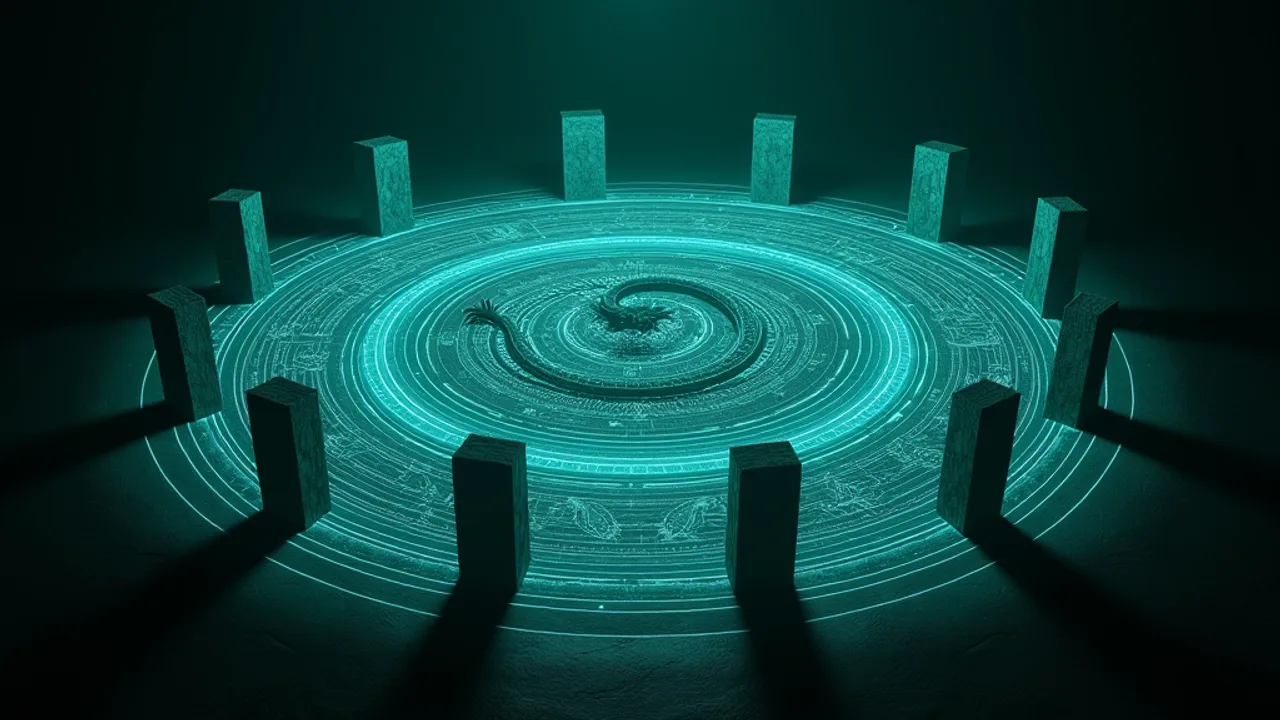
The Ophite Diagram: The Gate Passwords
A second-century sect drew a map of the levels above the world and wrote out what you say to the thing guarding each one. We only have it because a pagan critic described it in order to mock it, and a Christian critic quoted the mockery in order to answer it. Here is the document itself, invented.
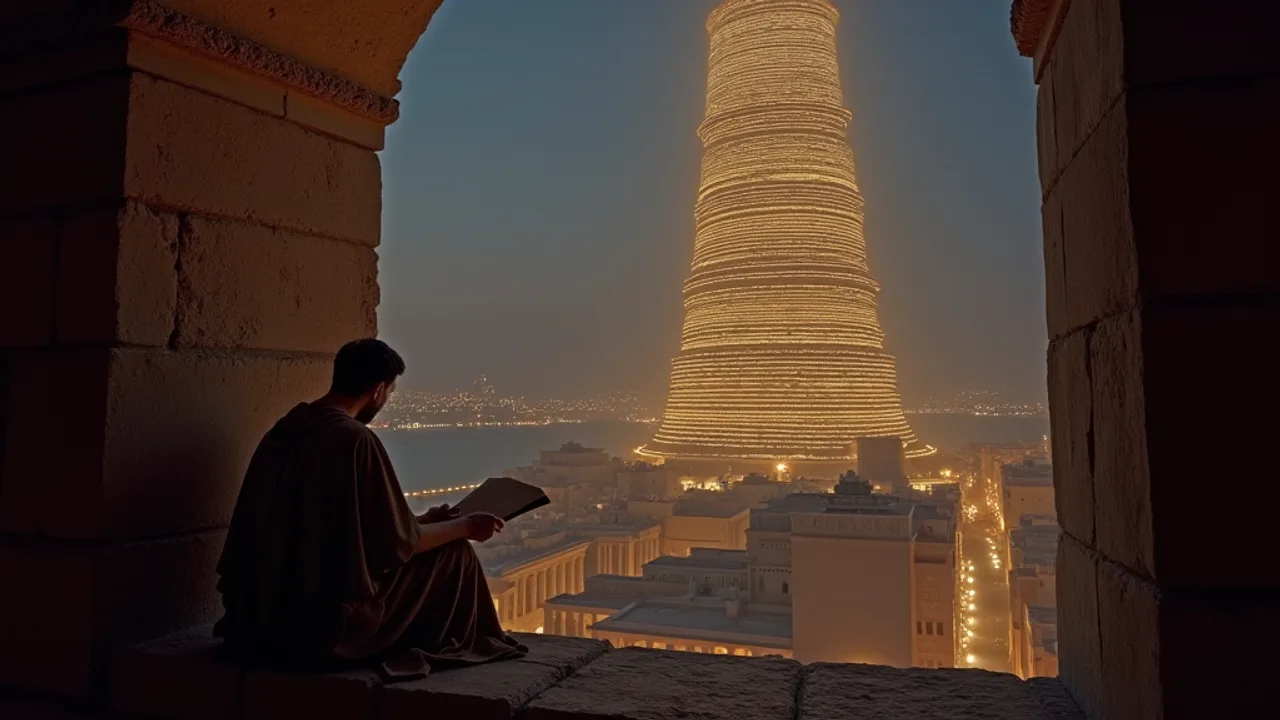
Basilides, Exegetica, Book Thirteen
He wrote twenty-four books in Alexandria around the year 130. We have a page and a half, quoted by men who were refuting him. The most disturbing idea attributed to him is that ignorance is installed on purpose, as an act of mercy. This is the middle book, invented, arguing that case.
One email when the next leaf lands
The Thirteenth Codex, plus the rest of the site's case files. Sources or it didn't happen, except in the room where we say otherwise.