'Taken' at 24: The 2002 Spielberg Abduction Series That Now Reads Like a 2026 Briefing
Steven Spielberg Presents Taken, a 20-hour, Emmy-winning miniseries from 2002 about Roswell, a hidden government program, and a multi-generational hybrid breeding project, now lines up unnervingly well with what whistleblowers are telling Congress in 2026. We score it element by element: where the fiction matches the current claims, where it's still pure TV, and the uncomfortable possibility nobody raises, that the resemblance runs backwards.
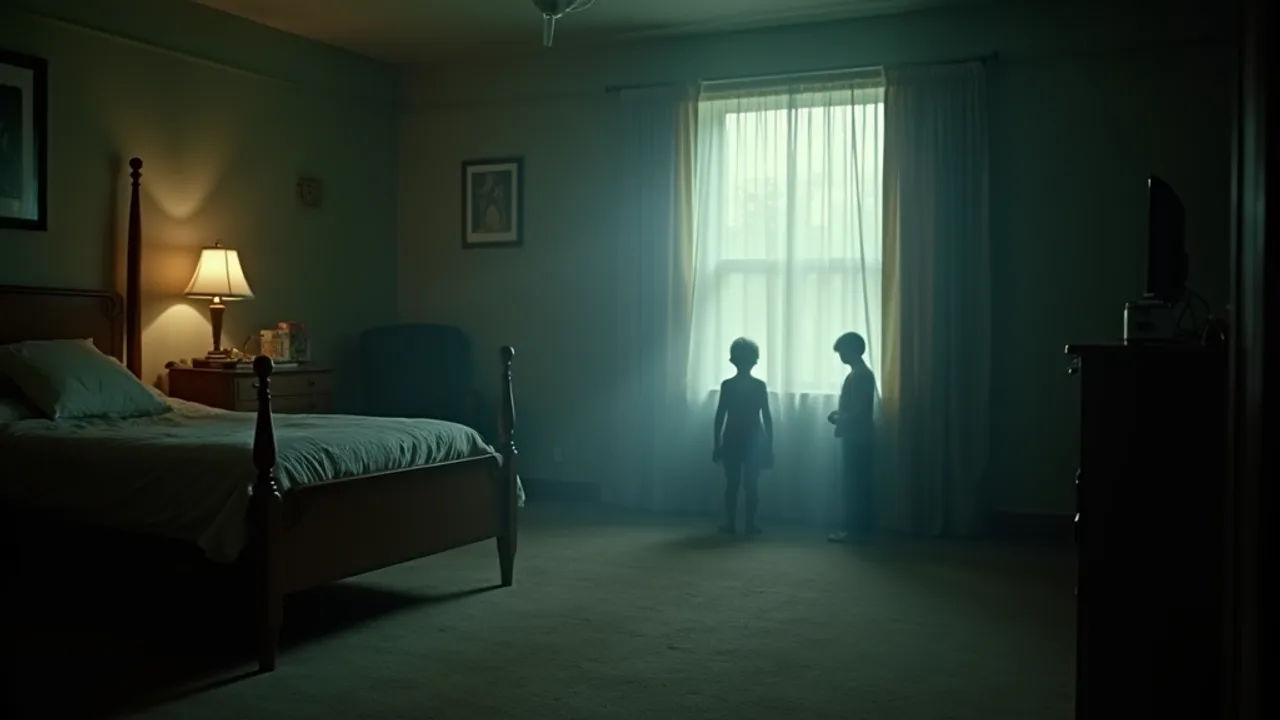 AI illustration
In 2002, the Sci Fi Channel aired the most expensive miniseries made to that point: Steven Spielberg Presents Taken, a 20-hour, ten-part saga written by Leslie Bohem and executive-produced by Spielberg’s DreamWorks. It followed three American families, the Keys, the Crawfords, and the Clarkes, from the 1944 skies over Germany and the Roswell crash of 1947 through five decades of abductions, cover-ups, and a secret hybridization program, ending with Allie (a young Dakota Fanning), the child the whole thing was apparently for. It won the Emmy for Outstanding Miniseries and then, mostly, faded into late-night reruns.
Watch it in 2026 and something is off. The plot beats don’t feel like science fiction anymore. They feel like a summary of the week’s news, recovered craft, a program hidden from Congress, “non-human biologics,” a continuum of beings. So the fair question, and the one this piece actually tries to answer: did Taken get it right, or did it help write the script everyone is now reading?
The scorecard
For each major element of the series, what Taken dramatized in 2002, what the 2026 claims say, and an honest verdict.
Roswell as a real recovery
Taken (2002): opens on a genuine crash with recovered craft and bodies, treated as the secret hinge of postwar history. 2026: David Grusch testified under oath that the U.S. holds recovered craft and “non-human biologics,” and at the June 9 presser lawmakers claimed foreign recovery files have been “confirmed.” Verdict: eerie match, on the claim, not the proof. The series asserted as fact what is now asserted as testimony. Neither has produced a body. The shape of the allegation is identical; the evidence is equally absent.
A black program hidden even from Congress
Taken: Owen Crawford, a ruthless Air Force officer, builds a self-perpetuating, unaccountable program around the recovery, the real engine of the story is the cover-up, not the aliens. 2026: the central political claim is precisely this, that Special Access Programs and private contractors have been used to keep UAP material beyond Congressional oversight and FOIA. Verdict: the strongest match in the series. Strip the aliens out entirely and Taken’s institutional thesis, secrecy as an organism that protects itself, is the exact argument the disclosure caucus makes today. This is the part that ages least like fiction.
A multi-generational hybridization program
Taken: the abductions aren’t random; they’re a breeding project across generations, culminating in a hybrid child. 2026: “hybrids” remain a fixture of abduction literature, we catalog the type in our field guide, but note where it sits: hybrids appear in regression therapy and experiencer accounts, not in any whistleblower testimony about physical recovery. Verdict: partial, and revealingly so. The series treats as plot-fact a claim that, in 2026, still lives entirely in the softest, least-corroborated tier of the evidence. Taken didn’t predict this one; it crystallized it.
Greys, medical procedures, implants, missing time
Taken: the canonical abduction kit, small grey beings, paralysis, exams, implants, lost hours. 2026: identical to the descriptions in the investigated cases we cover, Betty & Barney Hill, Travis Walton, the Allagash four, Whitley Strieber. Verdict: match by design, not by prophecy. The series faithfully reproduced lore that already existed by 2002. This isn’t Taken being right; it’s Taken doing its homework.
The benevolent endgame, a child who is the point of it all
Taken: the program has a purpose; Allie is a luminous, telepathic bridge between species, and the story resolves toward meaning. 2026: nothing in the public record, the testimony, or the AARO findings supports a purpose, a plan, or a benevolent arc. Verdict: still pure fiction. This is the seam where Taken is most obviously a story, it needs a destination, so it invents one. Reality has supplied no third act.
The uncomfortable part: which way does the arrow point?
Here is the question that makes “it’s basically a documentary” the wrong takeaway, not because the resemblance isn’t real, but because resemblance has two possible explanations, and the flattering one isn’t obviously correct.
Explanation A, prophecy. Taken was downstream of real leaks and insider lore, and dramatized things that were genuinely true. The 2026 confirmations are the world catching up to what the show already knew.
Explanation B, feedback. Taken was a 20-hour, Emmy-winning, Spielberg-branded broadcast watched by millions during the formative years of the modern abduction narrative. It didn’t just reflect the lore, it taught it, vividly, to a generation that would go on to become the experiencers, the podcasters, and yes, the witnesses. When later accounts match the show, that may be the show in the accounts.
This is not a fringe worry. It is the core of Jacques Vallée’s “control system” thesis: the UFO phenomenon and the culture that describes it are locked in a feedback loop, each writing the other. Taken is a near-perfect specimen of that loop, a piece of fiction so influential that its fingerprints would be impossible to distinguish from “real” testimony decades later.
So when the series “predicts” 2026, you genuinely cannot tell, from the resemblance alone, whether you’re seeing foresight or an echo. Both worlds look exactly like this. That ambiguity isn’t a cop-out; it’s the most honest thing that can be said.
How to hold it
Taken is worth revisiting, not as a leaked truth, but as the best single artifact of how thoroughly fiction and belief braid together in this subject. Its institutional cynicism (the cover-up as a living thing) has aged into something close to the 2026 argument. Its hardware (greys, implants, hybrids) was accurate because it was borrowed. And its meaning (a benevolent plan) remains exactly as unevidenced as it was the night it aired.
Watch it. Feel the chill when Owen Crawford’s program starts to sound like a committee hearing. Then remember that the chill is doing its job either way, whether the show saw the future, or quietly helped build it.
Just landed here from the new film? See the real disclosure timeline behind Spielberg’s ‘Disclosure Day’.
Every new case, scored the same way
One email when a case file lands, with its Signal-Strength score and what would move it. No hype, no 'BREAKING', and every claim carries its source. Unsubscribe anytime.
Sources
- [1] Wikipedia, Taken (miniseries), 'Steven Spielberg Presents Taken' (DreamWorks TV, 2002)
- [2] IMDb, Taken (2002), plot summary (Keys / Crawford / Clarke families, 1944-2002)
- [3] NHIAnomalous, Jacques Vallée's Magonia & the control system (the feedback thesis)
- [4] NHIAnomalous, the June 9 2026 Capitol presser (current claims)
Read next
More Esoterica →
Saw 'Disclosure Day'? Here's the Real Disclosure Timeline Spielberg's Film Is Riding
Steven Spielberg's 'Disclosure Day' (Universal, June 12) is fiction: a cybersecurity expert turns whistleblower to reveal the government's alien secret. The strange part is that three days before it opened, a version of that scene played out for real on the Capitol steps. Here is the actual, checkable disclosure timeline the movie is built on top of, what's documented, what's only claimed, and where the film quietly rewrites the record.
Passport to Magonia: The Scientist Who Said the UFO Is a Control System
Jacques Vallée helped build the early internet, mapped Mars for NASA, and was the model for the French scientist in Close Encounters. He is also the man who argued the UFO is neither alien spacecraft nor hoax, but a recurring control system that has worn fairy lore, religious apparitions, and now starships as its costume. It is the most serious version of the occult reading, precisely because it comes from the least occult person in the field.
Is 'Disclosure Day' Based on a True Story? Every Real UFO Claim in Spielberg's Movie, Graded
Spielberg's 'Disclosure Day' opens June 12 at 86% on Rotten Tomatoes, and almost every beat in it, the insider who steals the files, the psychic contactee, the aliens disguised as animals, the broadcast that tells the world, is borrowed from a real claim someone has actually made. None of those claims is proven. Here is the full plot, element by element, matched against the actual record: what's documented, what's only alleged, and what the movie invented outright. Spoilers throughout.
Follow the thread
New disclosure reporting, physics breakdowns, and case files, in your inbox. Sources or it didn't happen. No spam, unsubscribe anytime.