Communion: The Book That Gave the Visitors a Face
A successful horror novelist staked his career on a story he could not prove and did not enjoy telling. The cover image alone rewired what a million people pictured when they heard the word 'alien'.
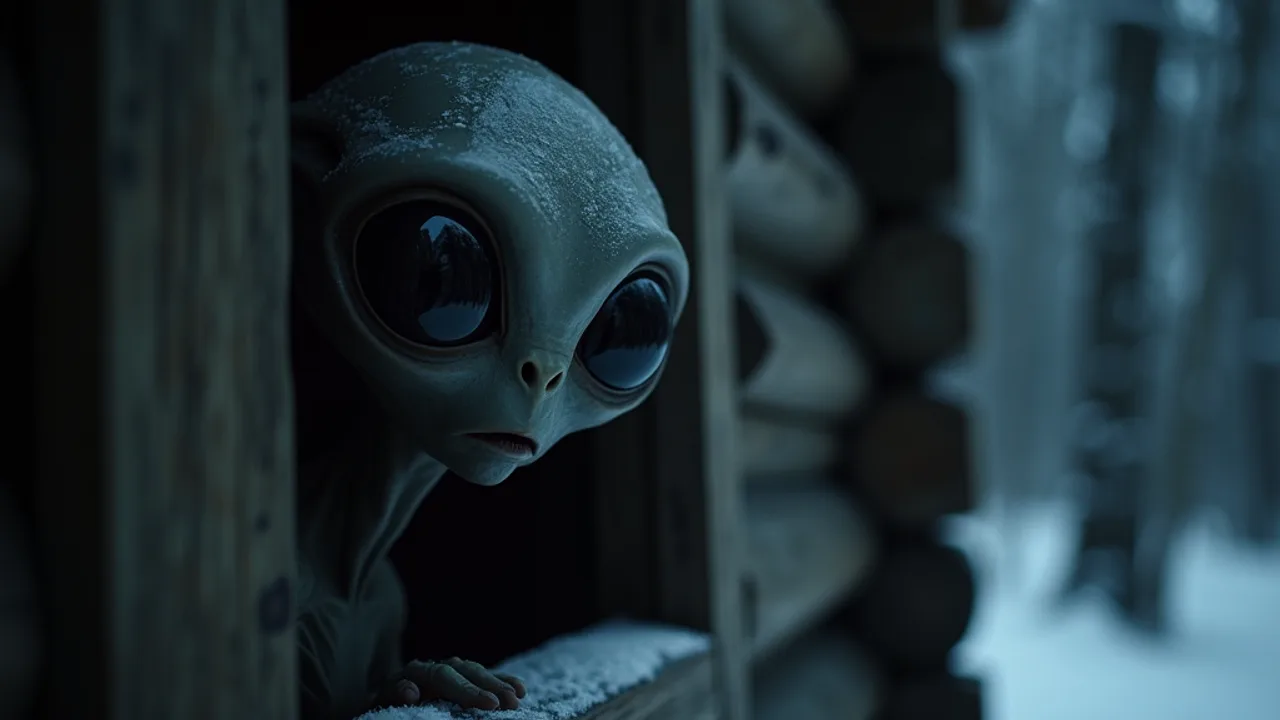 AI illustration
By 1985 Whitley Strieber had a working theory of his own career: he frightened people for money, on purpose, in print. The Wolfen and The Hunger were commercial horror by a man who knew exactly how the machinery of dread worked. That biography is the most important fact about Communion, because it cuts both ways. A horror novelist is the perfect person to fabricate a terrifying alien-contact memoir. He is also the last person who needed to, and the one with the most to lose by filing it as nonfiction.
He filed it as nonfiction.
The night
The weekend after Christmas 1985, Strieber, his wife, and their young son were at their cabin in upstate New York with houseguests. In the early hours of December 26, Strieber says he woke to a sense of movement in the room and was taken, carried, somehow, from the bedroom, and subjected to an examination by figures he could not at first describe, including a needle inserted into his brain and a probe used invasively. He woke with fragmented, intolerable memories and a conviction that something had happened that his mind was actively refusing to hold.
What followed was not a press tour. It was a man trying to find out whether he had lost his sanity. He sought a neurologist to rule out temporal-lobe epilepsy. He took a polygraph. He underwent hypnosis with Budd Hopkins, the artist-turned-investigator who was then cataloguing similar accounts. The temporal-lobe workups did not produce the expected abnormality; the polygraph he passed.
The face
The lasting cultural artifact is not the prose. It is the cover. Strieber worked with an artist to render the being he remembered most vividly: a smooth, heart-shaped face, a small frame, and enormous, black, almond eyes that seem to absorb the reader rather than look back. That image went onto the hardcover of a number-one New York Times bestseller and into the retinas of millions.
After Communion, “the alien” had a settled face. People who reported encounters afterward tended to report that face. Skeptics read this as proof of contamination: Strieber published the image, the image became the expectation, the expectation generated the testimony. It is a strong argument, and it should be sat with rather than waved away.
The honest hypothesis
The most serious prosaic explanation is not “he lied.” It is sleep paralysis with hypnopompic hallucination, the well-documented state in which a waking mind finds the body immobilized and populates the room with a felt presence, often menacing, sometimes accompanied by the sensation of pressure on the chest and of being moved. It explains the paralysis, the dread, the bedroom setting, and the night timing with unsettling economy.
Strieber, to his credit, has engaged this rather than dodged it. His own position drifted away from “aliens” toward something stranger and less classifiable, he prefers “the visitors,” and has spent decades refusing to claim he knows what they are.
What it costs to dismiss it
You can file the whole thing under neurology and be on solid ground for most of it. The residue that neurology handles less cleanly is the corroboration: houseguests that weekend reported their own disturbances and lights, and Strieber’s son described experiences of his own. Sleep paralysis is a private event; it does not usually arrive with witnesses in other rooms.
And there is the motive problem, inverted. Strieber did not need the money or the attention; he had both. What he got from publishing Communion as truth was the permanent reclassification of a respected novelist as the alien-abduction guy, a reputational cost no horror career benefits from.
He paid it anyway, and never recanted. That is not proof of anything beyond the bedroom. But it is the behavior of a man reporting something, not selling it.
Every new case, scored the same way
One email when a case file lands, with its Signal-Strength score and what would move it. No hype, no 'BREAKING', and every claim carries its source. Unsubscribe anytime.
Sources
Read next
More Stories Retold →
Element 115 and the Lazar Claim: The Story That Made Its Own Test, and Failed It
Bob Lazar's 1989 account is the rare UFO claim specific enough to check. Physics checked it. Element 115 exists, it was made in 2003, and it lasts less than a second.
Is 'Disclosure Day' Based on a True Story? Every Real UFO Claim in Spielberg's Movie, Graded
Spielberg's 'Disclosure Day' opens June 12 at 86% on Rotten Tomatoes, and almost every beat in it, the insider who steals the files, the psychic contactee, the aliens disguised as animals, the broadcast that tells the world, is borrowed from a real claim someone has actually made. None of those claims is proven. Here is the full plot, element by element, matched against the actual record: what's documented, what's only alleged, and what the movie invented outright. Spoilers throughout.
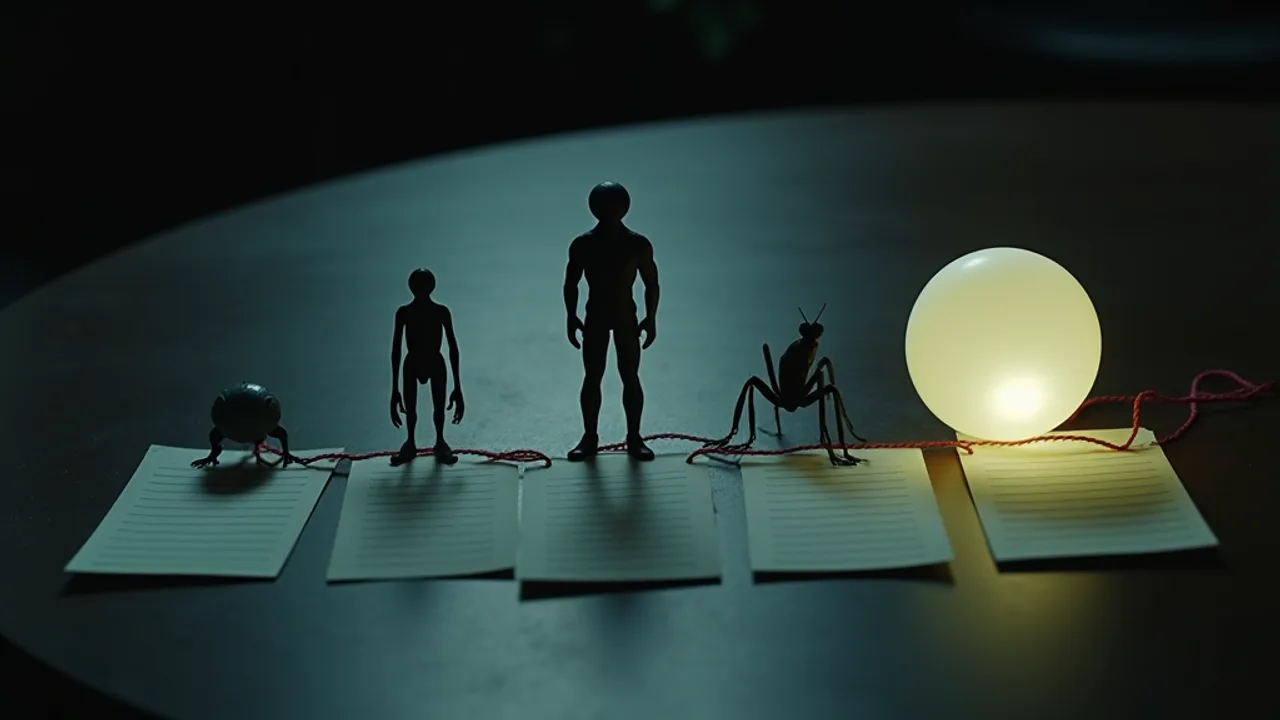
The Reported-NHI Field Guide: Every Claimed Non-Human Type, Graded by Provenance
Greys, Nordics, Reptilians, Insectoids, Tridactyls, and, as of June 2026, 'sentient plasmoid life.' Pop catalogs list a dozen alien races as if they were equally real. They are not equally evidenced. This is a field guide that logs each reported non-human type, ties it to the specific cases it actually comes from, and sorts the whole gallery into three honest tiers of provenance, from investigated physical encounters down to channeled starseed lore.
Follow the thread
New disclosure reporting, physics breakdowns, and case files, in your inbox. Sources or it didn't happen. No spam, unsubscribe anytime.