Saw 'Disclosure Day'? Here's the Real Disclosure Timeline Spielberg's Film Is Riding
Steven Spielberg's 'Disclosure Day' (Universal, June 12) is fiction: a cybersecurity expert turns whistleblower to reveal the government's alien secret. The strange part is that three days before it opened, a version of that scene played out for real on the Capitol steps. Here is the actual, checkable disclosure timeline the movie is built on top of, what's documented, what's only claimed, and where the film quietly rewrites the record.
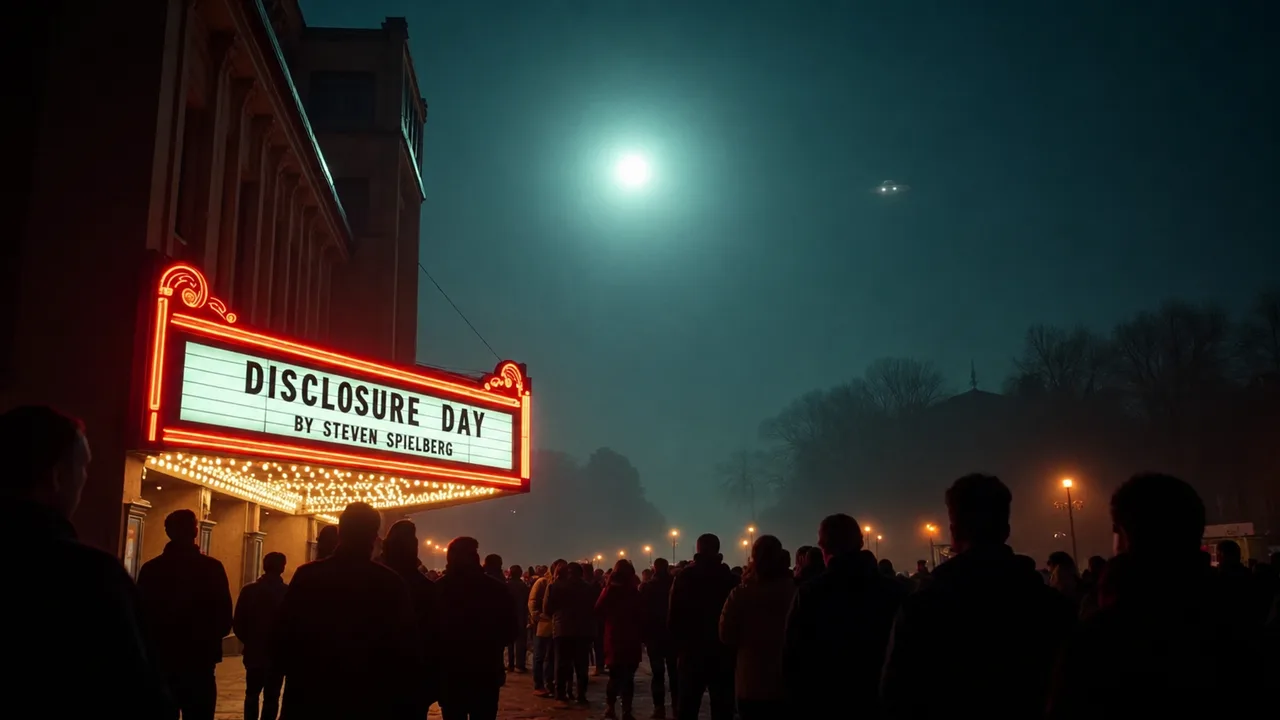 AI illustration
This week a Steven Spielberg movie asks you to imagine the day the government admits aliens are real. Disclosure Day, Universal, in theaters June 12, Josh O’Connor as a cybersecurity insider who turns whistleblower and Emily Blunt as the meteorologist pulled into what he stole, under the tagline “We deserve to know”, is the director’s return to UFO territory four decades after Close Encounters. The reviews landed mostly rapturous (86% on Rotten Tomatoes; the BBC and Variety dissenting). That’s a film-criticism question, and not ours.
Ours is the strange thing sitting underneath it: three days before the movie opened, the whistleblower scene happened for real. On June 9, a former intelligence officer and four members of Congress stood on the Capitol steps and demanded the government release what it knows. So if the film sent you here Googling “is any of this real?”, good. Here is the actual timeline, graded the way we grade everything: what’s documented, what’s merely claimed, and where the movie takes liberties the record doesn’t support.
The movie’s premise vs. the week’s real news
The film’s engine is a lone insider with proof who forces the truth into the open. The real version is messier and, honestly, more interesting:
- There is a real whistleblower, David Grusch, who testified under oath in 2023 that the U.S. holds recovered craft and “non-human biologics.” That’s not a screenwriter’s invention.
- There is no smoking-gun reveal. Unlike the movie, no document, body, or craft has been made public. At the June 9 presser, Grusch went further than ever rhetorically, describing a “continuum from corporeal bipedal type life to sentient plasmoid life”, but produced no evidence, and the careful press declined to even headline the quote.
- The institutional answer is flat denial. The Pentagon’s own UAP office found no verifiable evidence of recovered non-human technology in its 2024 review. The movie resolves that tension; reality has not.
So Disclosure Day dramatizes a clean ending to a story that, in the real world, is still an open, unresolved argument. That’s allowed, it’s a movie. Just don’t walk out mistaking the third act for a press release.
The real timeline, compressed
Everything the film borrows from, in order, with the status of each marked:
- 1947, Roswell. A recovery claim that became the genre’s origin myth. Official explanation: a balloon program (Project Mogul). No public ET artifact. (Claimed.)
- 2017, the AATIP story breaks. The New York Times reveals a quiet Pentagon UAP program and publishes Navy videos. This part is documented, the program and the footage are real; what the footage shows is not settled.
- 2021, the ODNI report. The U.S. government formally acknowledges 144 UAP incidents it could not explain. Documented, and deliberately agnostic about what they are.
- 2023, Grusch testifies. Under oath, he alleges recovered craft, “non-human biologics,” and a hidden reverse-engineering program kept from Congress. Claimed under oath, serious because of the venue, unproven because of the absent evidence.
- 2024, AARO says no. The Pentagon’s review finds nothing verifiable. Documented denial.
- 2026, the PURSUE releases + the June 9 presser. The Pentagon begins releasing tranches of UAP files; lawmakers and Grusch escalate the public push. Documented event, contested contents.
Notice the shape: real programs, real footage, real hearings, wrapped around a core claim (recovered bodies and craft) that has never once entered the public record. The movie collapses that gap. The timeline keeps it open.
If the film got you curious, start here
We built this site for exactly the person walking out of Disclosure Day wanting to know which parts weren’t invented:
- The “several species” question the movie waves at → our field guide to every reported NHI type, graded by how much evidence actually backs each one.
- The recovered-bodies claim → non-human biologics, examined.
- The “four types” headlines → what Puthoff and Davis actually said.
- The whistleblower scene, for real → the June 9 Capitol presser, graded.
- The official counterweight → what AARO has actually published.
The honest takeaway
Disclosure Day is doing something its mixed reviews mostly missed: it’s pressure-testing how you’d react to the reveal, which is a fair question to sit with, because a milder version of it is genuinely live in Congress right now. But a film can hand you certainty in two hours. The real subject can’t, and the difference between those two experiences is the whole topic.
Hold the wonder. Withhold the belief until something you can actually check enters the record. When it does, we’ll be the first to say so, and we’ll show our work.
Seen the movie already? We graded every claim it borrows, the corporate files, the psychic contactee, the aliens-as-animals, the broadcast ending, against the actual record, spoilers and all: is ‘Disclosure Day’ based on a true story?
Spielberg has been here before. For the other side of his UFO filmography, the 2002 abduction miniseries that, twenty years on, reads eerily like this year’s headlines, see what ‘Taken’ got right.
Every new case, scored the same way
One email when a case file lands, with its Signal-Strength score and what would move it. No hype, no 'BREAKING', and every claim carries its source. Unsubscribe anytime.
Sources
- [1] Letterboxd, Disclosure Day (2026), dir. Steven Spielberg (synopsis & tagline)
- [2] Variety, 'Disclosure Day' first reactions ahead of June 12 release
- [3] BBC Culture, Disclosure Day review (★★, June 9 2026)
- [4] The Independent, US government aware of several kinds of alien life, whistleblower claims (June 9 2026)
Read next
More Disclosure →
Is 'Disclosure Day' Based on a True Story? Every Real UFO Claim in Spielberg's Movie, Graded
Spielberg's 'Disclosure Day' opens June 12 at 86% on Rotten Tomatoes, and almost every beat in it, the insider who steals the files, the psychic contactee, the aliens disguised as animals, the broadcast that tells the world, is borrowed from a real claim someone has actually made. None of those claims is proven. Here is the full plot, element by element, matched against the actual record: what's documented, what's only alleged, and what the movie invented outright. Spoilers throughout.
'Taken' at 24: The 2002 Spielberg Abduction Series That Now Reads Like a 2026 Briefing
Steven Spielberg Presents Taken, a 20-hour, Emmy-winning miniseries from 2002 about Roswell, a hidden government program, and a multi-generational hybrid breeding project, now lines up unnervingly well with what whistleblowers are telling Congress in 2026. We score it element by element: where the fiction matches the current claims, where it's still pure TV, and the uncomfortable possibility nobody raises, that the resemblance runs backwards.
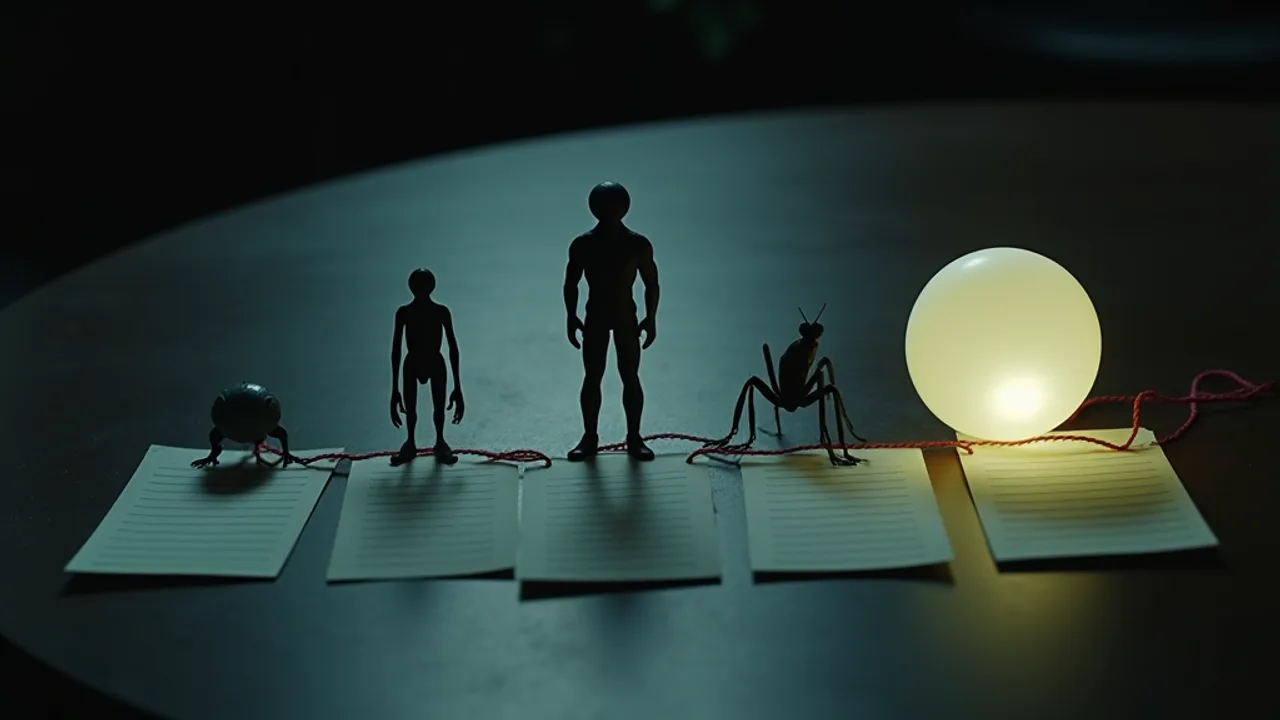
The Reported-NHI Field Guide: Every Claimed Non-Human Type, Graded by Provenance
Greys, Nordics, Reptilians, Insectoids, Tridactyls, and, as of June 2026, 'sentient plasmoid life.' Pop catalogs list a dozen alien races as if they were equally real. They are not equally evidenced. This is a field guide that logs each reported non-human type, ties it to the specific cases it actually comes from, and sorts the whole gallery into three honest tiers of provenance, from investigated physical encounters down to channeled starseed lore.
Follow the thread
New disclosure reporting, physics breakdowns, and case files, in your inbox. Sources or it didn't happen. No spam, unsubscribe anytime.