Travis Walton: The Witness Who Could Not Be Cracked
Six men watched him get hit. Five took the lie detector. He passed his. Fifty years later, the case is still the cleanest abduction account on record, and nobody has dismantled it.
 AI illustration
Travis Walton, an Arizona logger, disappeared for five days in November 1975 after his six-man crew reported seeing him struck by a beam of light from a hovering disc. Five of the six crew members passed polygraph exams affirming the sighting; Walton also passed a later polygraph on his own account, and no evidence of a hoax or foul play was ever substantiated despite decades of scrutiny, though what actually happened during the missing five days remains unverified.

The unflattering version is well-rehearsed: a logging crew on a U.S. Forest Service contract is falling behind schedule. There is a penalty clause. They invent a story to invoke an Act of God. Travis Walton, the youngest, “disappears” for five days. He returns. He sticks to the story. They all stick to the story. Everyone gets paid.
This explanation has the advantage of being entirely earthbound. It has the disadvantage of requiring six men, none of them friends with each other beyond the job, to maintain it under five decades of subsequent scrutiny, including:
- A multi-day Yavapai County Sheriff’s Office search.
- Five polygraph examinations of the remaining crew (each passed except for one inconclusive).
- A polygraph of Walton himself, two weeks after the event, passed.
- A second polygraph of Walton in 1993, separately commissioned, passed.
- Independent interviews by the National Enquirer’s contracted PIs (whose mandate was specifically to expose a hoax for a story payment).
- Decades of book and film deals that consistently pressure the witnesses to embellish, with no embellishment ever materializing in court or in print.
That is a lot of friction for a fabrication to survive.
What the crew said
Crew foreman Mike Rogers was driving a flatbed Ford pickup back from a day’s thinning work in the White Mountains when, near a clearing in the gathering dusk, the six men saw a luminous, “metallic disc with golden glow” hovering above the road. Walton stepped out of the truck. He walked toward it. A beam, they were specific about the geometry, struck him. He was lifted, briefly, and dropped.
Rogers and the others fled. They drove a short distance, stopped, talked themselves into returning. The clearing was empty. Walton was gone.
They reported it to the sheriff’s office within two hours. Initial law enforcement reaction, on the record, was suspicion of murder.
What Walton said
Five days later he was found by a payphone outside a Heber, Arizona gas station, dehydrated and disoriented. He said he had woken on a table under bright lights, in a room with three short, hairless humanoid figures with large eyes, and then a tall figure in a helmet who was not the same kind. He said he had panicked, swung at one of them, run through corridors, ended up outside on the road. Five days had passed. He remembered roughly two hours.
This is not where most hoaxers stop. Most hoaxers stop at the disc. Adding entity descriptions, missing-time, and a coherent confused-witness posture is high-risk creative writing if you don’t believe it.
What has held up
The polygraphs are not perfect evidence. Polygraphs measure stress, not truth. But the entire crew submitted, and the pattern of the results is consistent with a story they were not making up. The polygraph examiners themselves were of varying quality. One was widely respected (C. E. Gilson); one had a known confederation with Klass-style skeptics (John J. McCarthy), and his single inconclusive on Rogers has been debated since.
The 1993 polygraph of Walton, by Cy Gilmore, was performed on his own initiative without media payment. He passed.
The crew, in interviews ranging from 1975 to 2024, has not contradicted itself on the core sequence. The descriptions of the craft, beam, and truck positions match across interviews recorded decades apart.
What it costs to dismiss it
You can dismiss any single witness. You can dismiss the polygraphs as unreliable. You can dismiss the missing-time as confabulation. But the debunker’s task is to find a unified theory under which seven men, of varying personalities and motivations, with prior animosities visible in the record, never break ranks, never make money commensurate with the effort of sustaining a lie, never trip on a detail under deposition, and remain at the same story for fifty years.
That theory has not yet been written.
The case stays in the canon because no one has ever explained it. They have only proposed that someone, eventually, will.
Every new case, scored the same way
One email when a case file lands, with its Signal-Strength score and what would move it. No hype, no 'BREAKING', and every claim carries its source. Unsubscribe anytime.
Sources
From the Canon
The reading list →Read next
More Stories Retold →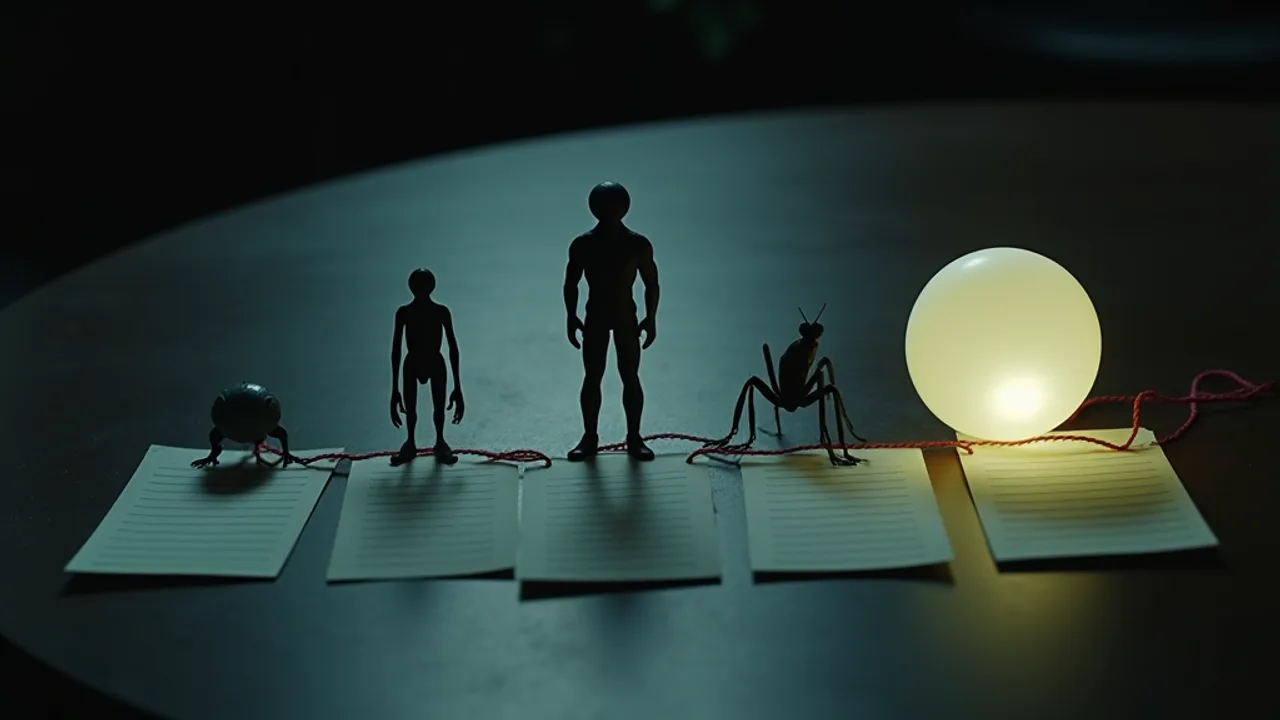
The Reported-NHI Field Guide: Every Claimed Non-Human Type, Graded by Provenance
Greys, Nordics, Reptilians, Insectoids, Tridactyls, and, as of June 2026, 'sentient plasmoid life.' Pop catalogs list a dozen alien races as if they were equally real. They are not equally evidenced. This is a field guide that logs each reported non-human type, ties it to the specific cases it actually comes from, and sorts the whole gallery into three honest tiers of provenance, from investigated physical encounters down to channeled starseed lore.
'Taken' at 24: The 2002 Spielberg Abduction Series That Now Reads Like a 2026 Briefing
Steven Spielberg Presents Taken, a 20-hour, Emmy-winning miniseries from 2002 about Roswell, a hidden government program, and a multi-generational hybrid breeding project, now lines up unnervingly well with what whistleblowers are telling Congress in 2026. We score it element by element: where the fiction matches the current claims, where it's still pure TV, and the uncomfortable possibility nobody raises, that the resemblance runs backwards.
What the Evidence Actually Says: We Scored Every Case on the Same Four Axes
Most UFO writing argues case by case, which makes every story sound equally strong. We did the opposite: scored every case file on the same four-part rubric and lined the numbers up. The pattern that falls out is not the one either side wants.
Follow the thread
New disclosure reporting, physics breakdowns, and case files, in your inbox. Sources or it didn't happen. No spam, unsubscribe anytime.