Communion: A True Story
Whitley Strieber · 1987 · Beech Tree Books / William Morrow
A successful horror novelist reports being taken from his cabin by non-human beings and, unusually, presents the account not as proof but as an unresolved terror he cannot explain away.
Canon score
- Influence
- 3/3
- Rigor
- 1/3
- Holds up
- 1/3
- Readability
- 3/3
How much it shaped the field or the culture.
Evidentiary quality of the book's own method.
How its claims survive today's evidence.
Whether it's worth the hours.
Scored on the same rubric across every book. See the full shelf →
TL;DR
Communion is the book that put the almond-eyed “Gray” on the cover of the culture. In 1987 Whitley Strieber, already a bestselling horror writer, described being removed from his upstate New York cabin by beings he pointedly refused to call aliens, calling them only “the visitors.” It sold in the millions, its cover became the single most recognizable image in the abduction genre, and it moved the abduction narrative out of UFO fanzines and onto airport bestseller racks. Read it for its influence and its genuinely unsettling prose, not as evidence: its central events rest entirely on one man’s recovered memory, much of it retrieved under hypnosis, which is exactly the kind of foundation that does not survive scrutiny.
What it claims
Strieber recounts a series of encounters, centered on the night of December 26, 1985, in which small non-human figures allegedly enter his home, immobilize him, and subject him to a frightening medical-style procedure. He reports missing time, screen memories, and a lingering dread that predates his conscious recollection of any event. Crucially, he declines to identify the visitors as extraterrestrials. He floats every option, the dead, the unconscious, folkloric entities, something genuinely non-human, and settles on none. He also submits himself to psychological testing and hypnosis and reports the results, including the possibility that he is unwell, rather than hiding them.
Why it matters
Two reasons, and they are large. First, the iconography: the cover portrait fixed the “Gray” as the default face of alien contact for a generation, a visual shorthand that now long outlives the book. Second, the framing. Where Budd Hopkins’s Missing Time built the abduction template as investigation, Communion delivered it as literary memoir from a gifted writer, which is why it reached an audience that would never touch a UFO paperback. It made abduction a mainstream subject and made Strieber, fairly or not, the genre’s most famous experiencer. Almost every abduction account that followed is measured against it.
Does it hold up?
As literature and cultural artifact, entirely. As evidence, no, and Strieber himself is more honest about that than his imitators. The problem is structural: the core events are single-witness and memory-based, and a large share was recovered through hypnosis, a method now well understood to generate vivid, sincerely-held, and false recollections rather than retrieve buried fact. Strieber’s willingness to entertain psychological and neurological explanations is to his credit and is the reason this scores above the pure contactee texts, but candor about uncertainty is not the same as corroboration. Nothing here survives outside his own recollection, and that is the line, the same one that sinks most abduction cases in our ranked files, between a haunting story and a checkable claim.
Read this if
You want to understand how the abduction phenomenon became a mass cultural fact, and you appreciate a genuinely frightening piece of writing that refuses the easy answer. Pair it with Budd Hopkins’s Missing Time for the investigative version of the same era, and with a clear-eyed account of how hypnosis manufactures memory before you decide what any of it means.
Read the real thing
Our summary is a field guide, not a substitute. If it's worth your time, read the book. Full credit to the author.
Get the next Canon entry when it lands
New reviews, disclosure reporting, and case files, in your inbox. Sources or it didn't happen. No spam, unsubscribe anytime.
The cases behind the book

Travis Walton: The Witness Who Could Not Be Cracked
Six men watched him get hit. Five took the lie detector. He passed his. Fifty years later, the case is still the cleanest abduction account on record, and nobody has dismantled it.
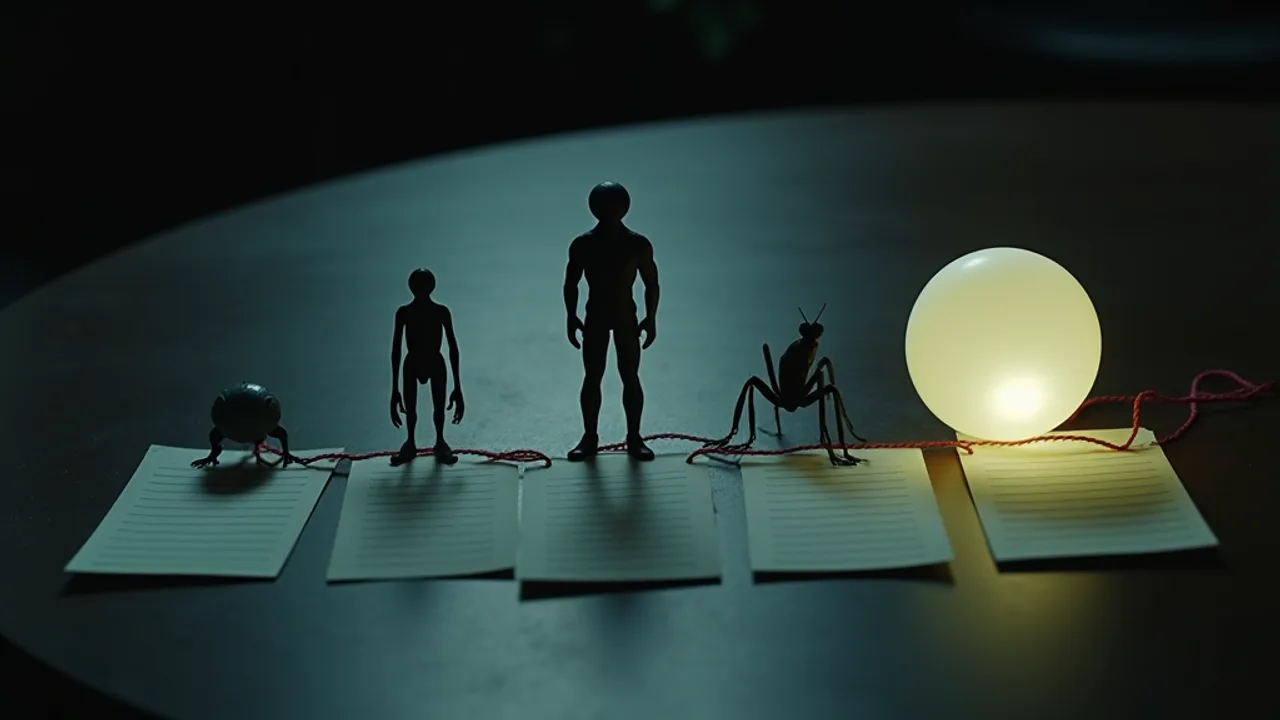
The Reported-NHI Field Guide: Every Claimed Non-Human Type, Graded by Provenance
Greys, Nordics, Reptilians, Insectoids, Tridactyls, and, as of June 2026, 'sentient plasmoid life.' Pop catalogs list a dozen alien races as if they were equally real. They are not equally evidenced. This is a field guide that logs each reported non-human type, ties it to the specific cases it actually comes from, and sorts the whole gallery into three honest tiers of provenance, from investigated physical encounters down to channeled starseed lore.
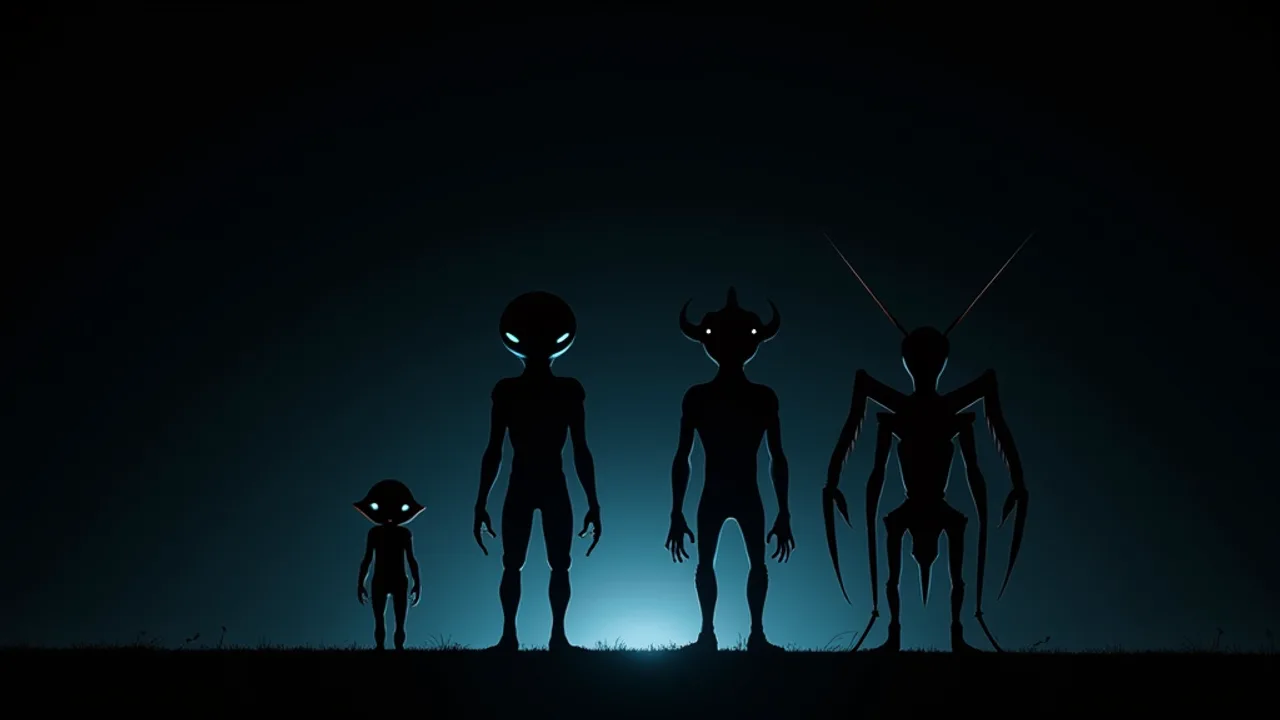
Grays, Nordics, Reptilians, Insectoids: The 'Four Types' Claim, Explained
In May 2026, physicist Hal Puthoff said people involved in alleged UFO recoveries described 'at least four separate types' of beings, and his colleague Eric Davis has named them. Here is exactly who said what, what each type is supposed to be, and what the public evidence does and does not show. No verdict, just the record.
More from the Canon
The full shelf →The Demon-Haunted World
Carl Sagan · 1995
Skepticism is not the enemy of wonder but its bodyguard, and the same tools that protect us from con artists are the tools that let us find out what is actually true.
Well-DocumentedChildhood's End
Arthur C. Clarke · 1953
Benevolent non-human overseers end war, want, and cruelty overnight, then shepherd humanity toward a transcendence we cannot survive as individuals, and the shepherds wear, exactly, the shape of the Devil.
ContestedContact With Alien Civilizations
Michael A.G. Michaud · 2007
A former US diplomat sets aside whether aliens are here and asks the harder question: what would contact with a genuine extraterrestrial civilization actually mean for humanity, and are we ready to decide.
Well-Documented