Element 115 and the Lazar Claim: The Story That Made Its Own Test, and Failed It
Bob Lazar's 1989 account is the rare UFO claim specific enough to check. Physics checked it. Element 115 exists, it was made in 2003, and it lasts less than a second.
 AI illustration
In 1989 Bob Lazar told a Las Vegas television station that he had worked at a site near Papoose Lake, Nevada, reverse engineering craft fuelled by a stable isotope of element 115. Element 115 was first synthesised in 2003 at Dubna, recognised by IUPAC in 2016 and named moscovium; every known isotope decays in under a second, with the longest lived at roughly 0.65 seconds. Neither MIT nor Caltech has any record of the degrees Lazar claims, and no independent documentation of his employment at the site he describes has ever been produced.
Almost every claim in this field is built to be unfalsifiable. Lazar’s was not, and that is the most interesting thing about it.
In November 1989 he sat down with reporter George Knapp at KLAS in Las Vegas and described working at a site he called S-4, near Papoose Lake, on nine recovered craft. He described a reactor, an antimatter reaction, three gravity amplifiers, and a fuel: element 115, a superheavy element that in 1989 had not been made, stable enough to be machined and stored in quantity.
That is a testable statement about the periodic table. It took physics fourteen years to get there.
What happened when the element arrived
Element 115 was first synthesised in 2003 at the Joint Institute for Nuclear Research in Dubna, by fusing calcium 48 with americium 243. Four atoms. The discovery was recognised by IUPAC in 2016 and the element was named moscovium.
Every isotope of moscovium that has ever been observed decays almost immediately. The longest lived known isotope, moscovium 290, has a half life of roughly 0.65 seconds. There is no stable form, no method of accumulating a usable mass, and no prospect of one from anything near current synthesis rates, which are measured in single atoms per week of beam time.
The claim was not that element 115 would one day be named. The claim was that a stable isotope of it existed in quantity, was already in US custody, and was being cut into wedges. That claim is dead.
The retreat, and why it matters
Lazar’s response, once moscovium was characterised, was that the isotope he handled is a heavier one, further into the theorised island of stability, which has not yet been synthesised.
Notice the shape of that move. A specific, checkable claim is replaced, after the check fails, by one that cannot be checked with any existing instrument. Every field has this pattern and it is always the same signal. The value of a claim lies in what would refute it. When the refutation arrives and the claim relocates, the claim was never doing the work its supporters thought it was doing.
The fan defence, that naming element 115 in 1989 was a hit, does not survive contact with 1989. Superheavy elements were being filled in by atomic number in order, 106 through 109 were already made, and the island of stability had been public physics since Glenn Seaborg’s work in the 1960s. Guessing the next number on a list that is being counted through in public is not precognition.
The biography
The core of Lazar’s credibility is that he was a physicist at Los Alamos. The verifiable part is thinner than that sentence.
He appears in a 1982 Los Alamos telephone directory, and a 1982 Los Alamos Monitor story about his jet powered Honda describes him as a physicist at the Meson Physics Facility. What his own account and the documentary record support is that he worked at the laboratory as a technician for Kirk-Mayer, a contractor. Working at a national laboratory is not the same job as being a staff physicist, and a local paper’s description of a car enthusiast is not a personnel file.
The degrees do not check out. Lazar claims master’s degrees from MIT and Caltech. Neither institution has a record of him. He has never produced a transcript, a thesis, an advisor, or a classmate. The one professor he named, William Duxler, taught at Pierce College, where Lazar was in fact enrolled, and had never taught at Caltech.
His W-2 for the disputed work, showing a small sum from an entity he gave as the Department of Naval Intelligence, names an organisation that does not exist under that title. In 1990 he was convicted of a felony connected to a Nevada brothel. That is not evidence against his physics, and we mention it only because it is routinely deployed as though it were, in both directions.
What the score reflects
Witnesses: weak. One person, self reporting. The associates who came along on scheduled Wednesday nights saw distant lights over a range where the Air Force has flown unusual aircraft for fifty years.
Instrumentation: none. No sample, no photograph, no measurement, no document.
Official record: weak. A phone directory listing and a contested tax form.
Stands up to scrutiny: none. Two independently checkable claims, the credentials and the stable isotope, were checked and both failed. This is one of only two cases on the index scored at zero on this axis. The other is the Bermuda Triangle, and both earn it the same way, by having been specific enough to fail.
Total 2 out of 12, the thin tier, alongside Strieber’s Communion.
Why it is still in the culture, and in the game
Because it works. The Lazar account gave the field its modern vocabulary: the black site, the compartmented programme, the reverse engineering effort, the element that does the impossible thing. Nearly every claim made since 1989 is dressed in clothes he cut, including serious ones made under oath by people with real clearances.
That influence is a fact about the culture, not a fact about physics. It is the same distinction we draw with Roswell: founding myths shape what later witnesses expect to see, and what later audiences are prepared to believe. Tracking the myth carefully is worth doing precisely because the evidence is not.
If you want the physics of a real gravity manipulation proposal, one that is honest about its own energy requirements, read the Alcubierre metric. If you want the ranking, it is at the case index.
Every new case, scored the same way
One email when a case file lands, with its Signal-Strength score and what would move it. No hype, no 'BREAKING', and every claim carries its source. Unsubscribe anytime.
Sources
Read next
More Science & Physics →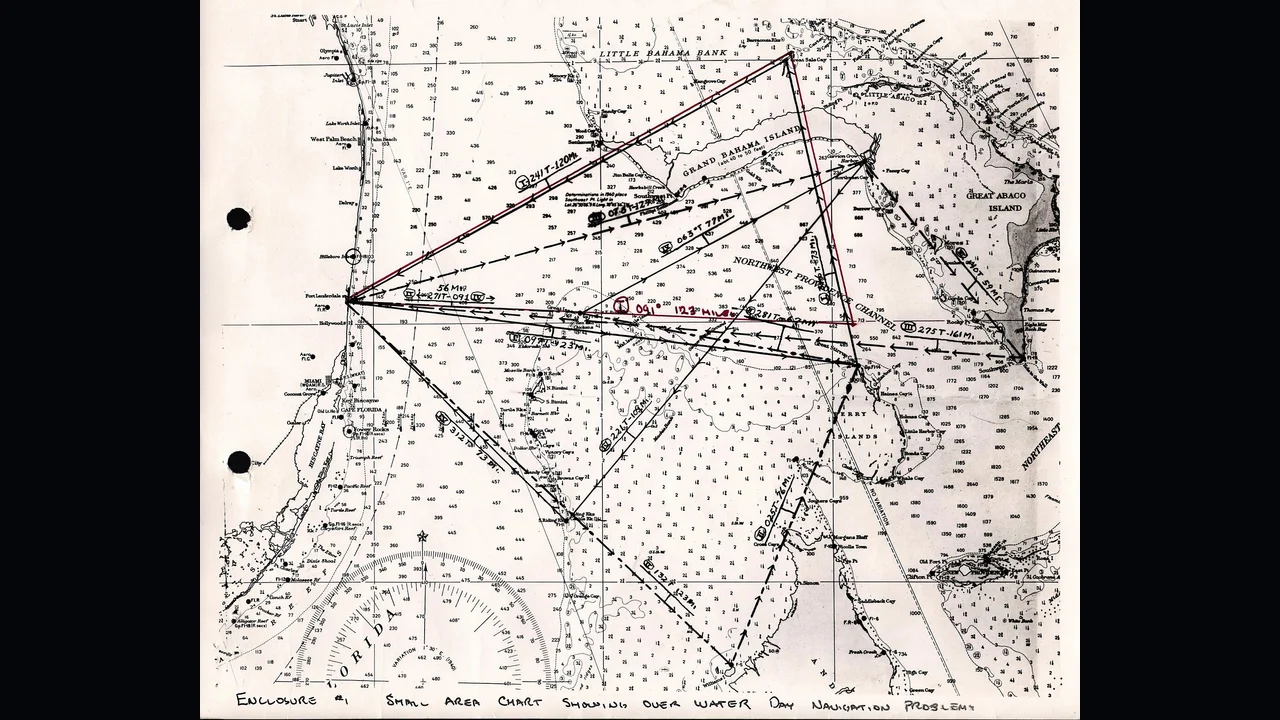
The Bermuda Triangle: A Mystery Assembled From Filing Errors
The most famous anomalous region on Earth was named in a pulp magazine in 1964 and dismantled by one researcher with a library card in 1975. It scores 2 out of 12, and that is generous.
The Warp Drive Is Real Math: What Alcubierre Actually Proposed
In 1994 a physicist showed that faster-than-light travel does not violate relativity, if you move space instead of the ship. The catch is the fuel bill, and the catch keeps shrinking.
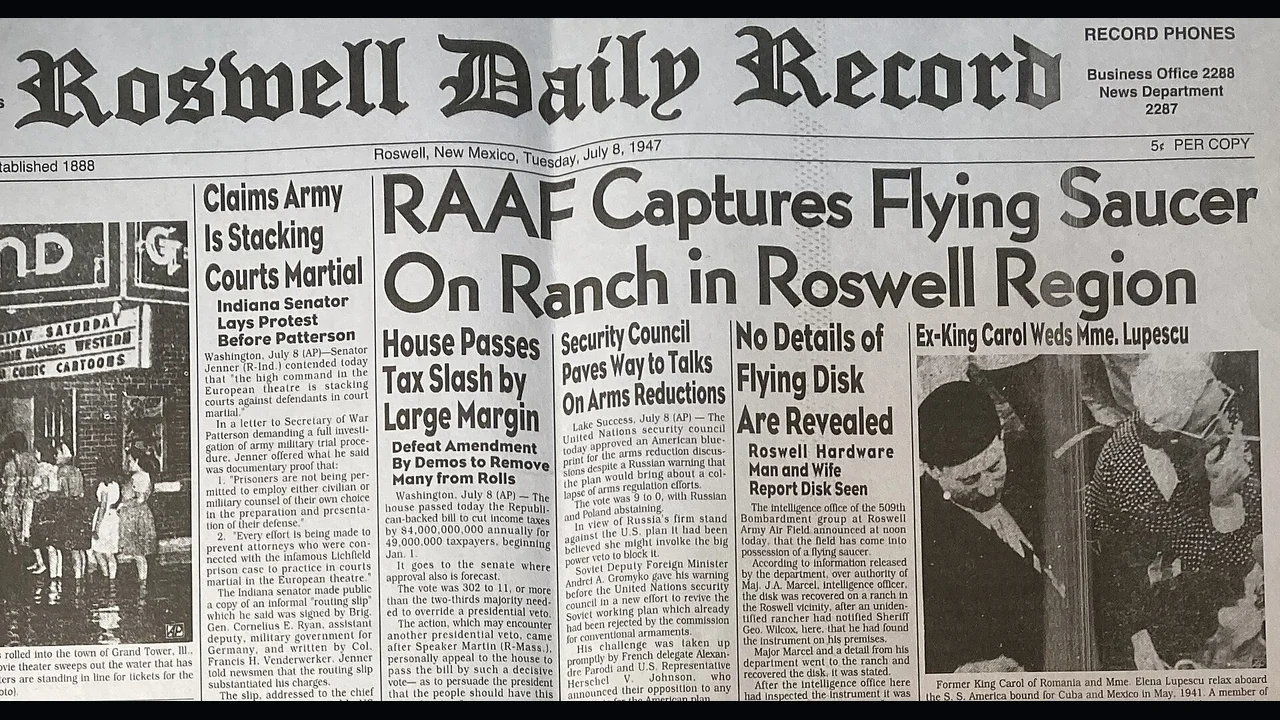
Roswell 1947: What the Paperwork Actually Says
The most famous UFO case in the world has a thick official record and a thin evidentiary one. Scored on our own rubric, it lands below cases nobody has heard of.
Follow the thread
New disclosure reporting, physics breakdowns, and case files, in your inbox. Sources or it didn't happen. No spam, unsubscribe anytime.