The Bermuda Triangle: A Mystery Assembled From Filing Errors
The most famous anomalous region on Earth was named in a pulp magazine in 1964 and dismantled by one researcher with a library card in 1975. It scores 2 out of 12, and that is generous.
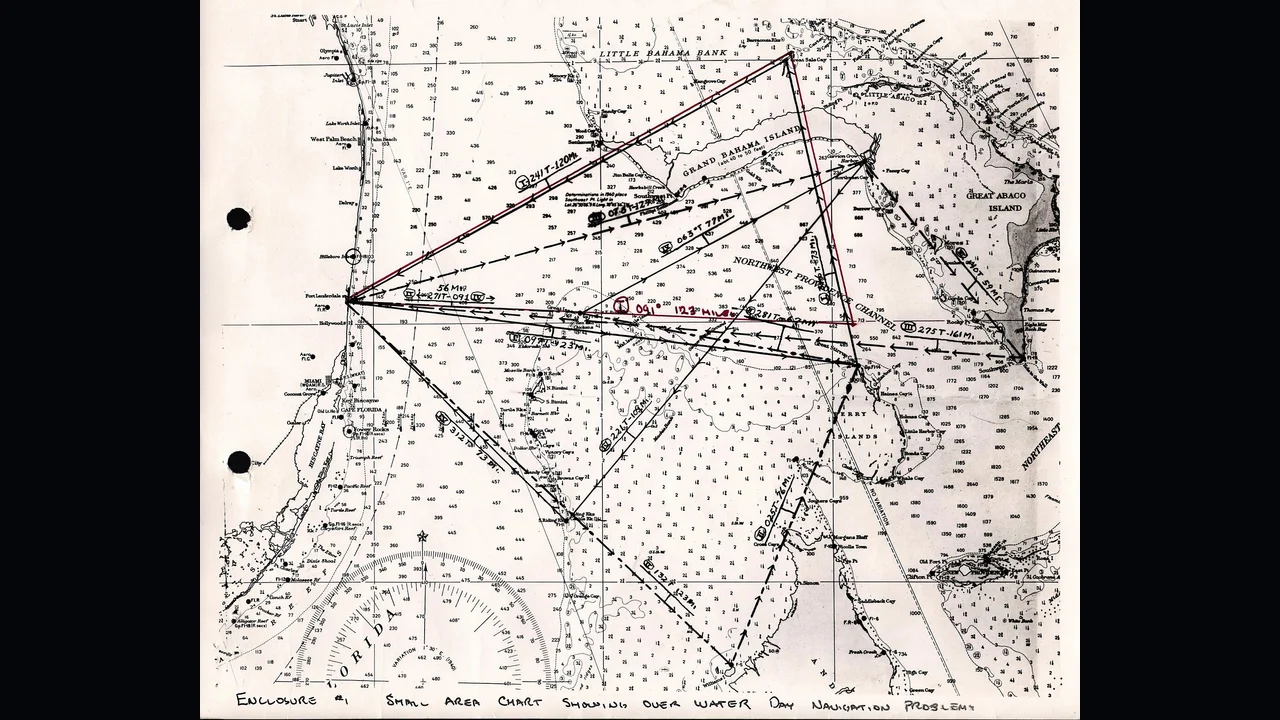
The Bermuda Triangle was named by writer Vincent Gaddis in Argosy magazine in 1964 and popularised by Charles Berlitz in 1974. NOAA states there is no evidence that disappearances occur more frequently there than in any other heavily travelled stretch of ocean, and researcher Lawrence Kusche demonstrated in 1975 that many of the canonical incidents happened in storms, happened outside the region, or were misreported. Insurers have never charged higher premiums for the area.
The Bermuda Triangle is the only case on this index where the correct score is not merely low but structural. There is nothing to score, because the phenomenon was assembled out of bookkeeping.
It is on the index anyway, for the same reason it is a zone in a video game and a shelf in every airport bookshop. It is load bearing culture. It taught a generation what an anomaly is supposed to feel like, and that lesson turns out to have been wrong in a way worth studying.
Where it came from
Not from sailors. From magazines.
An Associated Press writer, E.V.W. Jones, grouped some Atlantic losses in 1950. George Sand wrote them up for Fate in 1952. Vincent Gaddis gave the region its name in Argosy in February 1964, in an article called The Deadly Bermuda Triangle, and expanded it into a book the following year. Charles Berlitz turned the whole package into a global bestseller in 1974.
At no point in that chain did anyone go and look at the primary records. That job was done in 1975, by a librarian.
Kusche
Lawrence Kusche was a research librarian at Arizona State University who kept getting asked for Bermuda Triangle sources by students. He went and found them: original newspaper reports, weather bureau archives, Lloyd’s records, Navy and Coast Guard inquiry files, insurance filings.
What he found, case after case, was that the mystery lived entirely in the retelling.
Ships described as vanishing in calm seas had gone down in documented storms. Aircraft said to have disappeared in the Triangle had disappeared hundreds or thousands of miles outside it. The Freya, cited for decades as a Triangle loss, was abandoned in the Pacific. The Mary Celeste, the flagship of the entire genre, was found off the Azores, which is closer to Portugal than to Bermuda. Several vessels reported as never seen again had been found, and the finding had simply not been reported by the authors who ran the story.
His conclusion is one of the cleanest sentences in the whole skeptical literature. The legend, he wrote, is a manufactured mystery, perpetuated by writers who either purposely or unknowingly made use of misconceptions, faulty reasoning and sensationalism.
The base rate problem
Ask the question the popular books never ask: compared with what?
The region is roughly half a million square miles of the busiest navigable water on the planet. It is the main corridor for Atlantic hurricanes. It contains the Gulf Stream, which is fast enough to carry debris out of a search area within hours and has been doing so for as long as ships have sunk. It has shallow shoals capable of tearing a hull open and deep trenches capable of hiding one afterwards.
NOAA’s position is that there is no evidence that disappearances occur there any more frequently than in any comparable, comparably travelled patch of ocean. The insurance market, which has no interest in mysteries and a very direct interest in loss rates, has never priced the region differently.
A high absolute number of losses in a high traffic area with severe weather is what a normal distribution looks like. Presenting the numerator without the denominator is how you make any region on Earth look cursed.
Flight 19, told properly
The founding incident deserves its own paragraph because the real account is better than the legend.
On 5 December 1945, five Avengers left Fort Lauderdale on a navigation training flight. The flight leader became convinced he was over the Florida Keys when he was actually over the Bahamas, and led the formation northeast, away from land, correcting in the wrong direction each time doubt surfaced. The radio traffic that survives is a slow, terrible record of a good pilot losing his frame of reference while junior pilots who suspected the truth deferred to rank. They ran out of fuel over open water, at night, in worsening weather.
The Mariner flying boat sent to search for them then exploded in flight, an event observed from the deck of a nearby merchant ship, which reported a fireball and an oil slick. Mariners were nicknamed flying gas tanks for a reason.
Fourteen men, then thirteen more. A navigation failure and a fuel system fire. The Navy’s board of inquiry initially attributed the loss to pilot error, and later amended the finding to cause unknown after the flight leader’s family objected. That amendment, an act of decency toward a grieving mother, is the thread the entire mythology hangs from.
The score, and the point
Witnesses: weak. There are witnesses to individual losses. There has never been a witness to the alleged phenomenon.
Instrumentation: none.
Official record: weak. Boards of inquiry documenting ordinary accidents are not documentation of an anomaly.
Stands up to scrutiny: none. The case was checked against primary sources and did not survive the check. It shares that zero with the Lazar claim, and for the same reason: both made claims concrete enough to fail.
Total 2 out of 12.
We keep it on the index because it is the best available worked example of a false positive at scale, and because knowing exactly how one gets manufactured is what makes the ranked cases above it worth anything. Cases like Shag Harbour and the Nimitz encounter score highly because there is a specific documentary and instrumental substrate underneath them that does not evaporate when you go and read it. The Triangle evaporates on contact. That difference is the entire methodology.
Every new case, scored the same way
One email when a case file lands, with its Signal-Strength score and what would move it. No hype, no 'BREAKING', and every claim carries its source. Unsubscribe anytime.
Frequently asked
Is the Bermuda Triangle dangerous? +
Not unusually. NOAA states there is no evidence that disappearances happen more often there than in any other large, well travelled area of ocean. The region carries very heavy shipping and air traffic, sits in the main Atlantic hurricane corridor, and contains the Gulf Stream and areas of shallow shoals, all of which produce ordinary losses in ordinary numbers.
Who invented the Bermuda Triangle? +
The name comes from an article by Vincent Gaddis in the pulp magazine Argosy in February 1964. Earlier writers had grouped some of the same incidents from 1950 onward. Charles Berlitz turned it into a global bestseller in 1974.
What happened to Flight 19? +
Five Navy torpedo bombers on a training flight became lost off Florida on 5 December 1945 after their flight leader concluded he was over the Florida Keys when he was over the Bahamas, and led the formation the wrong way until the aircraft ran out of fuel in deteriorating weather at night. A Mariner search aircraft sent after them exploded in flight, an event watched from the deck of the SS Gaines Mills.
Do ships pay higher insurance to cross the Bermuda Triangle? +
No. Lloyd's of London reported that it found no higher loss rate for the area and charges no additional premium for transiting it.
Sources
Read next
More Science & Physics →
Element 115 and the Lazar Claim: The Story That Made Its Own Test, and Failed It
Bob Lazar's 1989 account is the rare UFO claim specific enough to check. Physics checked it. Element 115 exists, it was made in 2003, and it lasts less than a second.
The USS Nimitz Tic Tac, 2004: The Best-Documented UAP Case on Record
Two weeks of radar tracks, four aviators' eyes, an infrared video the Pentagon itself released, and sworn congressional testimony. The Tic Tac is the case that moved UFOs from tabloids to oversight hearings, and the gap between what's confirmed and what's claimed still matters.
Shag Harbour, 1967: The UFO Canada Filed Under 'Unsolved'
Eleven people watched a lit object descend into the water off Nova Scotia. The RCMP responded, the Royal Canadian Navy sent divers, and they found nothing, which is exactly why it became one of the few UFO events a government has officially logged as unsolved.
Follow the thread
New disclosure reporting, physics breakdowns, and case files, in your inbox. Sources or it didn't happen. No spam, unsubscribe anytime.