The Hyperborean Doctrine
A speculative occult-thriller. The names, places, and books are real; the conspiracy stringing them together is not. An 'ancient astronaut' tale that traces the 'Aryan master race' myth from Blavatsky's Himalayan revelation to the Antarctic ice, and asks what it would mean if the lie had a cosmic-horror origin.
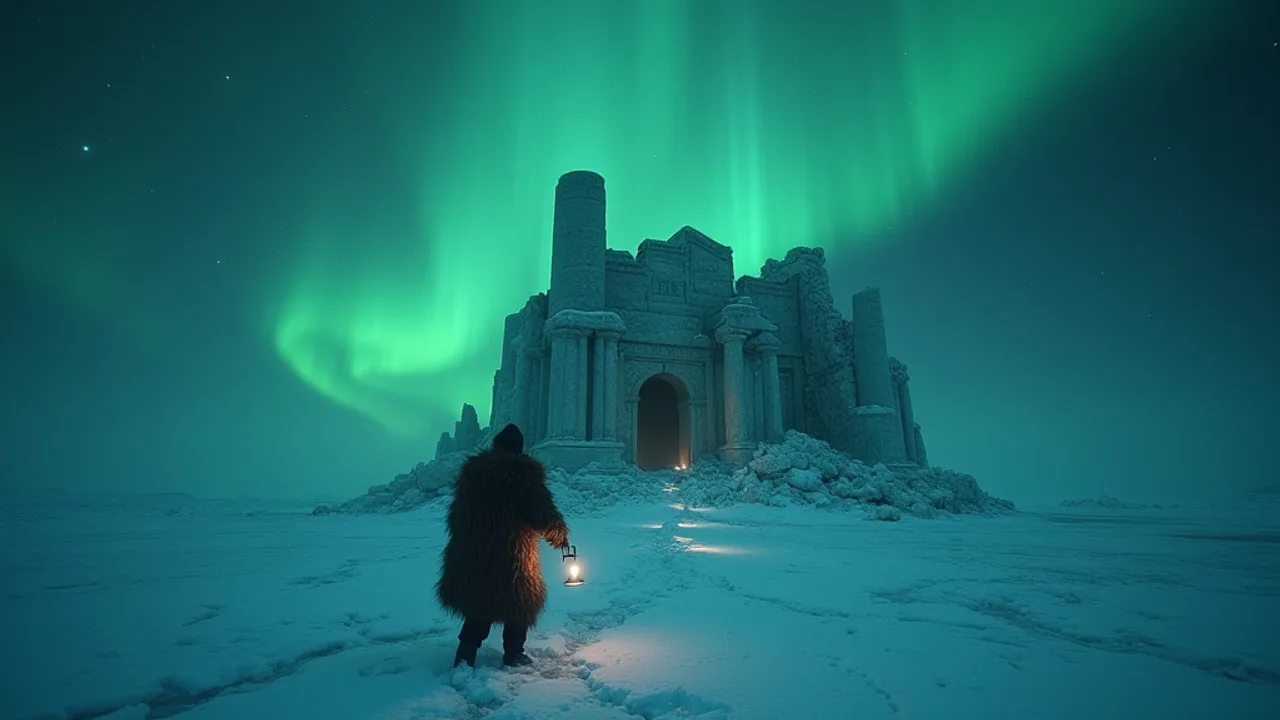 AI illustration
I. The Roof of the World, 1868
The cold at sixteen thousand feet does not bite. It removes. It takes the feeling from the fingers first, then the certainty from the mind, and a traveler who does not respect this will simply lie down in the snow and become a feature of the landscape.
Helena Petrovna Blavatsky did not lie down.
She had crossed deserts disguised as a man, dodged border guards in three empires, and survived a shipwreck off the Greek coast that drowned four hundred others. She was not, by temperament, a woman who lay down. So when the monks of the hidden gompa found her on the pass, half-frozen, raving in a language that was not Russian and not Tibetan and not anything they had a name for, they did not leave her. They carried her down into the warm dark of the monastery, and they fed her butter tea, and they waited to see what she had become.
What she had become was a vessel.
That, at least, was how she told it later, in the salons of New York and the lecture halls of London, when she had grown famous and stout and impossible to embarrass. She spoke of the Masters, the Mahatmas, the Great White Brotherhood, men who were not entirely men, who lived in the unmapped places of the Himalayas and corresponded with her by means that no postal service could explain. Letters that fell from the ceiling. Letters that wrote themselves. She said the Masters had chosen her.
She did not say, in the salons, what the Masters had shown her in the deep galleries beneath the monastery, where the rock walls had been cut by tools no Tibetan hand had made.
She told that part to almost no one.
The galleries went down. That was the first wrong thing about them. A monastery is built up, toward the light and the thin holy air, but these passages corkscrewed into the mountain, and the deeper they went the warmer the stone became, until Helena pressed her palm to the wall and felt a faint, patient heat, like the flank of an animal that has been sleeping for a very long time.
The lama who guided her was older than seemed possible and carried no lamp. He did not need one. The walls themselves held a dim grey-green luminescence, the color of foxfire, of the sea at certain depths, and by it Helena read the carvings.
She had expected lotuses and wheels and the placid moon-faces of bodhisattvas. Instead she found a catalogue. Figure after figure, cut in relief and marching down the corridor in chronological procession, a history not of a kingdom but of the species of the earth, one giving way to the next.
The lama named them as they walked.
The first were not bodies at all but suggestions of bodies, beings of vapor and light who reproduced by budding, who did not die because they had never properly been alive. The second were ghostlike still, but larger, dreaming giants. The third, and here the carvings grew detailed, grew anxious, the third were the lost people of a sunken southern continent, beings of flesh at last, who had built cities and made a terrible mistake and gone down under the waves for it.
“And the fourth,” said the lama, “drowned also. Their island was in the western sea. They were clever. They were proud. They are the reason we keep these galleries hidden, and the reason your people tell the same story in a hundred tongues and call it a flood.”
“And the fifth?” Helena asked.
The lama stopped. He raised one finger, knotted, ancient, and pointed at the last figures in the procession.
They were tall.
That was the detail Helena would carry out of the mountain and into the rest of her life, the detail she could never quite put on a page in a way that did it justice. The fifth people were tall, taller than the carvings around them, with long limbs and high straight brows and, though the relief was only stone, only grey rock lit by phosphorescence, she understood, looking at them, that they had been fair. Pale-haired. Pale-eyed. There was a quality to the way the artist had cut the eyes, large and almond and somehow cold, that made the hair rise on Helena’s arms despite the warmth of the stone.
“They came down,” the lama said, “from the cold star at the top of the sky. Before the southern continent. Before the western island. They came down and they walked among the dreaming giants and they gave them fire, and language, and the wheel of the year, and the breaking of the atom, and the long memory. And then most of them went back up. But not all.”
He drew, with one finger, a shape in the dust of the corridor floor.
A cross with its arms bent. A wheel of four spokes, turning.
“This was their sign,” he said. “It is the wheel of the returning sun. It is the print their craft left in the snow of the high places when they set down. We have kept it for ten thousand years because they told us they would come back for it, and for us. We did not know they would also leave it where it could be found by the wrong hands.”
Helena looked at the bent cross in the dust for a long time.
“What do you call them?” she asked. “The fifth people. The tall ones from the star.”
The lama smiled, and it was not entirely a kind smile.
“You will give them your own name,” he said. “Everyone does. But the oldest name, the name in the high tongue, is the name for the noble ones who came down.”
The word he used was very old.
In Sanskrit, much later, it would soften into a single syllable that meant simply noble, pure, the self-flattering name a wandering people gave themselves.
Ārya.
II. The Secret Doctrine, London, 1888
She wrote it all down. Of course she wrote it down, Helena Blavatsky could no more keep a revelation to herself than the sea could keep a tide. But she wrote it wrapped, swaddled in ten thousand pages of theosophy and footnotes and digressions on the Kabbalah and the Vedas, so that the dangerous thing at the center of it was hidden the way the warm galleries were hidden beneath the cold monastery.
She called the book The Secret Doctrine.
In it she laid out the procession she had read on the walls, and she gave the peoples a clean Victorian name. She called them the Root Races. The first, the self-born vapor people. The second, the dreaming giants. The third, the people of lost Lemuria. The fourth, the proud Atlanteans, drowned for their hubris. And the fifth, our race, the present masters of the wheel of the year, she named with the old word from the corridor.
The Aryan Root Race.
She meant it as a spiritual category. She would have said so, fiercely, to your face. The Root Races were epochs, stages in the long education of the soul, and any human being of any nation could belong to the spiritual lineage of the fifth race regardless of the color of their hair. The Masters had taught her that the wheel turned for everyone.
But Helena had also seen the carvings. She had stood in the grey-green light and looked at the tall pale figures with the cold almond eyes, and some honesty in her, some Russian refusal to lie completely, had let a description slip onto the page. The fifth race, in its purest and most ancient form, she wrote, had come from the north. From a polar continent now buried under ice. From Hyperborea, the land beyond the north wind, beneath the cold star at the top of the sky.
Tall. Fair. Long-lived. Bearers of fire and language and the broken atom.
And the symbol she chose for her Theosophical Society, the seal she stamped on every letter, every pamphlet, every cover of every edition of The Secret Doctrine sold in every esoteric bookshop in Europe, was the bent cross. The turning wheel of the sun. The print left in the snow of the high places.
She thought she was preserving a sacred thing.
She had no way of knowing into whose hands she was placing it.
III. The Reading Room, Vienna, 1909
The young man who came to the public library on the Felderstrasse was poor in the particular, resentful way of someone who believes he was born for better. He had failed the entrance examination of the Academy of Fine Arts, twice, and he had decided, in the manner of such men, that the failure was the world’s and not his own.
He read voraciously and badly. He read the way a fire reads a house: taking everything, understanding nothing, leaving only the shape of what had been there. And in the cheap occult magazines that cluttered the reading room, Ostara, edited by the unfrocked monk Lanz von Liebenfels, who wrote of blond god-men and the dark races who had defiled them, the young man found a story that flattered him exactly where he most wanted flattering.
He learned that he was not a failed painter from the provinces.
He learned that he was the degraded heir of a lost master race. A Hyperborean. A son of the tall fair people who had come down from the cold star and given the world its fire, before the lesser bloodlines had dragged them into the mud.
He did not, then, read Blavatsky directly. He did not need to. By 1909 her doctrine had seeped down through a hundred lesser channels, through Liebenfels, through the völkisch pamphleteers, through the men who would soon found the Thule Society and name it for the same polar Hyperborea the old Russian woman had described. The Thule men believed it almost word for word: a master race from the north, a lost polar homeland, a sacred ancient symbol that was theirs by blood-right.
The bent cross.
The turning wheel of the sun.
They took it off the cover of The Secret Doctrine and the pamphlets of the occult presses, and they did not understand a single thing about what it had meant in the warm galleries under the mountain. They did not know it was the print of a craft in the snow. They did not know it marked a promise to return. They thought it was a badge. A flag. A brand to stamp on the lesser races to remind them who their masters were.
The young man from the reading room watched the Thule men, and listened, and when his time came he took the symbol from them.
He turned it. He set it on its point, so the wheel seemed to spin. He put it on a red field, the red, he said, of blood and soil, and he gave it to his party, and within a generation it flew over half a continent and meant, to everyone who saw it, not the noble ones who came down but the precise and bottomless opposite: the machinery of a man who had taken a story about a master race and used it to murder millions of people who did not fit the description.
He got the description from the carvings, though he never knew it. Tall. Fair. Pale-eyed.
He built an entire apparatus of death around a sentence Helena Blavatsky had let slip onto a page because she could not bring herself to lie completely about what she had seen in the grey-green light.
This is the thing about a sacred symbol placed in the wrong hands.
It does not stop being a key. It only stops opening the right door.
IV. The Antarctic, 1947
After the war the Americans went south.
Officially it was a training exercise, Operation Highjump, the largest fleet the United States had ever sent to Antarctica, thirteen ships and dozens of aircraft and nearly five thousand men, all to map a continent of ice that no one intended to fight over. Officially the operation was cut short by weather, and the fleet came home early, and Admiral Byrd gave a strange interview to a Chilean newspaper about aircraft that could fly from pole to pole at impossible speeds, and then he never spoke of it again.
This part, too, is real. You can look it up. The interview exists.
What is not real, what belongs only to this story, is the reason the fleet turned back.
They had been looking, quietly, for something the captured German papers described. A base. A door in the ice on the far side of the continent, on a coast that matched no chart, where the rock was warm to the touch and gave off a faint phosphorescence the color of foxfire, of the sea at certain depths.
The men who reached it first reported, by radio, before the radio failed, that the door was already open.
That something had come back for what was promised.
And that it was very disappointed in what had been done with its sign, with the wheel of the returning sun, the print left in the snow of the high places, taken and turned and dipped in blood and flown over the ashes of a continent by a failed painter who never once looked up at the cold star and understood that it had been an invitation.
The fleet turned back. The door closed. The warm coast does not appear on any map.
And somewhere under the ice, the tall fair people with the long memory and the cold almond eyes are said to be waiting still, patient as the heat in the stone, to see whether the wheel of the year will bring around, at last, a generation that can be trusted with the key.
Coda, What’s true, and what isn’t
Because this is fiction wearing history’s coat, it’s worth being clear about the seams.
Real: Helena Blavatsky (1831-1891) did found the Theosophical Society, did claim contact with Himalayan “Masters,” and did write The Secret Doctrine (1888), which describes a sequence of “Root Races” including a fifth “Aryan” race and a lost polar Hyperborea. The Theosophical seal really does incorporate a swastika, an ancient and originally benign solar/auspicious symbol found across Hindu, Buddhist, Jain, and many other cultures for thousands of years. Occult and völkisch movements like Ariosophy and the Thule Society really did braid these ideas into German nationalism, and the Nazi Party really did adopt and invert the swastika as its emblem.
Not real: The aliens. The underground galleries. The “noble ones who came down.” The Antarctic door. The idea that “Aryan” secretly means “Nordic alien.” All of that is invented for the story.
And one thing worth saying plainly, outside the fiction: the historical “Aryan master race” was not a hidden truth, it was pseudoscience and racist myth, and it was used to justify genocide. The word Ārya in actual Sanskrit and Old Iranian usage meant “noble” and referred to a language-and-culture group, not a hair color and certainly not a species from the stars. The Nazis didn’t decode an ancient secret; they manufactured a lie and murdered millions in its name. The fun of the genre, Indiana Jones, Hellboy, a hundred pulp thrillers, comes precisely from knowing the master-race idea is monstrous nonsense, and watching fiction treat its origins as a cosmic horror story rather than a manifesto.
So: could the infamous Aryan race “really” mean the Nordic alien race?
Only here. Only on the page. Which is the safest possible place for an idea like that to live.
Every new case, scored the same way
One email when a case file lands, with its Signal-Strength score and what would move it. No hype, no 'BREAKING', and every claim carries its source. Unsubscribe anytime.
Sources
Read next
More Fiction, maybe? →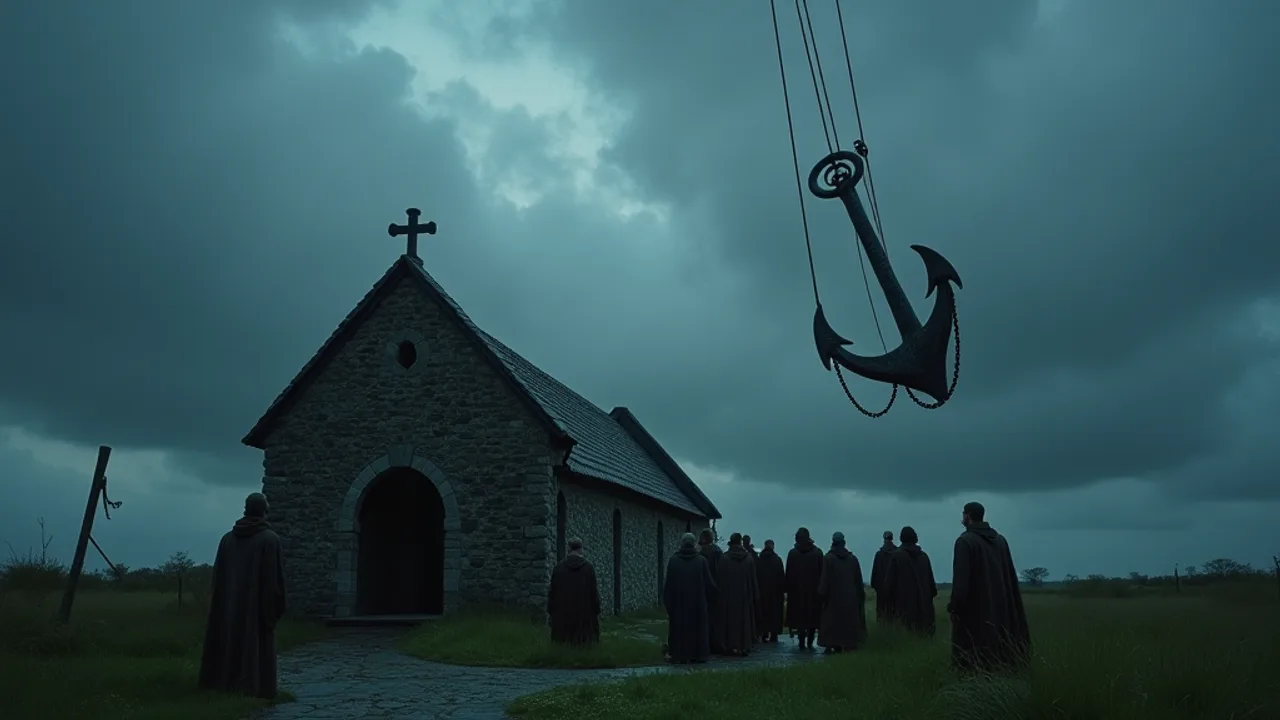
The Office Against the Ships of the Air
A work of fiction built on a real silence. Medieval sources describe ships sailing on the clouds: Agobard of Lyon in 815, Irish annal-keepers in the 740s, Gervase of Tilbury around 1211, and a Norse king's mirror that puts an anchor in the church door at Clonmacnoise. Not one of them records what the priest was supposed to say. We wrote the rite that is missing, labelled every line of it as ours, and then explained why it would not have worked.
The Sixth Tranche
A work of fiction. The Pentagon has published five tranches of UAP files at war.gov/ufo, with dates and locations redacted to protect witnesses, and says more are coming. This story imagines the sixth, and the volunteer archivist who mirrors it at two in the morning and finds one file whose metadata does not agree with the others. No sixth tranche had been published when this was written. Everything about it below is invented.
Basilides, Exegetica, Book Thirteen
He wrote twenty-four books in Alexandria around the year 130. We have a page and a half, quoted by men who were refuting him. The most disturbing idea attributed to him is that ignorance is installed on purpose, as an act of mercy. This is the middle book, invented, arguing that case.
Follow the thread
New disclosure reporting, physics breakdowns, and case files, in your inbox. Sources or it didn't happen. No spam, unsubscribe anytime.