The Sixth Tranche
A work of fiction. The Pentagon has published five tranches of UAP files at war.gov/ufo, with dates and locations redacted to protect witnesses, and says more are coming. This story imagines the sixth, and the volunteer archivist who mirrors it at two in the morning and finds one file whose metadata does not agree with the others. No sixth tranche had been published when this was written. Everything about it below is invented.
 AI illustration
The Sixth Tranche is a short story published by NHIAnomalous on September 17, 2026, in its Fiction pillar. It is invented. As of that date the U.S. Department of War had published five tranches of UAP files under the PURSUE program, on May 8, May 22, June 12, July 10 and August 7, 2026, and had said more would follow. No sixth tranche had been released. The file, the archivist and the metadata described in the story do not exist.
This is fiction. The five real releases, the redaction policy and the September waiver are documented and linked below. The sixth tranche, the archivist and the file are invented. The coda separates them.
I. 01:52
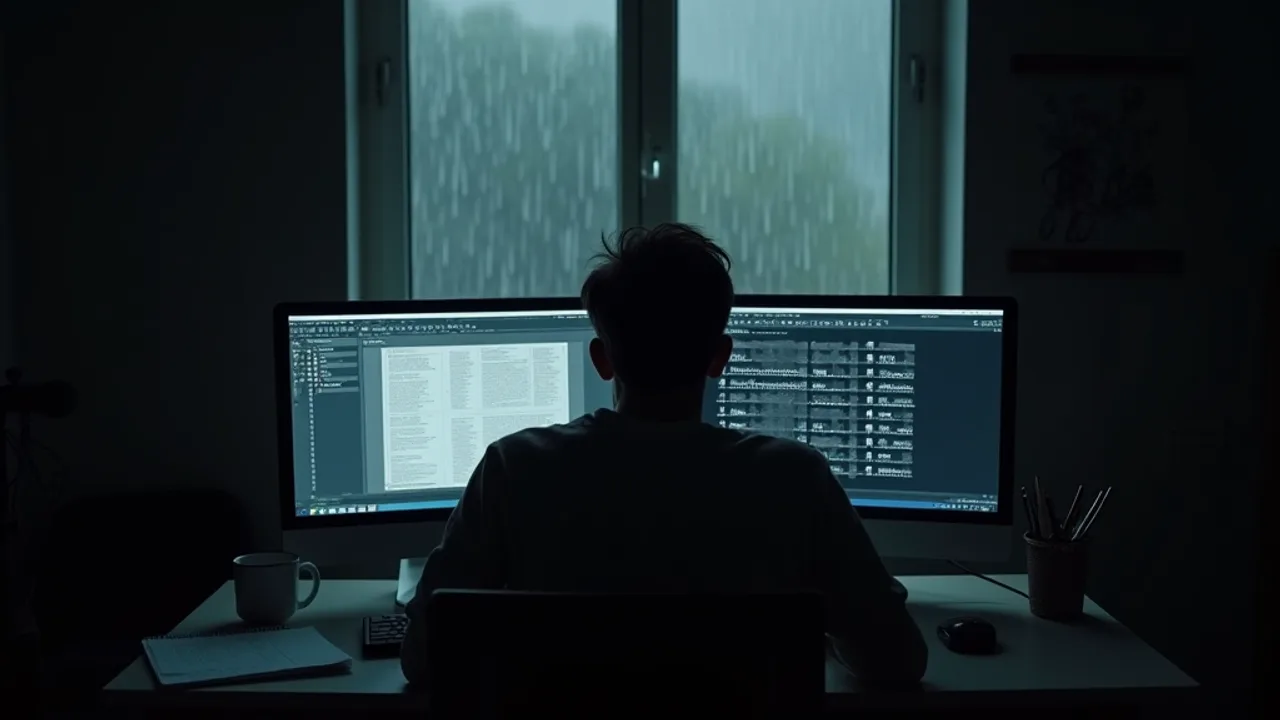
The release came at the wrong time, which was the first thing Wren wrote down.
The first five had all landed in daylight, Washington daylight, with a press release and a spokesperson and a news cycle already warming up behind them. May 8. May 22. June 12. July 10. August 7. Wren had them on an index card taped to the monitor bezel, because the gap between the dates was the only thing anyone could measure about the program from outside, and Wren measured things.
This one appeared at 01:52 Eastern with no press release at all. The index page at war.gov/ufo simply had one more row than it had had at 01:40, when the script last checked.
The script was eleven lines long. It fetched the page every twelve minutes, hashed it, and if the hash changed it sent a push notification that said only CHANGED. Wren had written it in May and had been woken by it four times since, each time for a real release, and had never once been annoyed by it. That was the whole relationship.
CHANGED, it said, and Wren got up.
II. The mirror
There were perhaps thirty people in the world doing what Wren did, and most of them knew each other by handle only. The job was simple and unglamorous. When a government posts files, it can also quietly replace them, rename them, or take them down. So you download everything the minute it appears, you record the exact bytes, you hash each file, and you publish the hashes. After that, nobody can swap a document without somebody noticing.
Wren’s mirror held every file from the first five tranches, a little over a gigabyte, with a text file of SHA-256 sums beside each folder and a second copy on a drive in a drawer at a sister’s house two states away.
Tranche six was forty-one files. PDFs mostly, three short video clips, one spreadsheet. The downloads finished at 02:06.
Wren made coffee, sat back down, and started the part that nobody thanked anyone for, which was reading the metadata.
III. What a PDF remembers
People think of a PDF as a picture of paper. It is closer to a small archive with a picture on the front.
Inside, most PDFs carry a block of machine-written notes about themselves: when the file was created, when it was last modified, what software produced it, sometimes the account name of whoever pressed save. Nobody reads these notes. That is exactly why they are useful. People lie on the page. Software, left alone, mostly does not.
Across the first five tranches the notes had been dull and consistent, which is what you want. The same scanning software. The same conversion tool. Creation dates clustered in the weeks before each release, which matched the story the government told: old paper, newly scanned, reviewed, redacted, posted. Wren had a spreadsheet of all of it, three hundred and some rows, and had published it in June with a note that said nothing weird here, and that is good news.
Forty of the forty-one new files fit the pattern.
The forty-first was a four-page witness statement, a special agent’s account of lights over a mountain range. It read like the others. Dates removed. Place removed. The heavy black bars the program used, laid over names and times so that the witness could not be found.
Its creation date was eleven days in the future.
IV. The reasonable explanations
Wren did not believe anything at 02:31. Wren listed things.
A server with its clock set wrong. That happens constantly, and it produces exactly this.
A time-zone bug, except eleven days is not a time zone.
A template. Someone opened an old file, saved it as a new one, and the software carried forward some unrelated date. But the date was not old. It was ahead.
A deliberate marker. Agencies sometimes stamp files with a planned review date, and a careless tool could write that into the wrong field.
All four were boring, and one of them was almost certainly true, and Wren wrote each on the notepad and drew a small box next to it, the way you do when you intend to tick one off by morning.
Then, because it was the next step on the checklist and not because of any feeling, Wren checked the redactions.
V. Under the bars
There is a famous way to get a redaction wrong. You draw a black rectangle over the words, the page looks censored, and the words are still there underneath, in the text layer, selectable, copyable. It has happened in court filings. It has happened in government releases. Everyone who does Wren’s job checks for it, and it almost never works, because the people doing the redacting now also know about it.
On forty files the redactions were real. The words had been removed and the bars sat over nothing.
On the forty-first, the bars sat over something. Not words. The text layer under each bar held a short string of digits and a few characters, a different string under each bar.
Wren copied the first one into a notepad and looked at it for a while before seeing what it was.
It was a pair of coordinates. Latitude and longitude, to four decimal places.
The second bar held a time, in the twenty-four hour format the rest of the document used.
VI. 03:14
The redacted place was a point on a map roughly nine hundred meters from the desk Wren was sitting at.
Not the building. A field behind the reservoir, where the town had once meant to build a school and had not, where people walked dogs, where Wren had walked, years ago, before the job and the scripts and the index card.
The redacted time was 21:40.
The redacted date was the same date as the creation stamp. Eleven days out.
Wren did the things a careful person does. Checked the coordinates in three different map tools, in case one of them had a bug. Checked the file hash against the one computed at 02:06, in case something on the machine had changed the file since. It had not. Checked the live copy on the server. It was still there, byte for byte identical.
Then Wren did something that was not on the checklist, which was to open the witness statement again and read it slowly, as a reader rather than an archivist.
The special agent described standing at the edge of a field after dark. Several red lights over the treeline to the east, moving together. One of them descending. And then a sentence Wren had skimmed past the first time, because it was the kind of sentence these statements always contain:
A second individual was present at the location and appeared to be recording the event on a mobile device.
VII. What Wren published
The mirror went up at 04:00, as it always did. Forty-one files, forty-one hashes, and the usual note.
Wren thought about what the note should say for a long time.
A person who does this work has exactly one asset, which is that people believe the hashes. The moment you say one of the files is from the future and it is about me, you are no longer an archivist. You are a story. And stories are what the whole mirror exists to check.
So the note said what the evidence said, and nothing more:
Tranche 6, 41 files, hashes below. One file (statement, 4 pp.) has a creation timestamp later than its publication time, most likely a clock or template error, and its redactions do not remove the underlying text layer. I have not published what is under the bars. I have notified the program’s public contact. If the file is replaced, the original hash above will show it.
At 09:30 the forty-first file was gone from the server. At 09:31 it was back, with a new hash, the bars now sitting over nothing, and a creation date the same as all the others.
Nobody in the thirty handles mentioned it, because only Wren had looked that closely, and the new version was perfectly ordinary.
VIII. Eleven days
On the eleventh day it rained until about eight and then cleared.
Wren had decided, days earlier, not to go. Had written the reasons down. A clock error. A template. A coincidence that feels like a message because the human brain is a machine for finding messages, and a person who spends every night in government metadata is exactly the person whose brain would build this one.
At 21:25 Wren put on a jacket, took the phone, and walked to the field behind the reservoir, because the notes also said something else, in the same handwriting, underneath the boxes: you are the only one who kept the original.
The field was empty and wet. A dog barked somewhere across the water. The treeline to the east was black against a sky that still had a little blue left in it.
At 21:40 there was nothing over the trees.
At 21:41 there was nothing.
Wren stood there until 22:15, feeling ridiculous and then relieved and then, underneath the relief, something that took a while to name. It was the feeling of having been, for eleven days, inside a story, and of the story now being over, and of being a person again, in a wet field, who reads metadata for no money.
Walking home, Wren opened the camera app to photograph the reservoir, because it was beautiful in that light and there was no other reason.
The phone had been recording since 21:39.
Wren did not remember starting it.
The clip was two minutes long. It showed wet grass, a black treeline, and the edge of a blue sky. Nothing else was in the frame. Wren watched it four times and saw nothing.
Then Wren did what Wren always did. Opened the file’s metadata.
The clip’s location was correct. Its time was correct. Under device, where the phone’s own model name belonged, it said something Wren had seen only once before, eleven days ago, in the producer field of a four-page PDF that no longer existed anywhere except a drive in a drawer at a sister’s house two states away.
Coda: what’s real, and what isn’t
Real. The U.S. Department of War has published UAP files at war.gov/ufo under PURSUE, the Presidential Unsealing and Reporting System for UAP Encounters. Five tranches appeared on May 8, May 22, June 12, July 10 and August 7, 2026, and the department describes the release as rolling. The fifth tranche included special-agent accounts of red lights over mountain ranges and thermal footage of “black-hot” objects, with exact dates and locations withheld to protect witnesses. On September 14, 2026 the department announced a waiver letting current and former personnel give UAP information to PURSUE representatives without breaching their nondisclosure agreements. Independent archivists really do mirror government releases and publish file hashes so that later changes can be detected. PDFs really do carry creation dates and producer fields that most readers never see. Redactions really have failed by covering text that was still selectable underneath, most famously in a January 2019 court filing by lawyers for Paul Manafort.
Not real. The sixth tranche. As of September 17, 2026 none has been published. Update, September 19: the real sixth tranche arrived the next day, on September 18. It contains nothing like the files in this story. Our reporting on it is here. Wren, the eleven-line script, the thirty handles, the forty-one files, the future timestamp, the coordinates under the bars, the replaced file, and everything that happened in the field. All invented.
Worth saying plainly. Future timestamps in file metadata are common and almost always mean a misconfigured clock. Coordinates in metadata are usually just where a device was. If you ever find a real anomaly in a government file, the useful thing to do is exactly what Wren did first and then stopped doing: record the hash, publish the boring explanation alongside the strange one, and let other people check your work. The site’s scorecard for the real releases lives in What AARO Has Actually Published, and the waiver that this story borrows its season from is covered in the NDA waiver article.
Every new case, scored the same way
One email when a case file lands, with its Signal-Strength score and what would move it. No hype, no 'BREAKING', and every claim carries its source. Unsubscribe anytime.
Sources
- [1] U.S. Department of War, first PURSUE release of UAP files (May 2026)
- [2] U.S. Department of War, fifth PURSUE release of UAP files (August 7, 2026)
- [3] Newsweek, 'New UFO Files Detail FBI Records of 2026 Sightings' (redacted dates and locations, 'black-hot' thermal footage)
- [4] United States UFO files, Wikipedia (release timeline)
- [5] Extensible Metadata Platform (XMP), Wikipedia
Read next
More Fiction, maybe? →
PURSUE Release 06: The Pentagon Re-Released the AAWSAP Papers. The Best File Is From 1952.
The sixth PURSUE tranche landed on September 18 with 72 records, 15 videos and an hour of 1952 audio. The headlines went to 37 warp-drive and wormhole studies and a paper on 'injury to human observers.' Those studies have been public since a FOIA release in March 2022. What is actually new is the contract paperwork behind them, a set of mission reports that grade their own objects as having 'no advanced capabilities,' and the complete Air Force file on the 1952 Tremonton film, dissent included.
The UAP NDA Waiver Has a Text Now. It Is Three Paragraphs, and It Is Narrower Than the Law.
On July 27 we asked whether the reported NDA waiver would ever leave paper. It did. A two-page unclassified ODNI memorandum, ES 2026-00818, signed July 31 and addressed to eighteen named intelligence officials, gives them thirty days to appoint a PURSUE designee and tell their workforces the NDAs are off. Those thirty days end on August 30. The memo is also narrower than the statute it implements, and the only public copy is hosted by a congressman. Updated September 17: on September 14 the Department of War announced its own, separate waiver for its service members, civilians and contractors.
What AARO Has Actually Published, and the Caveats Buried in the Data
The Pentagon's UAP office has now released annual reports, a historical-record volume, and a working definition of 'anomalous.' Read past the headline 'no evidence of aliens' and the office's own numbers tell a more careful story, one that hinges on a single archived word: unresolved.
Follow the thread
New disclosure reporting, physics breakdowns, and case files, in your inbox. Sources or it didn't happen. No spam, unsubscribe anytime.