Trump Waived UAP Whistleblower NDAs. Congress Already Did That in 2022.
The directive is real and the headlines are close to accurate. The part almost nobody is reporting is that the specific legal barrier it removes was already removed by statute more than three years ago, and the barrier that actually keeps witnesses quiet is untouched.
 AI illustration
On July 21, 2026, Fox News Digital reported, citing unnamed senior administration officials, that President Trump directed the Department of War and the intelligence community to abrogate prior nondisclosure agreements for former employees and contractors who bring UAP information to AARO or the PURSUE task force. Officials stated it is not a declassification directive and that disclosures must go through government channels, with any public release still subject to existing declassification review. A near-identical protection has been federal law since December 2022 under Section 1673 of the FY2023 NDAA, codified at 50 U.S.C. 3373b, which states that an authorized UAP disclosure 'shall not be subject to a nondisclosure agreement' and bars reprisal including clearance revocation. The directive therefore changes the political signal more than the legal position, and it does not declassify any record.
The reporting is accurate, so start there. On July 21, 2026, Fox News Digital reported, sourced to unnamed senior administration officials, that President Trump had directed the Department of War and the intelligence community to let former government employees and contractors carrying UAP information come forward, and to have their prior nondisclosure agreements abrogated when they do.
The mechanism, as described in that briefing: a former employee or contractor who believes they know something goes to cleared officials at AARO, the Pentagon’s All domain Anomaly Resolution Office, or at PURSUE, the Presidential Unsealing and Reporting System for UAP Encounters. Inside those authorized conversations, any applicable NDA can be waived.
Then the sentence that got cut from most of the aggregation. A senior administration official said the move is “not a declassification directive” and only allows people to come forward through government channels. Anything they say is then run through existing declassification procedures before any of it can become public.
The part that is missing from the coverage
This protection is not new. It has been federal law since December 2022.
Section 1673 of the FY2023 National Defense Authorization Act, codified at 50 U.S.C. 3373b, does the following, in the statute’s own terms. An authorized UAP disclosure:
- “shall not be subject to a nondisclosure agreement entered into by the individual who makes the disclosure”
- is deemed to comply with any regulation or order issued under Executive Order 13526, the classification order
- “is not a violation of section 798 of title 18 or other provision of law”
And subsection (b)(2)(A) bars an agency from taking or threatening a personnel action as reprisal for an authorized disclosure, naming explicitly “revocation or suspension of security clearances, or termination of employment.”
That is the same substance as the 2026 directive, written into law more than three years earlier, and it is why AARO stood up a secure reporting mechanism on its own website for current and former government personnel in the first place.
There is an obvious objection here, and the statute answers it. You could argue the 2022 protection is narrower, because it only covers an “authorized disclosure.” True. But subsection (d) defines that term as a report made through the reporting mechanism AARO was required to establish. In other words, the statutory NDA nullification applies inside the government channel and nowhere else.
Which is precisely the boundary of the 2026 directive. It also runs through the government channel, AARO or PURSUE, and nowhere else. The two instruments have the same shape and the same ceiling. One of them is law and has been for three and a half years.
So the honest framing of this week’s news is not that a barrier fell. It is that the executive branch has now said out loud, at the presidential level, something Congress already wrote into the U.S. Code and that the agencies have had three and a half years to act on.
What it might genuinely add
Three things, and it is worth being fair about them.
One: PURSUE is now a named channel. The 2022 statute names AARO and its predecessor task force. PURSUE did not exist then. Adding it matters operationally, because PURSUE is the body actually pushing records out the door, having run tranches on May 8, May 22, June 12 and July 10, 2026.
Two: it removes an excuse. A statutory protection is only as good as an agency’s willingness to honor it. A general counsel who wanted to slow-walk a witness could always find friction. A direct presidential instruction to the Department of War and the IC is harder to sit on quietly.
Three: perceived risk is the real variable. People do not stay silent because they have read 50 U.S.C. 3373b and concluded they are exposed. They stay silent because they signed something frightening decades ago and nobody in authority has ever personally told them it does not bind them here. A White House directive is a louder signal than a subsection. That is a genuine change even though the statute did not move.
What it does not touch
The NDA was never the load-bearing wall. Classification is.
Waiving a nondisclosure agreement lets a witness talk to the government. It does nothing about the separate, much heavier body of law that makes it a crime to hand classified national defense information to the public or the press. That exposure lives in the Espionage Act and the classification system, and no directive of this kind reaches it. This is exactly why the official had to say the words “not a declassification directive.”
Follow the pipe to its end and the shape of the problem is clear. A witness talks to AARO or PURSUE. Their account is classified on arrival. It is then reviewed for release by the same departments whose withholding is the entire grievance. The public learns what that review decides to let out, on no clock, with no appeal.
It is also not law. A directive is reversible by the next president, or by this one, on a Tuesday, with no vote and no notice. There is no deadline, no compulsion to testify, no penalty for an agency that drags, and no independent body reviewing the withholding decisions.
Which is the exact set of features the UAP Disclosure Act was written to supply: a records collection at the National Archives, an independent Review Board with power to compel and declassify, and a presumption of disclosure with a statutory clock. It was filed in both chambers in June 2026 and the House Rules Committee left it off the list of amendments allowed a floor vote.
(Correction, August 29, 2026: the freeze-out did not hold. Burlison refiled a revised version on July 20, Rules made it in order, and the House adopted it on July 22, five days before this article ran, inside an en bloc package agreed to by voice vote. It still is not law, and the Senate has not moved. The corrected record is here.)
The contrast still holds, in a narrower form: the instrument with teeth is stuck in a defense bill the Senate cannot bring to the floor, and the instrument announced by press briefing has no teeth.
The evidence problem with the directive itself
One more caution, because this site holds government claims to the same standard it holds witness claims.
At the time of writing, no published text of this order had been located. It is not described in reporting as a numbered executive order, and the White House presidential actions index carried no UAP related item for July 2026, the ten entries in that window being the Smithsonian order, several tariff actions, two nomination notices and a Captive Nations Week proclamation. That is a check any reader can repeat. Everything known publicly about the directive’s scope, its limits and its exclusions comes from anonymous officials briefing a single outlet.
That is not an accusation, and background briefings are ordinary Washington practice. But it means the scope cannot be independently verified, the phrase “abrogated” cannot be checked against operative language, and the stated carve outs, reportedly excluding known foreign technology, acknowledged classified U.S. programs and natural phenomena, cannot be read for their edges. A directive whose text the public cannot read is a directive the public cannot grade.
The track record of the channel it feeds
We do have one thing to judge: what has come out of PURSUE so far.
The first tranche, on May 8, 2026, ran to roughly 160 files, at least 100 of them containing redactions, including pixelated imagery and pilot reports. The reaction from the people best positioned to evaluate it was not hostile, but it was consistent.
Christopher Mellon, former Deputy Assistant Secretary of Defense for Intelligence, allowed that “the scale of what exists is itself a revelation” and then delivered the line that has stuck to the whole program: “Data alone is not disclosure. Releasing raw files without context may confuse more than clarify.”
Ryan Graves, the former Navy aviator, made the same point from the operator’s side: “Ambiguous imagery without that surrounding data is hard for pilots, researchers, or the public to evaluate responsibly.” Retired Rear Adm. Tim Gallaudet flagged that “no metadata was included.” Researcher Grant Lavac called the newness of the first tranche “underwhelming.”
That is the pipe the new witnesses are being pointed down.
Three tests, and how to grade this in six months
This site’s habit is to write the falsifiable test before the emotional reaction, so here it is.
Test 1: does a text appear? An executive order number, a Federal Register entry, a Department of War implementing memo, anything with operative language a reader can hold. If the directive is real policy it will leave paper. If it never leaves paper, it was a message, not a mechanism.
Test 2: does a new witness actually come forward and get named? Not “sources say interest has increased.” A person, on the record, who says the waiver is why they went in. Zero is a meaningful number here.
Test 3: does anything reach the public that could not have been released before? This is the only test that touches disclosure as the public means the word. Referrals into classified channels are process. A record moving from classified to public is disclosure. If in six months the only output is more tranches of redacted files that AARO could have released in 2023, the directive did not change the outcome, whatever it changed about the mood.
Verdict
Real, modest, and aimed at the wrong wall.
The directive is not a hoax, not a nothingburger, and not the breakthrough the headlines imply. It restates and politically reinforces a protection Congress enacted in December 2022, adds PURSUE as a channel, and probably does shift what some former insiders believe about their own exposure, which is not nothing.
But it removes a barrier that the law had already removed, leaves standing the classification regime that actually binds, creates no obligation on anyone, publishes no text, and can be undone without a vote. The instrument that would have forced the outcome, an independent review board with a presumption of disclosure, is the one the House would not bring to the floor five weeks ago.
Disclosure advocates got a strong signal. They did not get a lever.
Update, August 29, 2026. Two claims above have been overtaken and the verdict is left standing as written on July 27, with the changes flagged here. First, “publishes no text” is no longer true: on July 31, 2026 the Principal Deputy Director of National Intelligence signed a two-page unclassified memorandum, ES 2026-00818, implementing the waiver and giving eighteen intelligence agencies thirty days to name a PURSUE designee and inform their workforces. Test 1 passed. The memo also turns out to be narrower than the statute it implements. We read it line by line in The UAP NDA Waiver Has a Text Now. Second, the House did bring the UAP Disclosure Act to the floor after all, on July 22, as noted in the correction above. Tests 2 and 3, a named witness and a record reaching the public, remain unmet.
Every new case, scored the same way
One email when a case file lands, with its Signal-Strength score and what would move it. No hype, no 'BREAKING', and every claim carries its source. Unsubscribe anytime.
Frequently asked
What did Trump actually order? +
According to senior administration officials who briefed Fox News Digital on July 21, 2026, the President directed the Department of War and the intelligence community to allow former government employees and contractors with UAP information to meet cleared officials at AARO or the PURSUE task force and to have their prior nondisclosure agreements abrogated for the purpose of those conversations. No published text of the order had been located at the time of writing, so the scope known publicly comes from that briefing rather than from a document.
Does it declassify anything? +
No. A senior administration official specifically said it is not a declassification directive. Information given to AARO or PURSUE still goes through existing classification review before any of it can be released publicly, and that review is run by the same departments the disclosure movement accuses of withholding.
Was this already the law? +
In substance, yes. Section 1673 of the FY2023 National Defense Authorization Act, signed in December 2022 and codified at 50 U.S.C. 3373b, provides that an authorized UAP disclosure shall not be subject to a nondisclosure agreement entered into by the person disclosing, is deemed to comply with Executive Order 13526, and is not a violation of 18 U.S.C. 798 or other law. It also bars reprisal, naming revocation or suspension of security clearances and termination of employment. AARO built a secure reporting tool under that authority.
So does it change anything at all? +
Possibly three things, all modest. It names PURSUE alongside AARO as a receiving channel, which the 2022 statute could not have done because PURSUE did not exist. It puts the White House on record telling agencies not to invoke NDAs, which removes an excuse an agency lawyer could previously make. And it may change what witnesses believe about their exposure, which matters even when the underlying law has not moved.
Will it make a difference to disclosure? +
On the public record so far, there is no evidence either way, because a directive that routes witnesses into classified channels produces nothing the public can grade. The measurable tests are whether a written text is published, whether any new witness comes forward and is named, and whether any material reaches the public that could not have been released before. Until one of those happens, the honest verdict is unproven.
Sources
- [1] Fox News Digital, 'Trump directs agencies to waive NDAs for UAP whistleblowers today' (July 21, 2026)
- [2] 50 U.S.C. 3373b, UAP reporting procedures (Pub. L. 117-263, div. A, title XVI, Sec. 1673, Dec. 23, 2022, 136 Stat. 2959)
- [3] The White House, Presidential Actions index (no UAP item listed for July 2026)
- [4] Douglas Dean Johnson, analysis of the UAP provisions in the final FY2023 NDAA
- [5] Department of War, PURSUE (Presidential Unsealing and Reporting System for UAP Encounters) portal
- [6] DefenseScoop, 'Data alone is not disclosure: UAP research community reacts to Trump's first PURSUE file drop' (May 14, 2026)
- [7] AARO secure reporting mechanism, established under Sec. 1673
Read next
More Disclosure →
The UAP NDA Waiver Has a Text Now. It Is Three Paragraphs, and It Is Narrower Than the Law.
On July 27 we asked whether the reported NDA waiver would ever leave paper. It did. A two-page unclassified ODNI memorandum, ES 2026-00818, signed July 31 and addressed to eighteen named intelligence officials, gives them thirty days to appoint a PURSUE designee and tell their workforces the NDAs are off. Those thirty days end on August 30. The memo is also narrower than the statute it implements, and the only public copy is hosted by a congressman. Updated September 17: on September 14 the Department of War announced its own, separate waiver for its service members, civilians and contractors.
The House Froze Out the UAP Disclosure Act. Three Weeks Later It Adopted It, in a Voice Vote.
In late June the House Rules Committee left the UAP Disclosure Act off the list of amendments it would even allow a vote on. Then Burlison refiled a revised version on July 20, Rules made it in order, and on July 22 the House adopted it inside an en bloc package agreed to by voice vote. The eminent domain clause survived. The Senate has not moved. This piece has been corrected and updated.
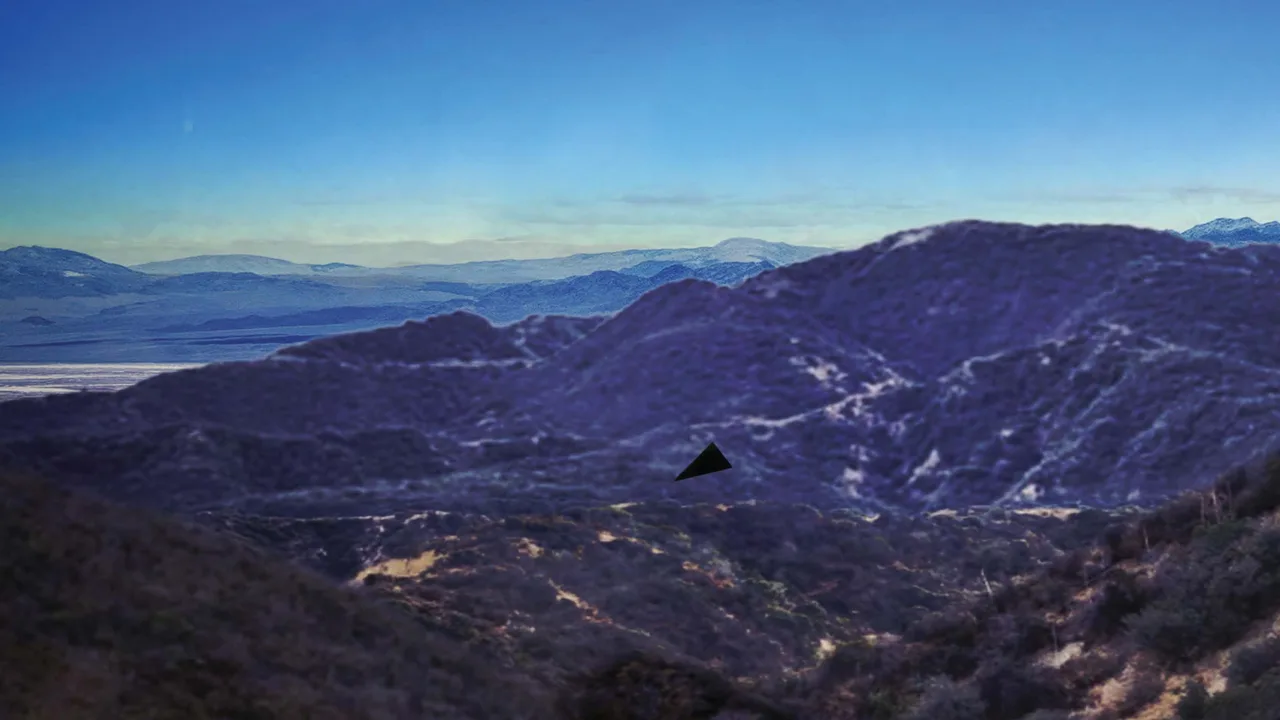
PURSUE Release 07: The Black Triangle, Read Against the FBI's Own Version
The seventh PURSUE tranche is 28 documents and no video. The headline is a silent black triangle seen by federal agents at a western U.S. national security site in 2026. We read the AARO memo and the FBI interview side by side, and they do not tell the same story. Also inside: Skinwalker Ranch hair that DNA-tested as raccoon and dog, a contractor plan to store crash debris in an underground vault, and a 1949 letter to Kenneth Arnold that the Air Force never answered.
Follow the thread
New disclosure reporting, physics breakdowns, and case files, in your inbox. Sources or it didn't happen. No spam, unsubscribe anytime.