How to Watch the June 9 UAP Press Conference, and How to Tell If It Actually Matters
Tomorrow at 1 p.m. ET, David Grusch and four bipartisan members of Congress will stand on the Capitol steps to demand UAP disclosure. Here's the confirmed cast, the three things they're asking for, and a plain scorecard for separating a real legislative turn from a well-staged photo op.
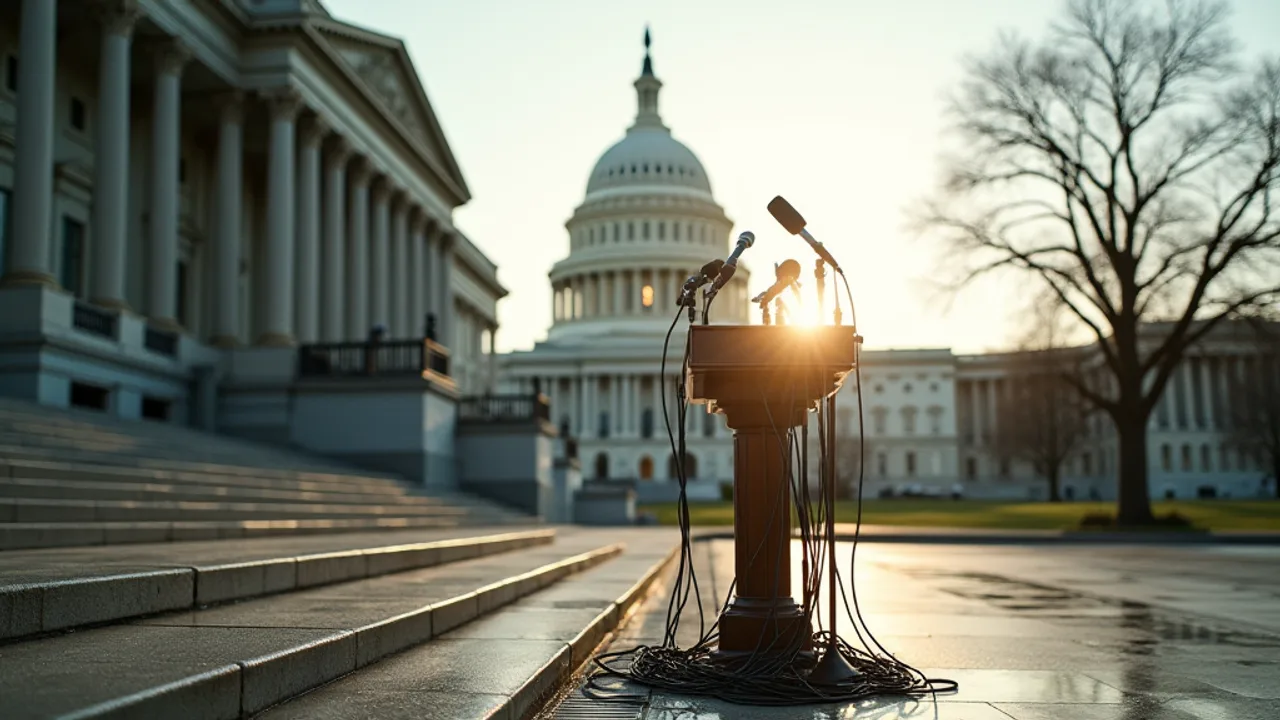 AI illustration
It’s happening now. Today, Tuesday, June 9, at 1:00 p.m. ET, former intelligence officer David Grusch and four members of Congress are holding a press conference on the steps of the U.S. Capitol to demand the government come clean about unidentified anomalous phenomena. The live stream is embedded above (via NewsNation); if it doesn’t load, use the YouTube link beneath the player. It’s the most deliberately staged disclosure event of the year, and the people behind it are calling it a line in the sand.
We wrote on Sunday about why the ask has quietly shifted from “show us the videos” to “pass a law”. This is the companion piece: who will actually be standing there, what they’re asking for, and, most importantly, a scorecard you can hold up against the event tomorrow to tell a genuine legislative turn from a very good photograph.
Who’s on the steps
The lineup is, by design, bipartisan, which matters more than the cast’s star power, for reasons we’ll get to.
- David Grusch, the former National Geospatial-Intelligence Agency officer who testified under oath to the House Oversight Committee in July 2023 that the U.S. operates a multi-decade craft-retrieval and reverse-engineering program outside normal congressional oversight. He says he referred more than 40 firsthand witnesses to oversight bodies. His claims remain his testimony, sworn, specific, and still not independently corroborated by any released physical evidence.
- Rep. Tim Burchett (R-TN) and Rep. Jared Moskowitz (D-FL), co-chairs of the bipartisan House UAP Caucus. One Republican, one Democrat, running the same caucus, is the single clearest signal that this isn’t a one-party exercise.
- Rep. Anna Paulina Luna (R-FL), chairs the Task Force on the Declassification of Federal Secrets, which has spent 2026 escalating from rhetoric to records demands, including the order for the Pentagon to surrender dozens of classified Tic Tac files.
- Rep. Eric Burlison (R-MO), has received classified UAP briefings and been a consistent voice for expanded congressional access.
Hosting are two figures with long credibility in the field rather than the fringe: Leslie Kean, the journalist who co-reported the 2017 New York Times story that put the Navy “Tic Tac” encounter on the front page, and documentary filmmaker James Fox (The Phenomenon, Out of the Blue).
The three things they’re asking for
Per the organizers’ own announcement, the event is built around three demands:
- Release the specific files Grusch flagged. Not another curated bundle, the exact records he says he pointed oversight bodies toward.
- Pass the UAP Disclosure Act. A statutory pathway for releasing records (with national-security carve-outs), essentially the full-strength version of the 2023 disclosure amendment that was gutted in conference and survives today only as a toothless “presumption of disclosure.”
- Strengthen whistleblower protections, legal cover for the next insider in line, plus a call for allied governments to join the effort.
Notice the order. A year ago the headline demand was release the files. Now two of the three asks are about machinery, a law, and protection for the people who feed it. That is the real story, and it’s the one we unpacked Sunday: you cannot subpoena a video the Pentagon never admits exists, so the lever that actually moves is legislative, not theatrical.
Why the UAP Disclosure Act is the part to watch
The 2026 timeline has been dominated by releases, the PURSUE file drops, the records AARO has and hasn’t published. Every one shared a flaw: the government chose what to release. A statute changes who controls the flow. That’s why “pass the UAP Disclosure Act” is a more consequential sentence than anything Grusch could say about a recovered craft, and also why it’s the demand most likely to get smothered in a committee where no camera is rolling.
The scorecard: how to tell if June 9 mattered
A press conference is not a markup. Nothing becomes law on the Capitol steps. So grade tomorrow on specifics, not spectacle. Three tests:
- Bill text, or just a podium? Is the UAP Disclosure Act introduced as a numbered bill with an actual protected-disclosure section, or is it a call to “pass legislation” with no text behind it? A named bill is a line in the sand. A general appeal is a Tuesday.
- Does the bipartisanship hold past the photo? Burchett-and-Moskowitz on the same steps is the right picture. The question is whether it survives contact with a committee chair who’d rather it didn’t. Watch for co-sponsors, not just co-attendees.
- Does it connect to the records mandate already on the books? The strongest version ties whistleblower protection to the existing FY2024 disclosure statute, the law that already exists but has no teeth without people willing to point at what’s being withheld. A demand that floats free of the machinery already passed is weaker than one that sharpens it.
And one thing to actively ignore: any saucer-on-the-South-Lawn framing. The disclosure project spent a year learning that the unglamorous lever, a statute that makes silencing a witness more expensive than letting them talk, is the one that actually moves. Tomorrow either advances that lever or it doesn’t.
The press conference begins at 1 p.m. ET on June 9. We’ll publish our read on what was actually delivered, graded against the scorecard above, once it happens and any bill text is public. Sources or it didn’t happen.
Every new case, scored the same way
One email when a case file lands, with its Signal-Strength score and what would move it. No hype, no 'BREAKING', and every claim carries its source. Unsubscribe anytime.
Sources
- [1] NewsNation, UAP disclosure news conference June 9 (preview)
- [2] PR Newswire, Members of Congress and whistleblowers call for release of UAP files (May 28 2026)
- [3] The Washington Times, Lawmakers host whistleblowers, UFO investigators to press feds (May 29 2026)
- [4] UFONews, Congress targets June 9 for a direct UFO disclosure demand
Read next
More Disclosure →
What AARO Has Actually Published, and the Caveats Buried in the Data
The Pentagon's UAP office has now released annual reports, a historical-record volume, and a working definition of 'anomalous.' Read past the headline 'no evidence of aliens' and the office's own numbers tell a more careful story, one that hinges on a single archived word: unresolved.
Whistleblowers Want a Law, Not a File Drop: What June 9 on the Capitol Steps Is Really About
On Tuesday, June 9, 2026, members of the UAP Caucus and whistleblower David Grusch will stand on the Capitol steps to demand statutory protection for people who come forward. After a year of headline-grabbing file releases, the ask has quietly shifted from 'show us the videos' to 'pass a law', and that shift is the actual news.
Why The Schumer Amendment Still Matters Two Years On
The UAP Disclosure Act of 2023 lost most of its teeth in conference, but the language it set, and the precedent it set, still defines the floor of every disclosure conversation that has happened since.
Follow the thread
New disclosure reporting, physics breakdowns, and case files, in your inbox. Sources or it didn't happen. No spam, unsubscribe anytime.