Whistleblowers Want a Law, Not a File Drop: What June 9 on the Capitol Steps Is Really About
On Tuesday, June 9, 2026, members of the UAP Caucus and whistleblower David Grusch will stand on the Capitol steps to demand statutory protection for people who come forward. After a year of headline-grabbing file releases, the ask has quietly shifted from 'show us the videos' to 'pass a law', and that shift is the actual news.
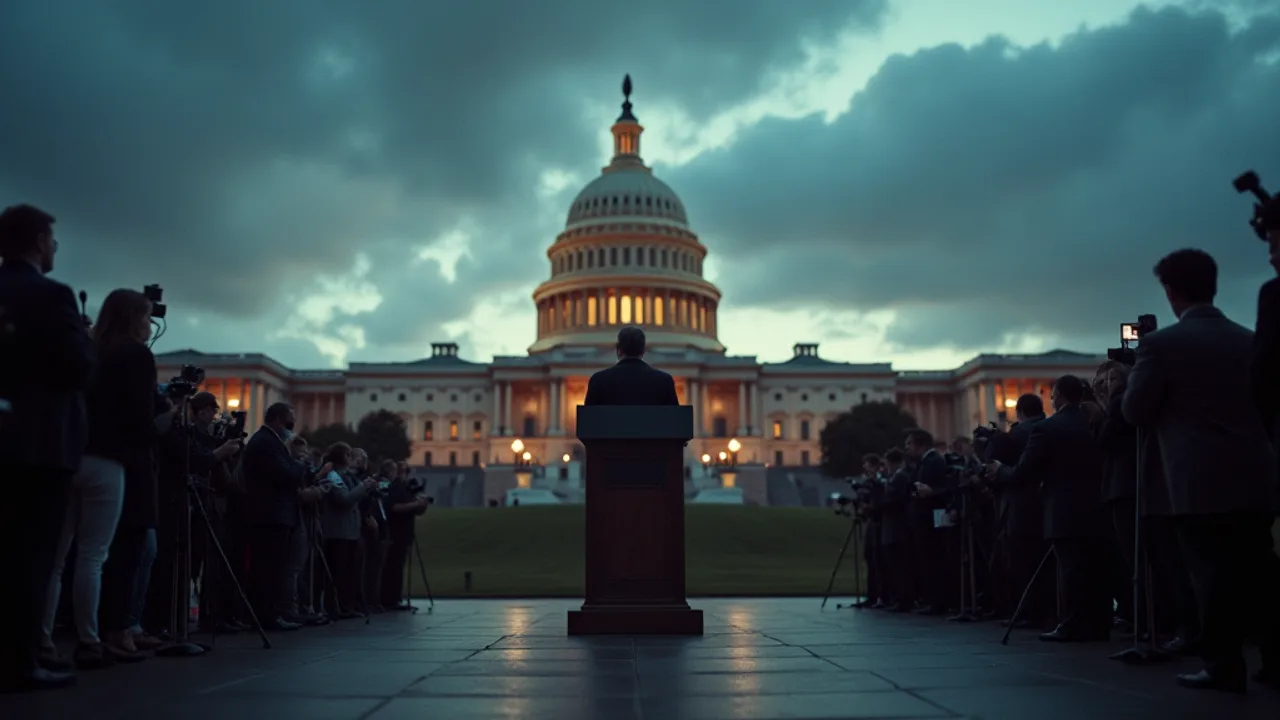 AI illustration
The June 9, 2026 Capitol Hill press conference was organized by the congressional UAP Caucus and whistleblower David Grusch to demand statutory legal protections for people who report classified UAP programs, a shift from the prior year's ask for document releases. No new evidence of alien technology was presented; the news is the change in what advocates are requesting from Congress.
On Tuesday, June 9, members of the congressional UAP Caucus and former intelligence officer David Grusch will hold a press conference on the steps of the U.S. Capitol. The framing from NewsNation’s Ross Coulthart, who has been briefed on the plan, is blunt: “It’s a drawing of a line in the sand.”
The interesting part isn’t the venue or the cast. It’s the demand. After eighteen months in which the disclosure story was dominated by releases, files, videos, the PURSUE drops, the people pushing it have changed what they’re asking for. They no longer primarily want documents. They want a law that protects the people who hold them.
How the ask quietly changed
Rewind the 2026 timeline and the drift is obvious:
- September 2025: witnesses tell a House task force the government knows more than it admits, and openly criticize AARO for “using science and coming up with answers”, i.e. resolving cases by redefinition rather than investigation.
- March-April 2026: Rep. Anna Paulina Luna escalates from rhetoric to subpoena-adjacent pressure, demanding the Pentagon surrender dozens of classified UAP videos, reporting put the figure at 46, within days.
- May 2026: the first PURSUE file drop lands on a government domain, complete with an FBI-rendered graphic of a metallic ellipsoid reported over a U.S. site in 2023. (We catalogued the five strangest items in that release.)
And then the brakes. Because here’s what every one of those releases had in common: the government chose what to release. Coulthart’s standing critique is that a curated file drop “doesn’t answer questions about whether the government bureaucracy is hiding more substantial information.” Two bundles are online; the public is “invited to draw their own conclusions.” That is transparency on the releaser’s terms.
Why a whistleblower statute is the real lever
A law changes who controls the flow. Grusch’s own account, that the U.S. has recovered non-human craft and runs a covert reverse-engineering program, and that insiders face pressure to stay silent, is precisely the kind of claim that dies in the dark without legal cover for the next person in line.
“There are people wanting to come forward who don’t feel safe about coming forward,” Coulthart told NewsNation, summarizing the case for legislation. Grusch, he said, is “basically saying it’s time for the government to put its money where its mouth is and back its promises with good, hard legislation.”
Prior proposals tried to shield individuals who disclose the use of taxpayer funds on UAP programs, a deliberately narrow, appropriations-flavored hook, because “we spent money on this” is a fact Congress can subpoena even when “aliens” is a fact it cannot. That is the unglamorous machinery of real disclosure: not a saucer on the South Lawn, but a statute that makes the cost of silencing a witness higher than the cost of letting them talk.
What to actually watch for on Tuesday
This is a press conference, not a markup. Nothing becomes law on the Capitol steps. So grade it on the right axis, not spectacle, but specifics:
- Is there bill text, or just a podium? A named bill with a section on protected disclosures is a real line in the sand. A general call for “transparency” is a Tuesday.
- Who stands behind Grusch? Bipartisan membership is the only thing that survives a change of committee chairs. A single-party event is a press hit, not a coalition.
- Does it tie to the records that already exist? The strongest version connects whistleblower protection to the UAP records mandate established in the FY2024 NDAA, the “presumption of disclosure” that is already statute but has no teeth without people willing to point at what’s being withheld.
The file drops made for better television. But you cannot subpoena a video the Pentagon never tells you exists. The whole disclosure project has spent a year learning that lesson in public, and June 9 is the moment it stops asking to see the cabinet and starts trying to protect the people with the key.
This is a developing story. We’ll update the evidence and outcomes once the press conference happens and any bill text is published, sources or it didn’t happen.
Every new case, scored the same way
One email when a case file lands, with its Signal-Strength score and what would move it. No hype, no 'BREAKING', and every claim carries its source. Unsubscribe anytime.
Sources
- [1] NewsNation, UAP disclosure advocates set to demand transparency measures Tuesday (June 7 2026)
- [2] Space.com, UAP witnesses criticize Pentagon UFO office in congressional hearing (Sept 2025)
- [3] DefenseScoop, Trump's first PURSUE UFO file drop (May 14 2026)
- [4] International Business Times, Lawmakers order Pentagon to surrender 46 classified 'Tic Tac' files (April 2026)
- [5] USA Today, Witnesses to testify about UFOs; what's happened since the last UAP hearing (Sept 2025)
Read next
More Disclosure →
Grusch's 'Sentient Plasmoid' Line: What Was Actually Said at the June 9 Capitol Presser
On June 9, 2026, David Grusch and four members of the House declassification task force stood on the Capitol steps to demand whistleblower immunity and the release of UFO files. The most-quoted moment, Grusch describing a 'continuum from corporeal bipedal type life to sentient plasmoid life', came in a Q&A and was printed verbatim by one outlet while the wires kept it vague. Here is exactly what was said, who said it, and how it grades against the three tests we set beforehand.
Inside PURSUE: The Five Strangest Things in Trump's UAP File Drop
Two tranches of declassified UAP records landed in May 2026 under a presidential disclosure system. Most coverage ran the headline. Here are the five buried items in the releases that actually move the needle, and the one line everyone skipped.
What Rep. Luna Actually Said About the 'Next' UFO Disclosure, and What X Turned It Into
Rep. Anna Paulina Luna told Glenn Beck 'without a doubt, the phenomenon's real' and teased an announcement 'soon.' Within 48 hours that became Pandora's box, crash retrievals, EBE remains, and a viral claim that Trump gives a disclosure speech on July 8. Here's what she said, on the record, and what didn't come from her at all.
Follow the thread
New disclosure reporting, physics breakdowns, and case files, in your inbox. Sources or it didn't happen. No spam, unsubscribe anytime.